Robert Osserman – författare
Visar alla böcker från författaren Robert Osserman. Handla med fri frakt och snabb leverans.
7 produkter
7 produkter
Häftad, Engelska, 1996
243 kr
Skickas inom 3-6 vardagar
E-bok
Engelska, 2011193 kr
Läs direkt efter köp
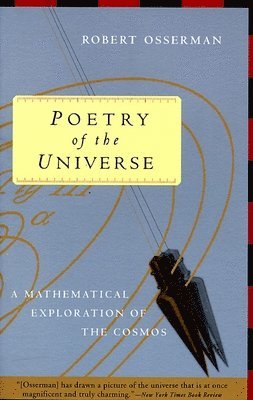
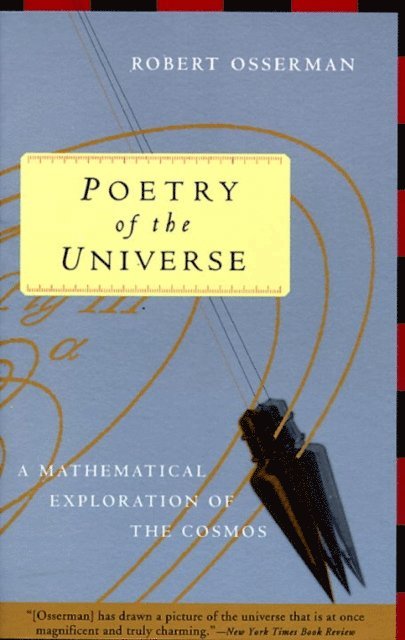
In the bestselling literary tradition of Lewis Thomas''s Lives of a Cell and James Watson''s The Double Helix, Poetry of the Universe is a delightful and compelling narrative charting the evolution of mathematical ideas that have helped to illuminate the nature of the observable universe. In a richly anecdotal fashion, the book explores teh leaps of imagination and vision in mathematics that have helped pioneer our understanding of the world around us.
E-bok
PDF, Tyska, 2013633 kr
Läs direkt efter köp
Häftad, Tyska, 2012
608 kr
Skickas inom 10-15 vardagar
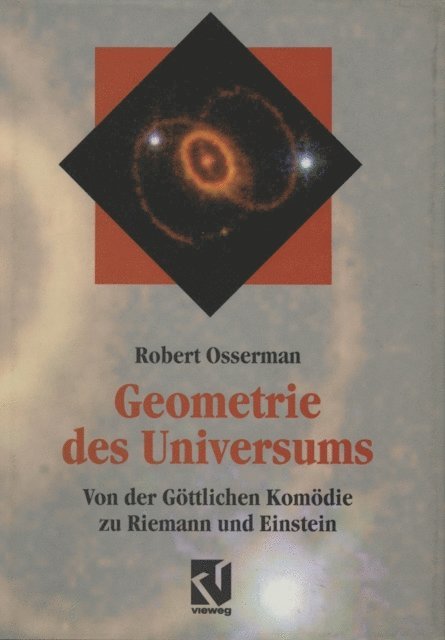
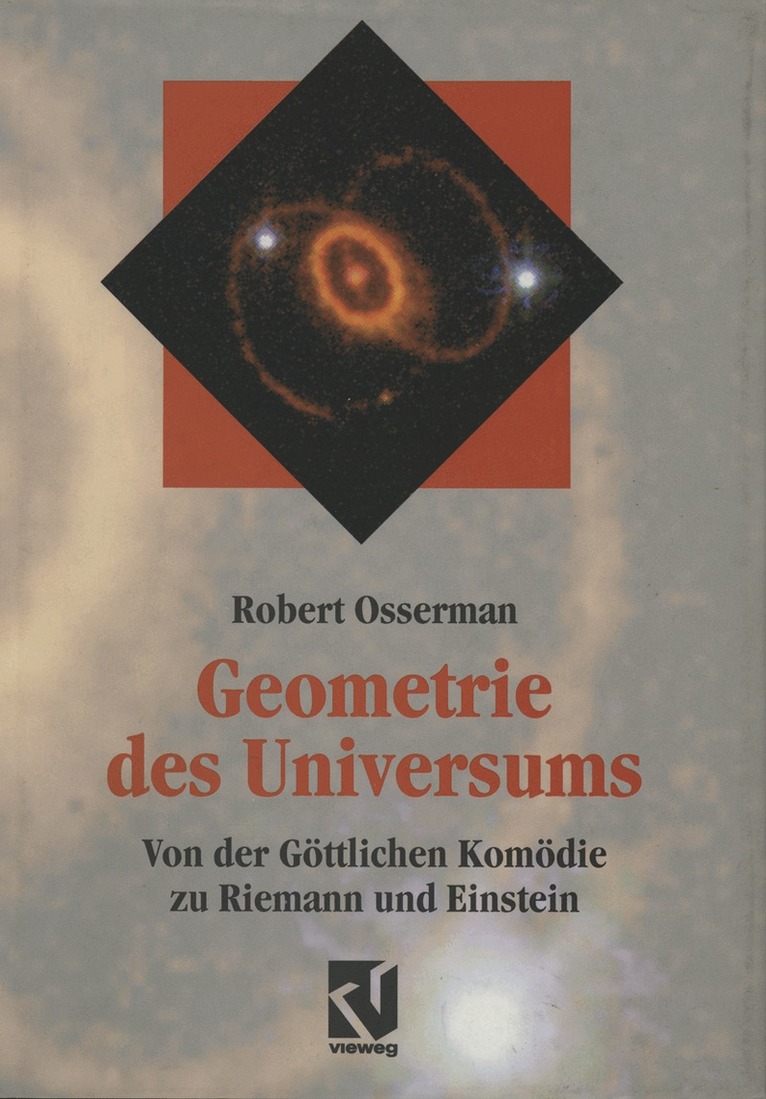
Osserman erzahlt lebendig und anschaulich eine Geschichte der Geometrie, von der Bestimmung der Erdgestalt und -grosse durch die alten Griechen uber das Problem der Kartierung der Weltkugel bis hin zur gekrummten Raumzeit, den Fraktalen und Buckyballs. Viele wird uberraschen, dass in der Mathematik nicht nur analytisches Denken zahlt, sondern dass Imagination, Phantasie und Kreativitat viel wichtiger sind. Dies und die Schonheit der Mathematik schlagen die Brucke zur Bildenden Kunst und Literatur, so nimmt Dante in seiner Gottlichen Komodie das Riemannsche Universum vorweg - zudem besteht eine frappante Analogie zwischen Dantes Gottlichem Licht und dem Urknall. Auch menschliche Aspekte kommen nicht zu kurz: Euler, Gauss und Riemann werden zum Beispiel als mathematische Entsprechungen von Bach, Beethoven und Brahms vorgestellt.
Del 90 - Encyclopaedia of Mathematical Sciences
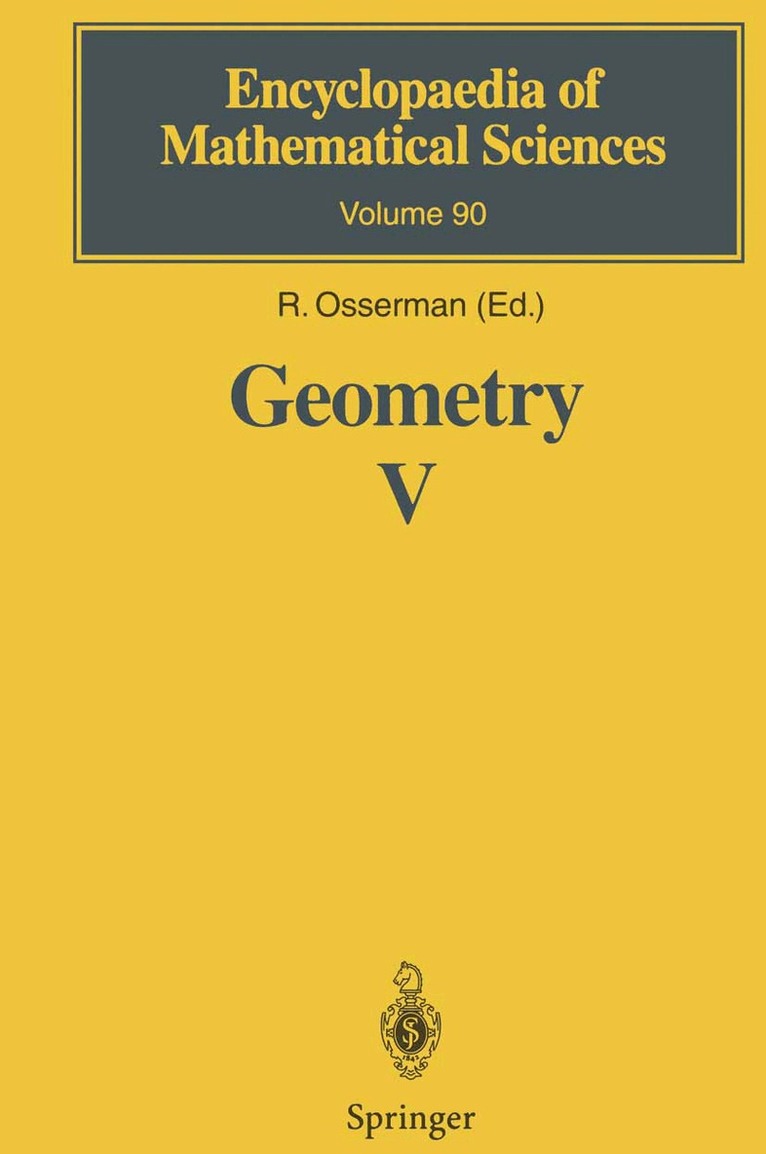
Geometry V
Minimal Surfaces
Inbunden, Engelska, 1997
1 080 kr
Skickas inom 10-15 vardagar
Few people outside of mathematics are aware of the varieties of mathemat ical experience - the degree to which different mathematical subjects have different and distinctive flavors, often attractive to some mathematicians and repellant to others. The particular flavor of the subject of minimal surfaces seems to lie in a combination of the concreteness of the objects being studied, their origin and relation to the physical world, and the way they lie at the intersection of so many different parts of mathematics. In the past fifteen years a new component has been added: the availability of computer graphics to provide illustrations that are both mathematically instructive and esthetically pleas ing. During the course of the twentieth century, two major thrusts have played a seminal role in the evolution of minimal surface theory. The first is the work on the Plateau Problem, whose initial phase culminated in the solution for which Jesse Douglas was awarded one of the first two Fields Medals in 1936. (The other Fields Medal that year went to Lars V. Ahlfors for his contributions to complex analysis, including his important new insights in Nevanlinna Theory.) The second was the innovative approach to partial differential equations by Serge Bernstein, which led to the celebrated Bernstein's Theorem, stating that the only solution to the minimal surface equation over the whole plane is the trivial solution: a linear function.
Del 90 - Encyclopaedia of Mathematical Sciences
Geometry V
Minimal Surfaces
Häftad, Engelska, 2010
1 080 kr
Skickas inom 10-15 vardagar
Few people outside of mathematics are aware of the varieties of mathemat ical experience - the degree to which different mathematical subjects have different and distinctive flavors, often attractive to some mathematicians and repellant to others. The particular flavor of the subject of minimal surfaces seems to lie in a combination of the concreteness of the objects being studied, their origin and relation to the physical world, and the way they lie at the intersection of so many different parts of mathematics. In the past fifteen years a new component has been added: the availability of computer graphics to provide illustrations that are both mathematically instructive and esthetically pleas ing. During the course of the twentieth century, two major thrusts have played a seminal role in the evolution of minimal surface theory. The first is the work on the Plateau Problem, whose initial phase culminated in the solution for which Jesse Douglas was awarded one of the first two Fields Medals in 1936. (The other Fields Medal that year went to Lars V. Ahlfors for his contributions to complex analysis, including his important new insights in Nevanlinna Theory.) The second was the innovative approach to partial differential equations by Serge Bernstein, which led to the celebrated Bernstein's Theorem, stating that the only solution to the minimal surface equation over the whole plane is the trivial solution: a linear function.
E-bok
PDF, Engelska, 20131 367 kr
Läs direkt efter köp
Few people outside of mathematics are aware of the varieties of mathemat ical experience - the degree to which different mathematical subjects have different and distinctive flavors, often attractive to some mathematicians and repellant to others. The particular flavor of the subject of minimal surfaces seems to lie in a combination of the concreteness of the objects being studied, their origin and relation to the physical world, and the way they lie at the intersection of so many different parts of mathematics. In the past fifteen years a new component has been added: the availability of computer graphics to provide illustrations that are both mathematically instructive and esthetically pleas ing. During the course of the twentieth century, two major thrusts have played a seminal role in the evolution of minimal surface theory. The first is the work on the Plateau Problem, whose initial phase culminated in the solution for which Jesse Douglas was awarded one of the first two Fields Medals in 1936. (The other Fields Medal that year went to Lars V. Ahlfors for his contributions to complex analysis, including his important new insights in Nevanlinna Theory.) The second was the innovative approach to partial differential equations by Serge Bernstein, which led to the celebrated Bernstein''s Theorem, stating that the only solution to the minimal surface equation over the whole plane is the trivial solution: a linear function.