Robert Oulds – författare
212 kr
Skickas inom 5-8 vardagar
52 kr
Läs direkt efter köp
110 kr
Läs direkt efter köp
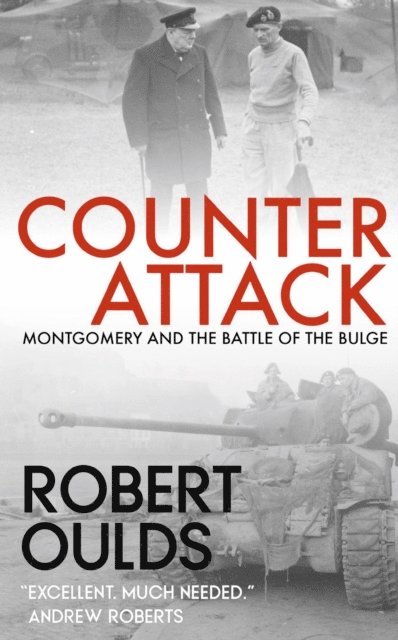
16th December 1944, western Europe. Hitler launches his last great gamble in the west. Fanatical Nazi soldiers were unleashed on unsuspecting Americans resting far away from where they thought the fighting would take place. The Battle of the Bulge was underway.
American commanders, earlier that fateful morning, thought the Germans were as good as beaten. British commander Bernard Law Montgomery knew otherwise. The famous Field Marshal had months before raised the alarm, telling the Supreme Allied Commander, General Eisenhower, of the threat. Monty''s warnings were not heeded, and tens of thousands of American soldiers paid the ultimate price.
Shocked and nearly overawed Americans were pushed aside as Hitler''s panzers raced towards Montgomery''s forces in Belgium. Despite the many Allied disagreements and jealous intriguing from some American commanders, Monty, as he was affectionately known, calmly halted and then drove back what was a ferocious assault. Yet, because of this success, his reputation was besmirched by those who could not accept his leading role in the fight. Attempts were made to write his contribution out of history.
This is the previously untold and until now hidden story of Field Marshal Montgomery and his British-led victory over Hitler''s ruthless counteroffensive. This epic confrontation that we know today as the Battle of the Bulge.
In this book the military historian Robert Oulds looks at the key role that the controversial victor of El-Alamein played in defeating Adolf Hitler''s bold surprise attack.
The events of this great conflict are explained to the reader as are the tactics, weapons, armies, the key commanders, and the strategy that Montgomery used to thwart Hitler''s plans. Robert Oulds also busts some long-held Hollywood myths and looks at the enormous controversy surrounding Montgomery.
Now it is time to tell the long overdue story of Montgomery and the Battle of the Bulge.
173 kr
Läs direkt efter köp
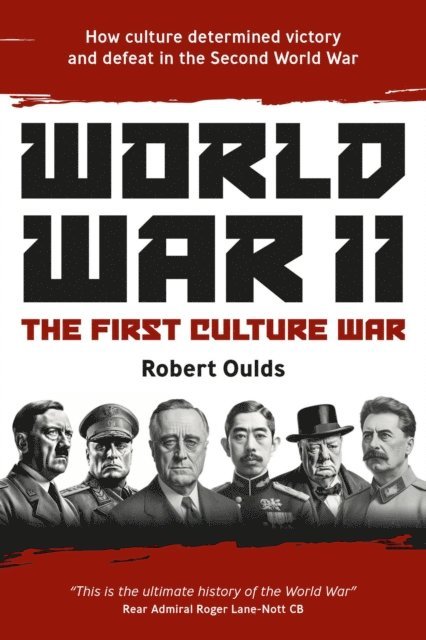
The global conflict of WWII, the bloodiest yet in human history, was as much a clash of cultures as it was a clash of arms. Different world visions collided as fiercely as the great armies which encountered each other on the battlefields of Europe, Asia, and Africa. The struggle of ideas was as vicious as the battle on, and below the waves as was the fight in the skies above. Indeed, the culture war and national differences drove the conflict and influenced where, when, why, and even how, the war was fought.
Churchill, Stalin, and Roosevelt - as well as their opponents; Hitler, Mussolini, and Hirohito - shaped events. However, these intractable enemies were governed by the hand which history gave them, the political directed the personal, as they wrangled for control of the future.
Despite the initial successes of Nazi Germany and Japan, Hitler and his Axis were eventually outgunned and outthought.
How much can we consider that German and Japanese capitulation was inevitable? And what drove so few men to command so many - and devastate so much? Economic and cultural factors, as well as military power, determined victory for some and subjected others to defeat and utter ruin.
In many regards, Second World War throws up more questions than answers, but World War II: The First Culture War addresses certain controversial and unpalatable issues.
The war fighting skills and the ability to manufacture the weapons that were so effectively wielded by the Allies were begotten by the notions of individual freedom, limited government, and property rights. Those concepts emerged in one place only, mediaeval England. The culture that produced Anglo-Saxon exceptionalism, and colonialism, gave Britain and her Allies the advantage over the Nazis.
Initiative, imagination, industriousness, innovation, ingenuity, and inventiveness; encouraged by the powerful inducement that is a lust for private profit - though now unpopular in some circles - proved to be the basis for the superior social, economic, political, and military system which confronted the Axis.
For some time, Great Britain and its Empire stood alone against the might and menace of the Axis powers. Churchill, embodying a culture of defiance, believed that the English-speaking peoples would ultimately triumph. He was right. World War II: The First Culture War asserts why he was right and how this great victory was fought.
298 kr
Skickas inom 5-8 vardagar
169 kr
Skickas inom 5-8 vardagar
141 kr
Skickas inom 5-8 vardagar
124 kr
Skickas inom 5-8 vardagar