Robert R. Taylor – författare
Visar alla böcker från författaren Robert R. Taylor. Handla med fri frakt och snabb leverans.
6 produkter
6 produkter
Häftad, Engelska, 2022
593 kr
Skickas inom 5-8 vardagar
The Word in Stone: The Role of Architecture in the National Socialist Ideology by Robert R. Taylor examines how Hitler’s regime sought to transform the built environment into a material language of power, identity, and control. Far more than background to political history, architecture stood at the very center of the Nazi project: a means of embodying ideology in stone and concrete, making visible the myths of nation, race, and destiny. Taylor traces how Hitler himself—an aspiring architect before he was a politician—invested architecture with symbolic authority, and how party ideologues and professional architects worked to give “form” to concepts of Volk, community, and health. Architecture became an instrument for forging social order and unity, whether in monumental state buildings, housing projects, or the planning of new cities designed to project a distinctly German future.The book moves from early nationalist views of architecture and their claims of “suppression” and “decadence” in German design since 1850 to the National Socialist redefinition of architectural values as authentically German, healthy, and community-focused. Chapters address the ideological stakes of monumental forms, “community” buildings meant to embody solidarity, structures designed to regulate social life, and architectural programs linked to racial hygiene and physical vitality. Taylor also examines the unrealized vision of the “new German city,” as well as the eventual failure of these architectural ambitions to secure widespread legitimacy—when the “word” of stone fell on deaf ears. Thoroughly researched and rigorously argued, The Word in Stone demonstrates how architecture was mobilized as propaganda and practice in service of totalitarian aims. For historians of modern Europe, architecture, and ideology, it is a sobering study of how aesthetics, politics, and power became fused in one of the darkest regimes of the twentieth century.This title is part of UC Press's Voices Revived program, which commemorates University of California Press’s mission to seek out and cultivate the brightest minds and give them voice, reach, and impact. Drawing on a backlist dating to 1893, Voices Revived makes high-quality, peer-reviewed scholarship accessible once again using print-on-demand technology. This title was originally published in 1974.
E-bok
Engelska, 2023433 kr
Läs direkt efter köp
This title is part of UC Press's Voices Revived program, which commemorates University of California Press’s mission to seek out and cultivate the brightest minds and give them voice, reach, and impact. Drawing on a backlist dating to 1893, Voices Revived makes high-quality, peer-reviewed scholarship accessible once again using print-on-demand technology. This title was originally published in 1974.
Inbunden, Engelska, 2022
1 116 kr
Skickas inom 5-8 vardagar
The Word in Stone: The Role of Architecture in the National Socialist Ideology by Robert R. Taylor examines how Hitler’s regime sought to transform the built environment into a material language of power, identity, and control. Far more than background to political history, architecture stood at the very center of the Nazi project: a means of embodying ideology in stone and concrete, making visible the myths of nation, race, and destiny. Taylor traces how Hitler himself—an aspiring architect before he was a politician—invested architecture with symbolic authority, and how party ideologues and professional architects worked to give “form” to concepts of Volk, community, and health. Architecture became an instrument for forging social order and unity, whether in monumental state buildings, housing projects, or the planning of new cities designed to project a distinctly German future.The book moves from early nationalist views of architecture and their claims of “suppression” and “decadence” in German design since 1850 to the National Socialist redefinition of architectural values as authentically German, healthy, and community-focused. Chapters address the ideological stakes of monumental forms, “community” buildings meant to embody solidarity, structures designed to regulate social life, and architectural programs linked to racial hygiene and physical vitality. Taylor also examines the unrealized vision of the “new German city,” as well as the eventual failure of these architectural ambitions to secure widespread legitimacy—when the “word” of stone fell on deaf ears. Thoroughly researched and rigorously argued, The Word in Stone demonstrates how architecture was mobilized as propaganda and practice in service of totalitarian aims. For historians of modern Europe, architecture, and ideology, it is a sobering study of how aesthetics, politics, and power became fused in one of the darkest regimes of the twentieth century.This title is part of UC Press's Voices Revived program, which commemorates University of California Press’s mission to seek out and cultivate the brightest minds and give them voice, reach, and impact. Drawing on a backlist dating to 1893, Voices Revived makes high-quality, peer-reviewed scholarship accessible once again using print-on-demand technology. This title was originally published in 1974.
E-bok
PDF, Engelska, 2016428 kr
Läs direkt efter köp
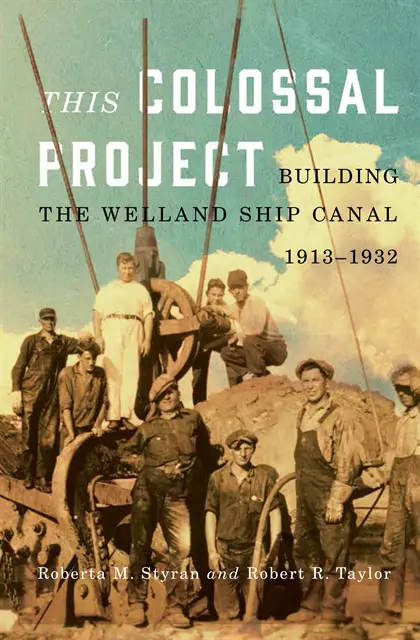
This Colossal Project presents an absorbing epic on the building of the fourth Welland Canal, which connects Lake Ontario and Lake Erie and allows ships to bypass Niagara Falls. An immense undertaking, the canal is a vital part of North America’s infrastructure and still functions as an essential part of the St Lawrence Seaway. Emphasizing the role that vivid personalities – including engineers John Laing Weller and Alex Grant as well as contractors and labourers – played in the construction of the canal, Roberta Styran and Robert Taylor use archival sources, government documents, newspapers, maps, and original plans to describe a saga of technological, financial, geographical, and social obstacles met and overcome in an accomplishment akin to the building of the Canadian Pacific Railway. A story of Canadian skill, courage, vision, and hardship, This Colossal Project details the twenty-year excavation of the giant channel and the creation of huge concrete locks amidst war, the Great Depression, political change, and labour unrest. Building on the work presented in Styran and Taylor’s This Great National Object, which told the story of the first three Welland canals built in the nineteenth century, This Colossal Project chronicles an impressive milestone in the history of Canadian technological achievement and nation building.
E-bok
Engelska, 2016413 kr
Läs direkt efter köp
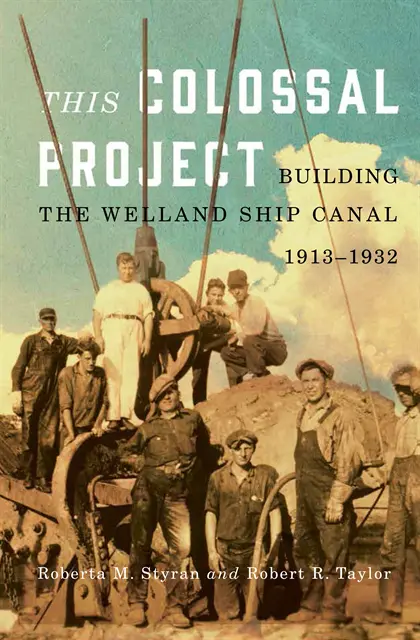
This Colossal Project presents an absorbing epic on the building of the fourth Welland Canal, which connects Lake Ontario and Lake Erie and allows ships to bypass Niagara Falls. An immense undertaking, the canal is a vital part of North America’s infrastructure and still functions as an essential part of the St Lawrence Seaway. Emphasizing the role that vivid personalities – including engineers John Laing Weller and Alex Grant as well as contractors and labourers – played in the construction of the canal, Roberta Styran and Robert Taylor use archival sources, government documents, newspapers, maps, and original plans to describe a saga of technological, financial, geographical, and social obstacles met and overcome in an accomplishment akin to the building of the Canadian Pacific Railway. A story of Canadian skill, courage, vision, and hardship, This Colossal Project details the twenty-year excavation of the giant channel and the creation of huge concrete locks amidst war, the Great Depression, political change, and labour unrest. Building on the work presented in Styran and Taylor’s This Great National Object, which told the story of the first three Welland canals built in the nineteenth century, This Colossal Project chronicles an impressive milestone in the history of Canadian technological achievement and nation building.
Häftad, Engelska, 1998
505 kr
Skickas inom 10-15 vardagar
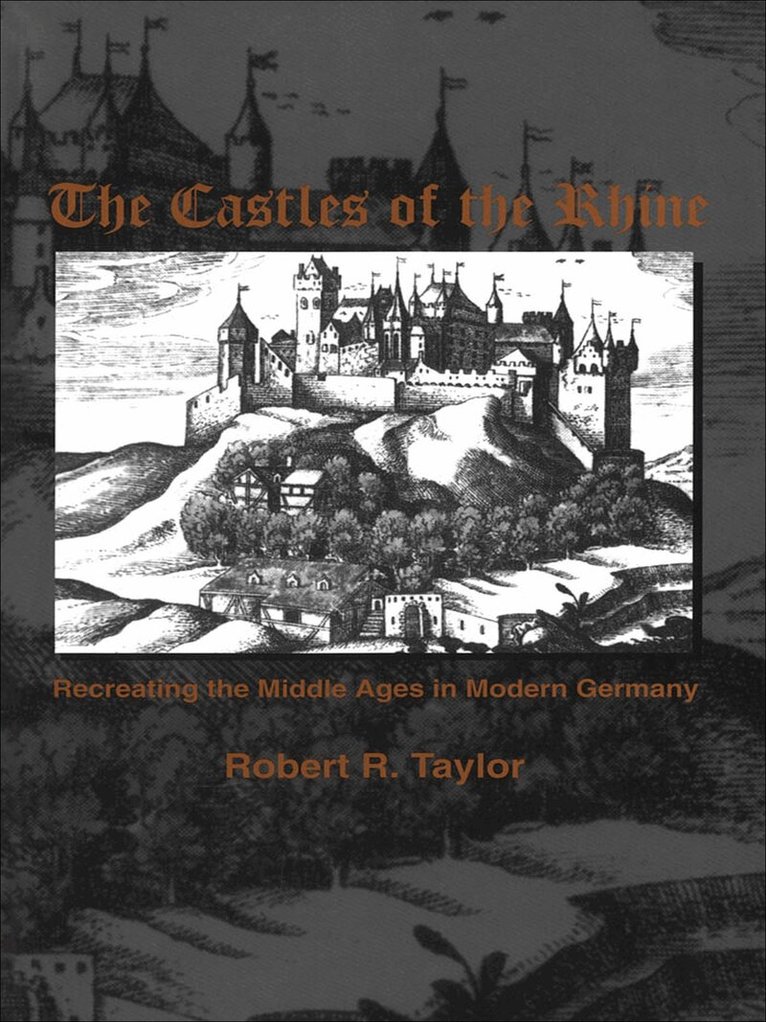
Far from being mere antiquarian or sentimental curiosities, the rebuilt or reused fortresses of the Rhine reflect major changes in Germany and Europe during the nineteenth and early twentieth centuries. Taylor begins The Castles of the Rhine with a synopsis of the major political, social and intellectual changes that influenced castle rebuilding in the nineteenth century. He then focuses on selected castles, describing their turbulent histories from the time of their original construction, through their destruction or decay, to their rediscovery in the 1800s and their continued preservation today. Reading this book is equivalent to looking at history though a romantic-nationalist kaleidoscope. Amply illustrated with maps and photographs, The Castles of the Rhine is a wonderful companion for anyone with dreams or experience of journeying along the Rhine.