Robert Rauschenberg - Böcker
Visar alla böcker från författaren Robert Rauschenberg. Handla med fri frakt och snabb leverans.
3 produkter
3 produkter
399 kr
Skickas inom 7-10 vardagar
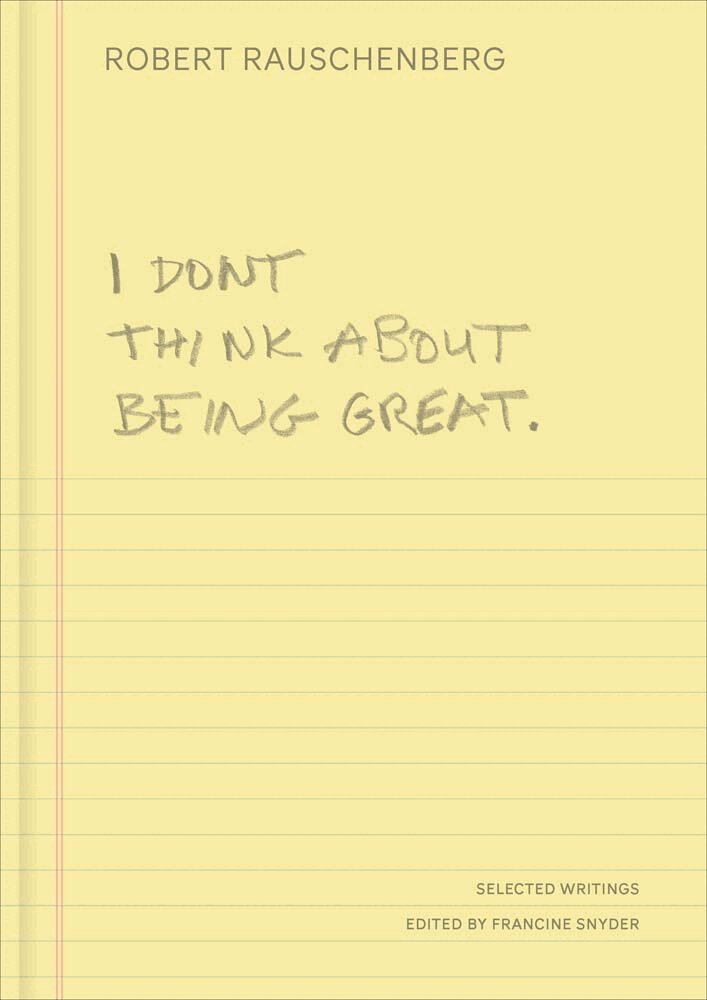
This collection of 100 writings by Robert Rauschenberg reveals the artist’s gift for prose and the importance of his relationship to language“Compelling. . . . Rauschenberg’s writings offer candid, lyrical insights [that enrich] our understanding of not just what Rauschenberg made, but how he thought about making it, and why that matters to readers today.”—Megan Fox Kelly, ObserverThe American artist Robert Rauschenberg (1925–2008) won acclaim and awards for his diverse oeuvre that spanned six decades and included paintings, sculpture, prints, photography, and performance. Less well known is the role that writing played in his creative process. Rauschenberg self-identified as dyslexic and did not publish extensively, leading to the widely held assumption that he was not an artist who wrote. This book corrects the record, showcasing 100 passages, many published here for the first time, from Rauschenberg’s robust body of written workComprising correspondence, artist notes, testimony, speeches, and more, this collection brings to light the artist’s love of language and reveals that writing was, in fact, central to Rauschenberg’s practice. The writings, illustrated with reproductions in the artist’s distinctive hand, are infused with visual and intellectual lyricism, humor, and insight, and span topics from the freedom of artistic expression to environmental concerns. This beautiful volume, which also features an essay by artist Martha Tuttle (b. 1989) about why artists’ writings matter, adds new depth to our understanding of Rauschenberg’s life and work.Published in association with the Robert Rauschenberg Foundation
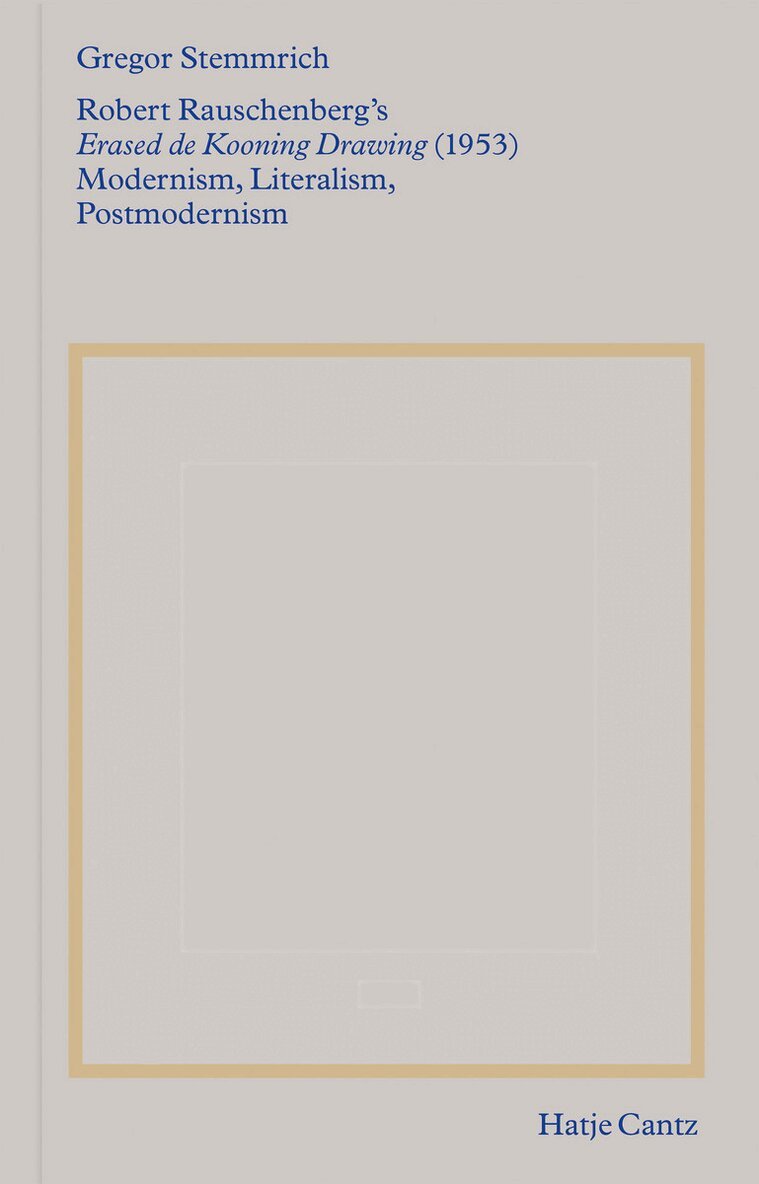
Robert Rauschenberg's »Erased de Kooning Drawing« (1953)
Modernism, Literalism, Postmodernism
Häftad, Engelska, 2024
511 kr
Skickas inom 7-10 vardagar
Seeing the Unseen Erased de Kooning Drawing is an artwork that radically challenged the very definition of art and questioned the notion of the artist as creator. Three American artists were involved in its creation: In 1953, Robert Rauschenberg erased a drawing by Willem de Kooning, who had somewhat reluctantly been giving his consent. Jasper Johns created a label for its first public presentation that proved to be key to the psychological framing of the piece. Having been transmuted into something new, the obliterated drawing was soon perceived as a pivotal moment in art history: In the 1950s it was considered Neo-Dada, in the 1960s it was hailed as the beginning of conceptual art, and in the 1980s saw it as a departure into postmodernism. Numerous artists referenced the work and it became a touchstone in Rauschenberg’s oeuvre. Gregor Stemmrich outlines its status as a litmus test for the definitions of modernism, literalism and postmodernism, and demonstrates its continuing relevance for the theory of the image and the question of appropriation.
345 kr
Skickas inom 3-6 vardagar