Robert Stawell Ball – författare
774 kr
Skickas inom 7-10 vardagar
385 kr
Skickas inom 5-8 vardagar
243 kr
Skickas inom 5-8 vardagar
412 kr
Skickas inom 5-8 vardagar
280 kr
Skickas inom 5-8 vardagar
400 kr
Skickas inom 5-8 vardagar
285 kr
Skickas inom 5-8 vardagar
485 kr
Skickas inom 5-8 vardagar
362 kr
Skickas inom 5-8 vardagar
386 kr
Skickas inom 5-8 vardagar
285 kr
Skickas inom 5-8 vardagar
416 kr
Skickas inom 5-8 vardagar
299 kr
Skickas inom 5-8 vardagar
362 kr
Skickas inom 5-8 vardagar
207 kr
Skickas inom 5-8 vardagar
519 kr
Skickas inom 7-10 vardagar
654 kr
Skickas inom 7-10 vardagar
381 kr
Skickas inom 7-10 vardagar
11 kr
Läs direkt efter köp
2 744 kr
Skickas inom 5-8 vardagar
502 kr
Skickas inom 5-8 vardagar
385 kr
Skickas inom 5-8 vardagar
16 kr
Läs direkt efter köp
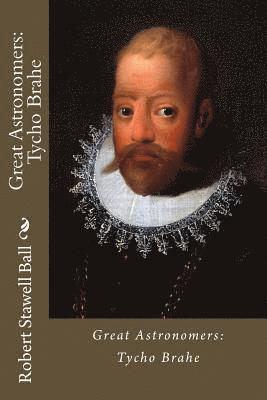
This is the chapter on 16th century Danish astronomer Tycho Brahe from Sir Robert S. Ball''s Great Astronomers, second edition, which begins: "The most picturesque figure in the history of astronomy ... Tycho Brahe was alike notable for his astronomical genius and for the extraordinary vehemence of a character which was by no means perfect. His romantic career as a philosopher, and his taste for splendour as a Danish noble, his ardent friendships and his furious quarrels, make him an ideal subject for a biographer, while the magnificent astronomical work which he accomplished has given him imperishable fame. ...
"Before Tycho was seventeen he had commenced the difficult task of calculating the movements of the planets and the places which they occupied on the sky from time to time. He was not a little surprised to find that the actual positions of the planets differed very widely from those which were assigned to them by calculations from the best existing works of astronomers. With the insight of genius he saw that the only true method of investigating the movements of the heavenly bodies would be to carry on a protracted series of measurements of their places. This, which now seems to us so obvious, was then an entirely new doctrine. Tycho at once commenced regular observations in such fashion as he could."
This book traces the life of Tycho Brahe (born 1546): the unusual way he was adopted by his uncle as an infant, his education, his productive years as inventor of precise astronomical instruments before telescopes, his meticulous observations, his personal life, his death as a prematurely aged man in 1601. Tycho’s observations were accurate enough for the mathematical astronomer Kepler to calculate that the planets moved in elliptic orbits, and to discover Kepler''s other laws, which gave Newton the facts he needed to establish his inverse-square law of gravitation.
15 kr
Läs direkt efter köp
German astronomer Johannes Kepler (1571-1630) derived his mathematical laws of planetary motion from astronomical data meticulously collected by Tycho Brahe, who, as he was dying, beseeched young Kepler to use the data to discover the laws of motion of the planets. Based upon Kepler''s laws, Sir Isaac Newton later developed his law of gravity.
This is a chapter from Sir Robert Stawell Ball''s Great Astronomers (2nd ed. 1907). Ball traces Kepler''s life from birth in 1571 to death at age 59 in 1630. "Though Kepler had not those personal characteristics which have made his great predecessor, Tycho Brahe, such a romantic figure, yet a picturesque element in Kepler''s character is not wanting. It was, however, of an intellectual kind. His imagination, as well as his reasoning faculties, always worked together. He was incessantly prompted by the most extraordinary speculations. The great majority of them were in a high degree wild and chimerical, but every now and then one of his fancies struck right to the heart of nature, and an immortal truth was brought to light."
15 kr
Läs direkt efter köp
Sir Isaac Newton (1642–1726) was an English physicist, mathematician, astronomer, natural philosopher, alchemist and theologian who has been considered by many to be the greatest and most influential scientist who ever lived. His monograph Philosophia Naturalis Principia Mathematica, published in 1687, laid the foundations for most of classical mechanics. In this work, Newton described universal gravitation and the three laws of motion, which dominated the scientific view of the physical universe for the next three centuries. Newton showed that the motion of objects on Earth and that of celestial bodies is governed by the same set of natural laws: by demonstrating the consistency between Kepler''s laws of planetary motion and his theory of gravitation he removed the last doubts about heliocentrism and advanced the scientific revolution. The Principia is generally considered to be one of the most important scientific books ever written, both due to the specific physical laws the work successfully described, and for its style, which assisted in setting standards for scientific publication down to the present time. (http://en.wikipedia.org/wiki/Isaac_newton)
This eBook is taken from a chapter in Sir Robert Stawell Ball''s Great Astronomers (2nd edition, 1907).
16 kr
Läs direkt efter köp
Nicolaus Copernicus (1473-1543) was a mathematician and astronomer who formulated a comprehensive heliocentric model which placed the Sun, rather than the Earth, at the center of the universe, contrary to the prevailing thought at his time which placed the Earth at the center.
The publication of Copernicus'' book, De revolutionibus orbium coelestium (On the Revolutions of the Celestial Spheres), just before his death in 1543, is considered a major event in the history of science.
This eBook briefly tells the life of Copernicus and explains his key theories: that the rotation of the Earth causes the apparent daily motion of the objects in the sky, not that the universe rotates around the Earth; that the motion of the planets is better explained with the Sun at the center and the Earth and planets rotating around the sun, rather than the Sun, planets, and stars rotating around the earth; that the sometimes-retrograde motion of Mars is an illusion due to the Earth rotating around the Sun faster than Mars does, not that Mars actually reverses its travel.
Although Copernicus correctly deduced that the planets rotate around the Sun, he retained the idea that the orbits were circles. This concept was later overturned by Kepler, who computed that the orbits were elliptical based on accurate measurements of the planets'' positions in the sky that were made by Tycho Brahe. (See the volumes about Kepler and Brahe in this eBook series on Great Astronomers.)
This is one chapter from Great Astronomers by Sir Richard S. Ball (2nd edition, 1907).
16 kr
Läs direkt efter köp
Galileo Galilei (1564-1642) was an Italian physicist, mathematician, astronomer, and philosopher who played a major role in the Scientific Revolution. His achievements include improvements to the telescope and consequent astronomical observations and support for Copernicanism, which held that the Earth is not the center of the universe and that the Earth and planets revolve around the Sun. Galileo has been called the father of modern observational astronomy, the father of modern physics, and the father of modern science.
This eBook tells the life story of Galileo, from a chapter in Great Astronomers by Sir Richard S. Ball (2nd edition, 1907). It begins:
"Among the ranks of the great astronomers it would be difficult to find one whose life presents more interesting features and remarkable vicissitudes than does that of Galileo. We may consider him as the patient investigator and brilliant discoverer. We may consider him in his private relations, especially to his daughter, Sister Maria Celeste, a woman of very remarkable character; and we have also the pathetic drama at the close of Galileo''s life, when the philosopher drew down upon himself the thunders of the Inquisition."
The book explains Galileo''s work and theories, along with a narrative of his personal troubles because of his science. The Catholic Church held that Galileo''s theory was heretical, contrary to holy scripture. He was ordered never to speak of it, but he defied that order and was tried before the Inquisition again for heresy and defiance of a Papal decree.
"...With his hands on the Gospels, Galileo was made to curse and detest the false opinion that the sun was the centre of the universe and immovable, and that the earth was not the centre of the same, and that it moved. He swore that for the future he will never say nor write such things as may bring him under suspicion, and that if he does so he submits to all the pains and penalties of the sacred canons."
He was ordered to be secluded for the rest of his life and not to speak of his theory again. The book ends with this sad story of science versus dogma.
15 kr
Läs direkt efter köp
John Flamsteed (1646-1719) was an English astronomer, a contemporary of Isaac Newton, and the first Astronomer Royal in charge of the newly built observatory at Greenwich, England (1676). Although he made no great discoveries nor new astronomical theories, Flamsteed distinguished himself by his meticulous measurements of the positions of stars, as Tycho Brahe did with observations of the planets. He also made improvements to astronomical techniques and some observations of the moon and sun.
Over 40 years, Flamsteed accumulated position data on over 2900 stars and tediously reduced it to a form usable by astronomers, but he refused to publish his star catalog until he was confident that the data was accurate and verified. This evoked the ire of Isaac Newton, who was then president of the Royal Society, the highest scientific body in England at that time. In 1712, Newton and Edmund Halley pirated the data and published it without Flamsteed''s consent. Flamsteed burned as many copies of the unauthorized catalog as he could gather. His own star catalog was published posthumously by his wife in 1725.
This eBook is a chapter from Great Astronomers by Sir Richard Stawell Ball (1907) plus information from A Short History of Astronomy by Arthur Berry (1910).
16 kr
Läs direkt efter köp
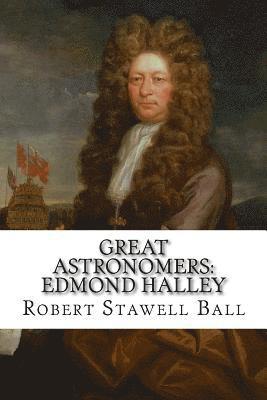
Edmond Halley,(1656–1742) was an English astronomer, geophysicist, mathematician, meteorologist, and physicist who is best known for computing the orbit of the eponymous Halley''s Comet. He was the second Astronomer Royal in Britain, following in the footsteps of John Flamsteed.
Halley became a close friend of Isaac Newton. He encouraged Newton to publish his discoveries, his "Principia," but when the Royal Society had no money to pay for the publication, Halley paid for and accomplished the publishing himself.
16 kr
Läs direkt efter köp
James Bradley (1693–1762) was the English astronomer who served as Astronomer Royal from 1742, succeeding Edmund Halley. He is best known for two fundamental discoveries in astronomy, the aberration of light (1725–1728), and the nutation of the Earth''s axis (1728–1748). These discoveries were called "the most brilliant and useful of the century" by Jean Baptiste Joseph Delambre, historian of astronomy, mathematical astronomer and director of the Paris Observatory, in his history of astronomy in the 18th century (1821), because "It is to these two discoveries by Bradley that we owe the exactness of modern astronomy. .... This double service assures to their discoverer the most distinguished place (after Hipparchus and Kepler) above the greatest astronomers of all ages and all countries."
(Biography from http://en.wikipedia.org/wiki/James_Bradley)