
Robert W. Merry – författare
Visar alla böcker från författaren . Handla med fri frakt och snabb leverans.
12 produkter
12 produkter

Häftad, Engelska, 2010
276 kr
Skickas inom 3-6 vardagar
E-bok
Engelska, 2005193 kr
Läs direkt efter köp
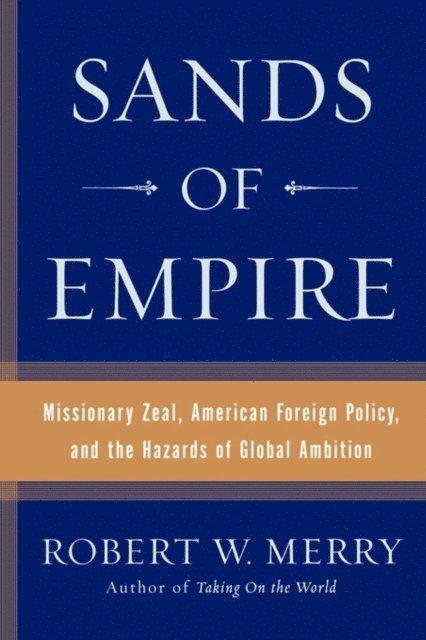
In Sands of Empire, veteran political journalist and award-winning author Robert W. Merry examines the misguided concepts that have fueled American foreign policy since the end of the Cold War. The emergence in the George W. Bush administration of America as Crusader State, bent on remaking the world in its preferred image, is dangerous and self-defeating, he points out. Moreover, these grand-scale flights of interventionism, regime change, and the use of pre-emptive armed force are without precedent in American history. Merry offers a spirited description of a powerful political core whose ideas have replaced conservative reservations about utopian visions -- these neocons who "embrace a brave new world in which American exceptionalism holds sway," imagining that others around the globe can be made to abandon their cultures in favor of our ideals. He traces the strains of Wilsonism that have now merged into an adventurous and hazardous foreign policy, particularly as described by William Kristol, Francis Fukuyama, Max Boot, and Paul Wolfowitz, among others. He examines the challenge of Samuel Huntington''s supposition that the clash of civilizations defines present and future world conflict. And he rejects the notion of The New York Times''s Thomas L. Friedman that America is not only the world''s role model for globally integrated free-market capitalism, but that it has a responsibility to foster, support, and sustain globalization worldwide. From the first president Bush to Clinton to the second Bush presidency, the United States has compromised its global leadership, endangered its security, and failed to meet the standard of justified intervention, Merry suggests. The country must reset its global strategies to protect its interests and the West''s, to maintain stability in strategic areas, and to fight radical threats, with arms if necessary. For anything less than these necessities, American blood should remain in American veins.

A Country of Vast Designs: James K. Polk, the Mexican War and the Conquest of the American Continent
Häftad, Engelska, 2010
294 kr
Skickas inom 3-6 vardagar
E-bok
Engelska, 2009219 kr
Läs direkt efter köp
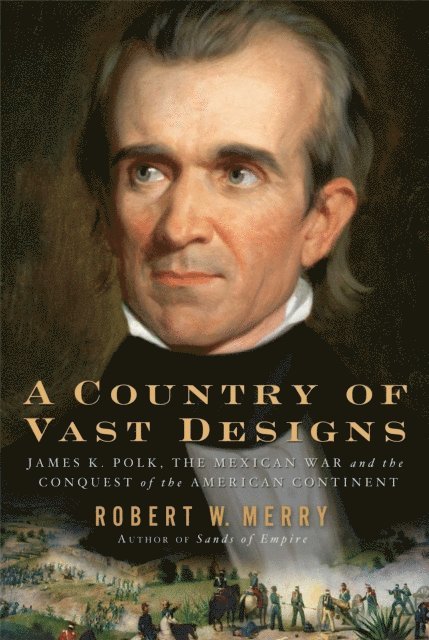
President James K. Polk, often overlooked yet ever-consequential, comes to life in this “compelling, perceptive” (The Wall Street Journal) biography of the 11th President of the United States, Andrew Jackson’s protégé, and champion of “manifest destiny.”When James K. Polk was elected president in 1844, the United States was locked in a bitter diplomatic struggle with Britain over which country would inherit the rich lands of the Oregon Territory. Texas, not yet part of the Union, was beset by hostile pressures from a more powerful Mexico. The great lands west of Texas—including what would become California, Nevada, Utah, Arizona, and New Mexico—belonged to Mexico. Four years later, when Polk relinquished power, the country had grown by half. Oregon belonged to the United States, as did Texas and all the lands to the west stretching to the Pacific. In bringing this about, Polk expended huge quantities of political capital through bold and often divisive decision making. This is the dramatic narrative of that grand national ambition that went by the name of Manifest Destiny—the idea that it was America''s fate to emerge as the greatest power of the Americas, with consolidated territory that stretched from sea to sea and with a capacity to project influence forcefully toward both Europe and Asia. This national dream and ambition turned out to be bigger than any man or any party or ideological outlook that took its place in the national debates of the time. Told through the towering figures of that time—such as the outgoing president John Tyler and Polk''s great mentor, Andrew Jackson—A Country of Vast Designs captures the enormity of this national dream and provides profound insight into this era in America''s history.
Häftad, Engelska, 2013
248 kr
Skickas inom 3-6 vardagar
E-bok
Engelska, 2012182 kr
Läs direkt efter köp
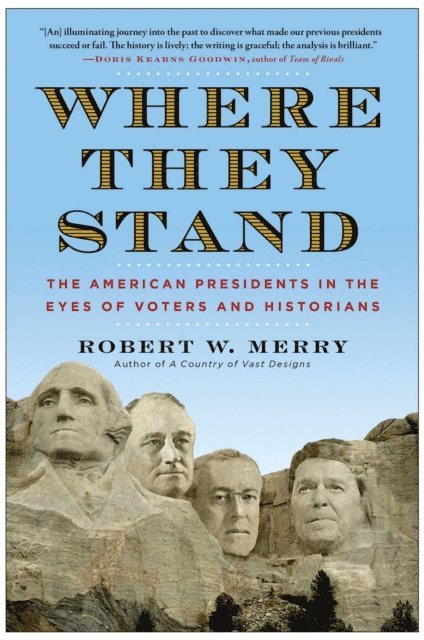
The author of the acclaimed biography of President James Polk, A Country of Vast Designs, offers a fresh, playful, and challenging way of playing “Rating the Presidents,” by pitching historians’ views and subsequent experts’ polls against the judgment and votes of the presidents’ own contemporaries. Merry posits that presidents rise and fall based on performance, as judged by the electorate. Thus, he explores the presidency by comparing the judgments of historians with how the voters saw things. Was the president reelected? If so, did his party hold office in the next election? Where They Stand examines the chief executives Merry calls “Men of Destiny,’’ those who set the country toward new directions. There are six of them, including the three nearly always at the top of all academic polls—Lincoln, Washington, and FDR. He describes the “Split-Decision Presidents’’ (including Wilson and Nixon)—successful in their first terms and reelected; less successful in their second terms and succeeded by the opposition party. He describes the “Near Greats’’ (Jefferson, Jackson, Polk, TR, Truman), the “War Presidents’’ (Madison, McKinley, Lyndon Johnson), the flat-out failures (Buchanan, Pierce), and those whose standing has fluctuated (Grant, Cleveland, Eisenhower). This voyage through our history provides a probing and provocative analysis of how presidential politics works and how the country sets its course. Where They Stand invites readers to pitch their opinions against the voters of old, the historians, the pollsters—and against the author himself. In this year of raucous presidential politics, Where They Stand will provide a context for the unfolding campaign drama.
Häftad, Engelska, 2018
294 kr
Skickas inom 3-6 vardagar
E-bok
Engelska, 2017219 kr
Läs direkt efter köp
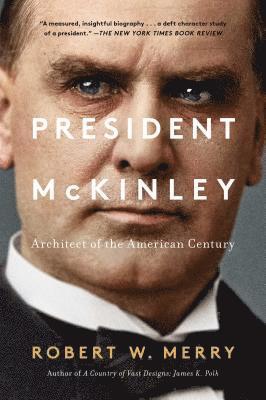
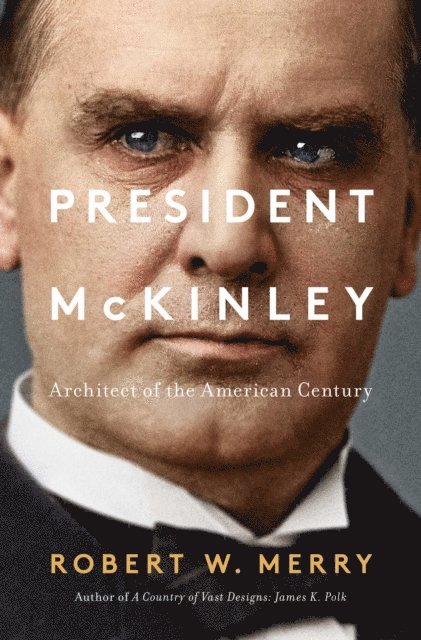
Acclaimed historian Robert Merry resurrects the presidential reputation of William McKinley in a “measured, insightful biography that seeks to set the record straight…a deft character study of a president” (The New York Times Book Review) whose low place in the presidential rankings does not reflect the stamp he put on America’s future role in the world.Republican President William McKinley transformed America during his two terms as president (1897 – 1901). Although he does not register large in either public memory or in historians’ rankings, in this revealing account, Robert W. Merry offers “a fresh twist on the old tale…a valuable education on where America has been and, possibly, where it is going” (The National Review). McKinley settled decades of monetary controversy by taking the country to a strict gold standard; in the Spanish-American war he kicked Spain out of the Caribbean and liberated Cuba from Spain; in the Pacific he acquired Hawaii and the Philippines; he developed the doctrine of “fair trade”; forced the “Open Door” to China; forged our “special relationship” with Great Britain. He expanded executive power and managed public opinion through his quiet manipulation of the press. McKinley paved the way for the bold and flamboyant leadership of his famous successor, Teddy Roosevelt, who built on his accomplishments (and got credit for them). Merry writes movingly about McKinley’s admirable personal life, from his simple Midwestern upbringing to his Civil War heroism to his brave comportment just moments before his death by assassination. “As this splendid revisionist narrative makes plain….The presidency is no job for a political amateur. Character counts, sometimes even more than charisma” (The Wall Street Journal). Lively, definitive, and eye-opening, President McKinley resurrects this overlooked president and places him squarely on the list of one of the most important.
359 kr
Skickas inom 3-6 vardagar
Ljudbok
Engelska, 2024440 kr
Lyssna direkt efter köp
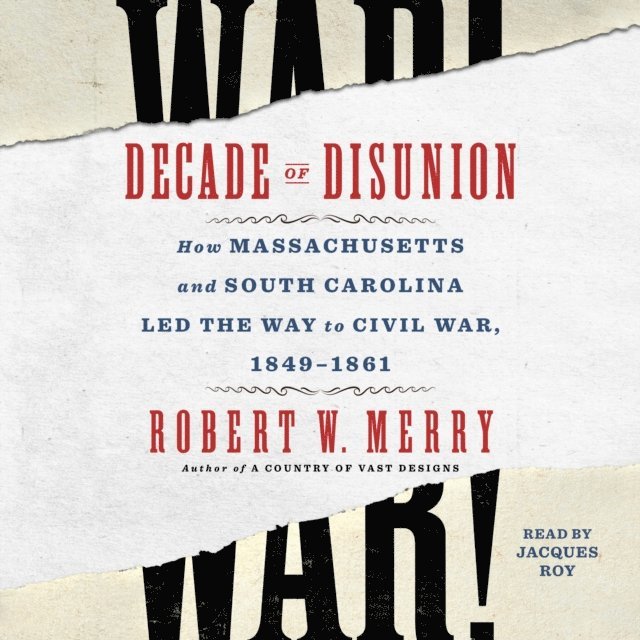
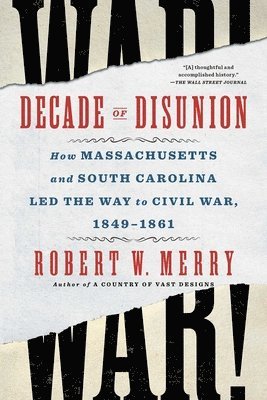
With “characteristic wisdom and grace” (Jon Meacham, Pulitzer Prize–winning author) Robert W. Merry explores a critical lesson about our nation that is as timely today as ever demonstrating how the country came apart during the enveloping slavery crisis of the 1850s.The Mexican War brought vast new territories to the United States, which precipitated a growing crisis over slavery. The new territories seemed unsuitable for the type of agriculture that depended on slave labor, but they lay south of the line where slavery was permitted by the 1820 Missouri Compromise. The subject of expanding slavery to the new territories became a flash point between the North and South. First came the 1850 compromise legislation, which strengthened the fugitive slave law and outraged the North. Then in 1854, Congress repealed the Missouri Compromise altogether, unleashing a violent conflict in “Bleeding Kansas” over whether that territory would become free or enslaved. The 1857 Dred Scott decision—abrogating any rights of African Americans, enslaved or free—further outraged the North. And John Brown’s ill-planned 1859 attack at the federal arsenal at Harpers Ferry stirred anger and fear throughout the South. Through a decade, the divide between the North and the South widened until disunion became inevitable. Then, in December 1860, in the wake of the Lincoln election, South Carolina finally seceded, leading the South of the Union. Beginning with the deaths of the great second-generation figures of American history—Calhoun, Webster, and Clay—Decade of Disunion tells the story of this great American struggle through the aims, fears, and maneuvers of the subsequent prominent figures at the center of the drama, with particular attention to the key players from Massachusetts and South Carolina. Decade of Disunion is a “thoughtful and accomplished” (The Wall Street Journal) look at one of the most tumultuous times of American history, offering us a sobering reminder that democracy is not self-sustaining—it must be constantly and carefully tended.
Häftad, Engelska, 2025
284 kr
Skickas inom 3-6 vardagar
E-bok
Engelska, 2024219 kr
Läs direkt efter köp
With “characteristic wisdom and grace” (Jon Meacham, Pulitzer Prize–winning author) Robert W. Merry explores a critical lesson about our nation that is as timely today as ever demonstrating how the country came apart during the enveloping slavery crisis of the 1850s.The Mexican War brought vast new territories to the United States, which precipitated a growing crisis over slavery. The new territories seemed unsuitable for the type of agriculture that depended on slave labor, but they lay south of the line where slavery was permitted by the 1820 Missouri Compromise. The subject of expanding slavery to the new territories became a flash point between the North and South. First came the 1850 compromise legislation, which strengthened the fugitive slave law and outraged the North. Then in 1854, Congress repealed the Missouri Compromise altogether, unleashing a violent conflict in “Bleeding Kansas” over whether that territory would become free or enslaved. The 1857 Dred Scott decision—abrogating any rights of African Americans, enslaved or free—further outraged the North. And John Brown’s ill-planned 1859 attack at the federal arsenal at Harpers Ferry stirred anger and fear throughout the South. Through a decade, the divide between the North and the South widened until disunion became inevitable. Then, in December 1860, in the wake of the Lincoln election, South Carolina finally seceded, leading the South of the Union. Beginning with the deaths of the great second-generation figures of American history—Calhoun, Webster, and Clay—Decade of Disunion tells the story of this great American struggle through the aims, fears, and maneuvers of the subsequent prominent figures at the center of the drama, with particular attention to the key players from Massachusetts and South Carolina. Decade of Disunion is a “thoughtful and accomplished” (The Wall Street Journal) look at one of the most tumultuous times of American history, offering us a sobering reminder that democracy is not self-sustaining—it must be constantly and carefully tended.