
Roberto M. Dainotto – författare
Visar alla böcker från författaren . Handla med fri frakt och snabb leverans.
5 produkter
5 produkter
Häftad, Engelska, 2007
387 kr
Skickas inom 5-8 vardagar
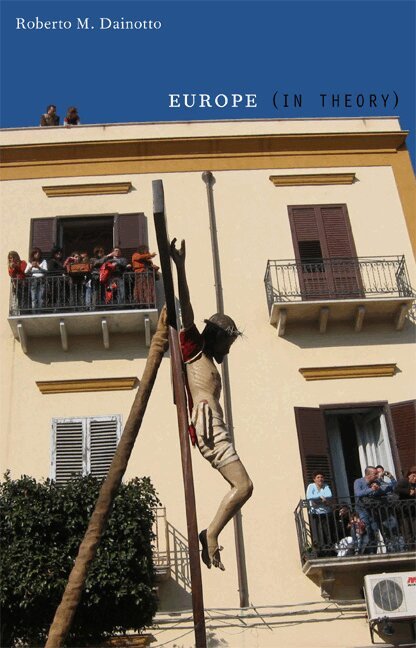
Europe (in Theory) is an innovative analysis of eighteenth- and nineteenth-century ideas about Europe that continue to inform thinking about culture, politics, and identity today. Drawing on insights from subaltern and postcolonial studies, Roberto M. Dainotto deconstructs imperialism not from the so-called periphery but from within Europe itself. He proposes a genealogy of Eurocentrism that accounts for the way modern theories of Europe have marginalized the continent’s own southern region, portraying countries including Greece, Italy, Spain, and Portugal as irrational, corrupt, and clan-based in comparison to the rational, civic-minded nations of northern Europe. Dainotto argues that beginning with Montesquieu’s The Spirit of Laws (1748), Europe not only defined itself against an “Oriental” other but also against elements within its own borders: its South. He locates the roots of Eurocentrism in this disavowal; internalizing the other made it possible to understand and explain Europe without reference to anything beyond its boundaries.Dainotto synthesizes a vast array of literary, philosophical, and historical works by authors from different parts of Europe. He scrutinizes theories that came to dominate thinking about the continent, including Montesquieu’s invention of Europe’s north-south divide, Hegel’s “two Europes,” and Madame de StaËl’s idea of opposing European literatures: a modern one from the North, and a pre-modern one from the South. At the same time, Dainotto brings to light counter-narratives written from Europe’s margins, such as the Spanish Jesuit Juan AndrÉs’s suggestion that the origins of modern European culture were eastern rather than northern and the Italian Orientalist Michele Amari’s assertion that the South was the cradle of a social democracy brought to Europe via Islam.
Inbunden, Engelska, 2020
1 768 kr
Skickas inom 5-8 vardagar
Antonio Gramsci's Prison Notebooks have offered concepts, categories, and political solutions that have been applied in a variety of social and political contexts, from postwar Italy to the insurgencies of the Arab Spring. The contributors to Gramsci in the World examine the diverse receptions and uses of Gramscian thought, highlighting its possibilities and limits for understanding and changing the world. Among other topics, they explore Gramsci's importance to Caribbean anticolonial thinkers like Stuart Hall, his presence in decolonial indigenous movements in the Andes, and his relevance to understanding the Chinese Left. The contributors consider why Gramsci has had relatively little impact in the United States while also showing how he was a major force in pushing Marxism beyond Europe-especially into the Arab world and other regions of the Global South. Rather than taking one interpretive position on Gramsci, the contributors demonstrate the ongoing relevance of his ideas to revolutionary theory and praxis.Contributors. Alberto Burgio, Cesare Casarino, Maria Elisa Cevasco, Kate Crehan, Roberto M. Dainotto, Michael Denning, Harry Harootunian, Fredric Jameson, R. A. Judy, Patrizia Manduchi, Andrea Scapolo, Peter D. Thomas, Catherine Walsh, Pu Wang, Cosimo Zene
Häftad, Engelska, 2020
422 kr
Skickas
Antonio Gramsci's Prison Notebooks have offered concepts, categories, and political solutions that have been applied in a variety of social and political contexts, from postwar Italy to the insurgencies of the Arab Spring. The contributors to Gramsci in the World examine the diverse receptions and uses of Gramscian thought, highlighting its possibilities and limits for understanding and changing the world. Among other topics, they explore Gramsci's importance to Caribbean anticolonial thinkers like Stuart Hall, his presence in decolonial indigenous movements in the Andes, and his relevance to understanding the Chinese Left. The contributors consider why Gramsci has had relatively little impact in the United States while also showing how he was a major force in pushing Marxism beyond Europe-especially into the Arab world and other regions of the Global South. Rather than taking one interpretive position on Gramsci, the contributors demonstrate the ongoing relevance of his ideas to revolutionary theory and praxis.Contributors. Alberto Burgio, Cesare Casarino, Maria Elisa Cevasco, Kate Crehan, Roberto M. Dainotto, Michael Denning, Harry Harootunian, Fredric Jameson, R. A. Judy, Patrizia Manduchi, Andrea Scapolo, Peter D. Thomas, Catherine Walsh, Pu Wang, Cosimo Zene
E-bok
PDF, Engelska, 2020636 kr
Läs direkt efter köp
Antonio Gramsci''s Prison Notebooks have offered concepts, categories, and political solutions that have been applied in a variety of social and political contexts, from postwar Italy to the insurgencies of the Arab Spring. The contributors to Gramsci in the World examine the diverse receptions and uses of Gramscian thought, highlighting its possibilities and limits for understanding and changing the world. Among other topics, they explore Gramsci''s importance to Caribbean anticolonial thinkers like Stuart Hall, his presence in decolonial indigenous movements in the Andes, and his relevance to understanding the Chinese Left. The contributors consider why Gramsci has had relatively little impact in the United States while also showing how he was a major force in pushing Marxism beyond Europe—especially into the Arab world and other regions of the Global South. Rather than taking one interpretive position on Gramsci, the contributors demonstrate the ongoing relevance of his ideas to revolutionary theory and praxis.Contributors. Alberto Burgio, Cesare Casarino, Maria Elisa Cevasco, Kate Crehan, Roberto M. Dainotto, Michael Denning, Harry Harootunian, Fredric Jameson, R. A. Judy, Patrizia Manduchi, Andrea Scapolo, Peter D. Thomas, Catherine Walsh, Pu Wang, Cosimo Zene
Häftad, Engelska, 2018
160 kr
Skickas
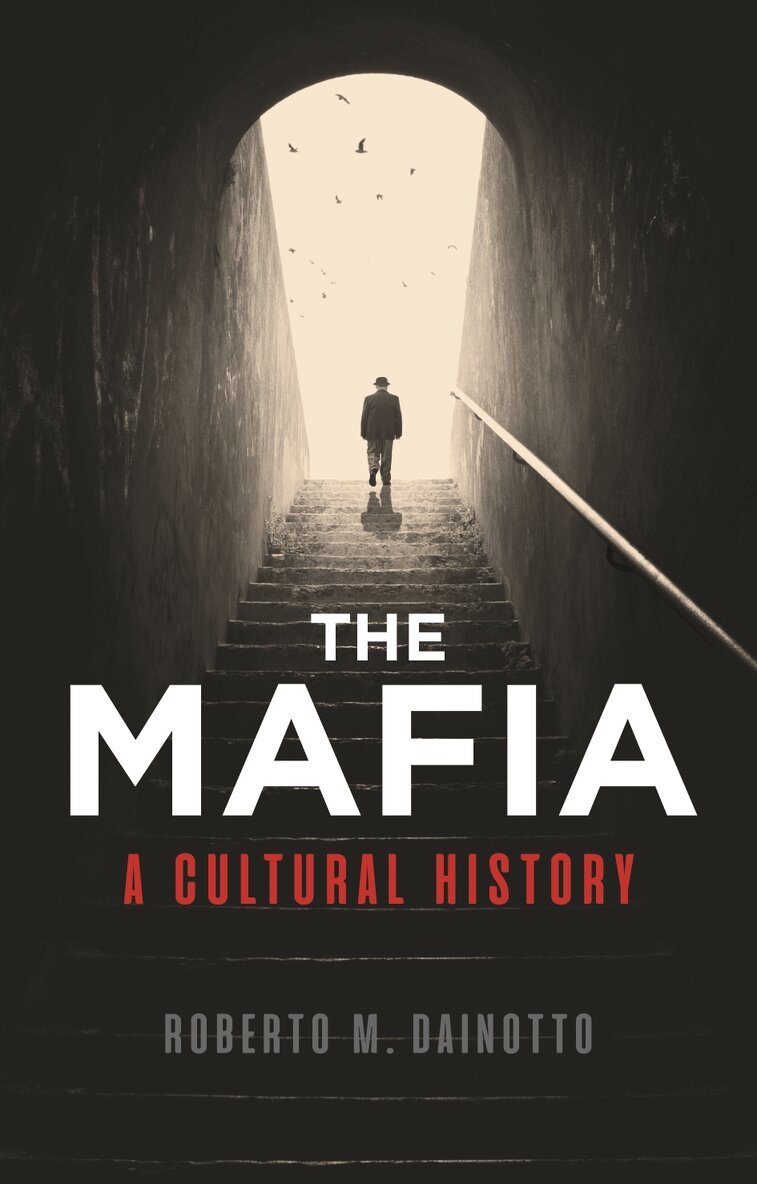
What makes Tony Soprano so likeable? Why would we rather leave the cannoli and take the gun? Do we truly want Scarface’s Tony Montana to succeed? Is Michael Corleone a misunderstood hero or a despicable villain?In The Mafia: A Cultural History, now available in paperback, Roberto M. Dainotto traces the complex and fascinating development of the mafia: its rural beginnings in Western Sicily; its growth into what has been aptly described as a global multinational of crime; and its parallel evolution in music, print and on the big screen. The book probes the tension between the real mafia – its brutal and often violent reality – and how we imagine it to be: a mythical assembly of codes of honour, family values and chivalric masochism. Rather than dismissing such mafia stereotypes as untrue, Dainotto sets out to understand what needs and desires, material and psychic longings, are satisfied by our mafia fantasies.Exploring the rich array of films, books, television, music and even video games portraying and inspired by the mafia, this book offers not only a social, economic and political history of the mafia but a new way of understanding our enduring fascination with what lurks behind the sinister omertà of the family business.