Robin Cooper – författare
From Perception to Communication
A Theory of Types for Action and Meaning
1 718 kr
Skickas inom 5-8 vardagar
151 kr
Skickas inom 5-8 vardagar
140 kr
Skickas inom 5-8 vardagar
44 kr
Läs direkt efter köp
Rita fell down the stairs at twenty-two minutes past midnight.''Robin Cooper, author of The Timewaster Letters, turns his hand to diary writing in this hilarious new novel. The year starts badly for Robin, who is fired for writing too many letters on company time, and for his wife Rita, who sprains her ankle (yet again). But Robin has a cunning plan - his marrying of the crossword and Sudoku into his devilish ''crossoku'' - which might just make their fortune...
44 kr
Läs direkt efter köp
''Even funnier than the funniest book I''ve read'' - Matt Lucas In his 2004 bestseller The Timewaster Letters, Robin Cooper plagued everyone from the Campaign for Courtesy to the British Halibut Association with his bizarre and surreal written requests. In Return of the Timewaster Letters, he delivers another wonderful collection of his polite, persistent and peculiar correspondence. Whether he is raising money for his nationwide hair-drying tour, booking a hotel room for his robot calf, or just trying to get rid of half a ton of unwanted herring, Robin''s imagination, as ever, knows no bounds . . .As featured in the The Timewaster Letters Compendium audiobook read by comedy giants, Dawn French, Peter Serafinowicz and Robert Popper.
232 kr
Skickas inom 7-10 vardagar
277 kr
Läs direkt efter köp
277 kr
Läs direkt efter köp
718 kr
Skickas inom 7-10 vardagar
1 071 kr
Läs direkt efter köp
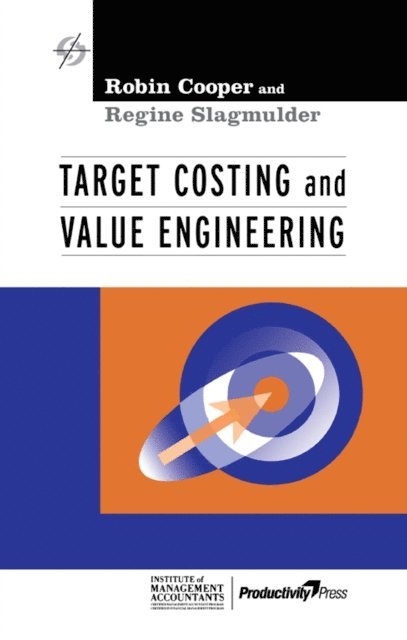
What would happen if everyone in your company followed a disciplined approach to cost reduction? Go ahead -- imagine it. What would it look like? How can it be done?The answer -- smart cost management.Effective cost management must start at the design stage. As much as 90-95% of a product''s costs are added in the design process. That is why effective cost management programs focus on design and manufacturing. The primary cost management method to control cost during design is a combination of target costing and value engineering.
Target Costing Objectives:
Identify the cost at which your product must be manufactured at if it is to earn its profit margin at its expected target selling price. Break the target cost down to its component level and have your suppliers find ways to deliver the components they sell you at the set target prices while still making adequate returns.Value Engineering:The connection to function: An organized effort and team based approach to analyze the functions of goods and services that the design stage, and find ways to achieve those functions in a manner that allows the firm to meet its target costs.The result: Added value for your company (development costs on-line with added value for your company; development costs on-line with selling prices) and added value for your customer (higher quality products that meet, possibly even exceed, customer expectations.)
1 071 kr
Läs direkt efter köp
What would happen if everyone in your company followed a disciplined approach to cost reduction? Go ahead -- imagine it. What would it look like? How can it be done?The answer -- smart cost management.Effective cost management must start at the design stage. As much as 90-95% of a product''s costs are added in the design process. That is why effective cost management programs focus on design and manufacturing. The primary cost management method to control cost during design is a combination of target costing and value engineering.
Target Costing Objectives:
Identify the cost at which your product must be manufactured at if it is to earn its profit margin at its expected target selling price. Break the target cost down to its component level and have your suppliers find ways to deliver the components they sell you at the set target prices while still making adequate returns.Value Engineering:The connection to function: An organized effort and team based approach to analyze the functions of goods and services that the design stage, and find ways to achieve those functions in a manner that allows the firm to meet its target costs.The result: Added value for your company (development costs on-line with added value for your company; development costs on-line with selling prices) and added value for your customer (higher quality products that meet, possibly even exceed, customer expectations.)
1 381 kr
Läs direkt efter köp
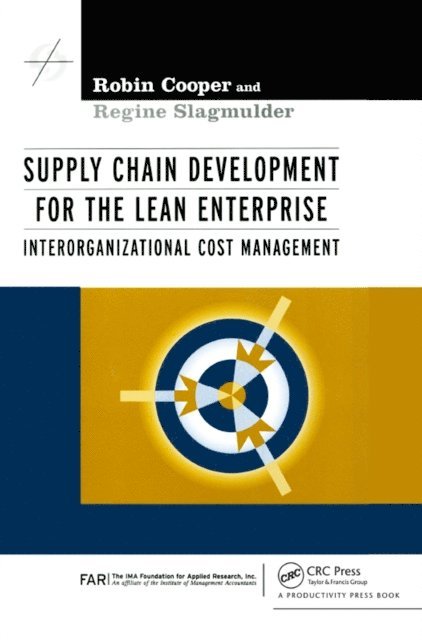
Four questions determine whether a company is using interorganizational cost management.
Does your firm set specific cost-reduction objectives for its suppliers? Does your firm help its customers and/or suppliers find ways to achieve their cost-education objectives? Does your firm take into account the profitability of its suppliers when negotiating component pricing with them? Is your firm continuously making its buyer-supplier interfaces more efficient?If the answer to any of these questions is ""no"", your firm risks introducing products that cost too much or are not competitive. The full potential of the supply network can be realized only when the entire supply chain adopts interorganizational cost management practices.
Competitive pressure has led many firms to try to increase the efficiency of supplier firms through interorganizational cost management systems, a structured approach to coordinating the activities of firms in a supplier network to reduce the total costs in the network.It is particularly important to lean enterprises for two reasons:
Lean enterprises typically outsource more of the added value of their products than their mass producer counterparts. Lean enterprises usually compete more aggressively and must manage costs more effectively.Interorganizational cost management can reduce costs in three ways: through product design, through product manufacture and through cooperative approaches between buyers and suppliers to build smoother interfaces.However, more than just cost management must cross interorganizational boundaries. Suppliers are also a major source of innovation for lean enterprises. Successful supplier networks encourage every firm in the network to innovate and compete more aggressively. Read this book to learn to manage the supply chain to forge competitive advantage while reducing costs.
1 381 kr
Läs direkt efter köp
Four questions determine whether a company is using interorganizational cost management.
Does your firm set specific cost-reduction objectives for its suppliers? Does your firm help its customers and/or suppliers find ways to achieve their cost-education objectives? Does your firm take into account the profitability of its suppliers when negotiating component pricing with them? Is your firm continuously making its buyer-supplier interfaces more efficient?If the answer to any of these questions is ""no"", your firm risks introducing products that cost too much or are not competitive. The full potential of the supply network can be realized only when the entire supply chain adopts interorganizational cost management practices.
Competitive pressure has led many firms to try to increase the efficiency of supplier firms through interorganizational cost management systems, a structured approach to coordinating the activities of firms in a supplier network to reduce the total costs in the network.It is particularly important to lean enterprises for two reasons:
Lean enterprises typically outsource more of the added value of their products than their mass producer counterparts. Lean enterprises usually compete more aggressively and must manage costs more effectively.Interorganizational cost management can reduce costs in three ways: through product design, through product manufacture and through cooperative approaches between buyers and suppliers to build smoother interfaces.However, more than just cost management must cross interorganizational boundaries. Suppliers are also a major source of innovation for lean enterprises. Successful supplier networks encourage every firm in the network to innovate and compete more aggressively. Read this book to learn to manage the supply chain to forge competitive advantage while reducing costs.
985 kr
Skickas inom 10-15 vardagar
1 216 kr
Skickas inom 10-15 vardagar
536 kr
Skickas inom 5-8 vardagar
986 kr
Skickas inom 5-8 vardagar
385 kr
Läs direkt efter köp
575 kr
Läs direkt efter köp
87 kr
Skickas inom 5-8 vardagar
63 kr
Läs direkt efter köp
271 kr
Skickas inom 5-8 vardagar
344 kr
Tillfälligt slut
382 kr
Tillfälligt slut
612 kr
Tillfälligt slut
315 kr
Tillfälligt slut