Robin Douglas – författare
Visar alla böcker från författaren Robin Douglas. Handla med fri frakt och snabb leverans.
4 produkter
4 produkter
1 018 kr
Kommande
This book is a unique documentary history of the religious tradition known as contemporary Paganism. It covers the period from around 1700 to 1950, with an emphasis on developments in Great Britain.Through the medium of pertinent texts accompanied by narrative and commentary, it seeks to explain and illustrate how this fascinating tradition was conceived and how it evolved over time. It takes in the various twists and turns in the story, from the first stirrings of revival in the Enlightenment years, via Romantic poets and Victorian occultists, to the Woodcraft and witchcraft movements of the twentieth century.Some of the texts that are reproduced are well-known and familiar, while others are being made widely available for the first time.The story of how Pagan religious traditions came be revived in the modern world has been told many times, but the scholarship has tended to focus disproportionately on developments in the twentieth and twenty-first centuries. In particular, researchers have tended to focus on the decades after 1950, when Gerald Gardner and his followers were publicizing the witch religion of Wicca and the work of Aleister Crowley underwent a rediscovery.The Pagan Revival is a valuable resource for academics and students in the fields of Pagan studies, cultural history and the history of ideas. It will also be of interest to general readers who are curious about this absorbing chapter of modern religious history.
370 kr
Kommande
1 227 kr
Skickas
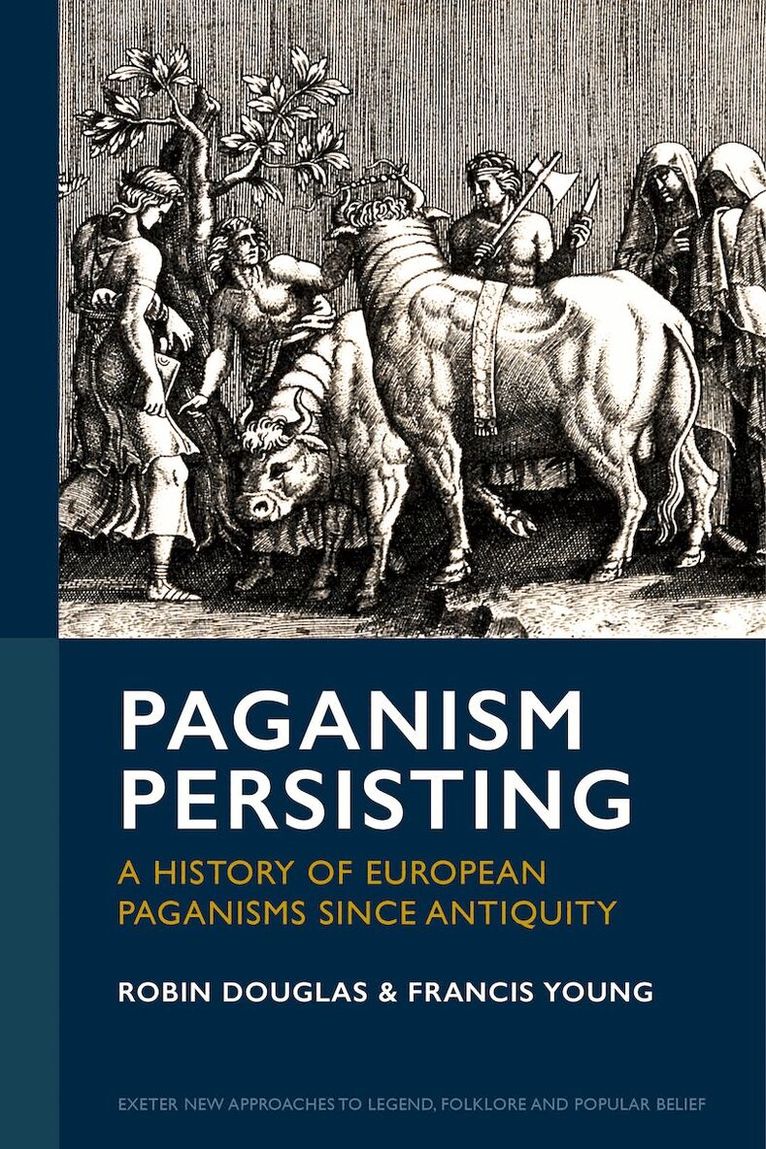
Paganism in Europe was not defeated by Christianity: it never went away. From the fourth century to the twentieth, against the background of a largely Christian culture, people repeatedly attempted to revive various kinds of pre-Christian religion – beliefs and practices that we have come to label as ‘paganism’.Ancient paganism did not survive the Middle Ages in its original form; this book tells the story of the persistence of elements of paganism and the pagan idea through Europe’s pagan revivals, from Byzantine Greece to medieval Eastern Europe and Renaissance Florence, from eighteenth-century Norwich to revolutionary Paris and Edwardian England. While some of these revivals are well known and others are almost entirely forgotten, they all reveal the rich diversity of interpretations of paganism – and how those interpretations have been conditioned by the surrounding culture.Revived paganisms ranged from the austerely rational to the earnestly romantic, from the mystical and occult to the stridently nationalistic. Paganism Persisting uncovers European paganism’s long afterlife, up to and including the emergence of modern paganism as a mass movement in the twentieth century. The authors are both historians of religion specializing, respectively, in the intellectual history of the idea of paganism and in the development of popular religion and folklore. This book has much to offer to anyone interested in European cultural history, the history of ideas and religious studies.
448 kr
Skickas inom 5-8 vardagar
Paganism in Europe was not defeated by Christianity: it never went away. From the fourth century to the twentieth, against the background of a largely Christian culture, people repeatedly attempted to revive various kinds of pre-Christian religion – beliefs and practices that we have come to label as ‘paganism’.Ancient paganism did not survive the Middle Ages in its original form; this book tells the story of the persistence of elements of paganism and the pagan idea through Europe’s pagan revivals, from Byzantine Greece to medieval Eastern Europe and Renaissance Florence, from eighteenth-century Norwich to revolutionary Paris and Edwardian England. While some of these revivals are well known and others are almost entirely forgotten, they all reveal the rich diversity of interpretations of paganism – and how those interpretations have been conditioned by the surrounding culture.Revived paganisms ranged from the austerely rational to the earnestly romantic, from the mystical and occult to the stridently nationalistic. Paganism Persisting uncovers European paganism’s long afterlife, up to and including the emergence of modern paganism as a mass movement in the twentieth century. The authors are both historians of religion specializing, respectively, in the intellectual history of the idea of paganism and in the development of popular religion and folklore. This book has much to offer to anyone interested in European cultural history, the history of ideas and religious studies.