Robin Piper – författare
Visar alla böcker från författaren Robin Piper. Handla med fri frakt och snabb leverans.
8 produkter
8 produkter
Inbunden, Engelska, 2019
1 845 kr
Skickas inom 10-15 vardagar
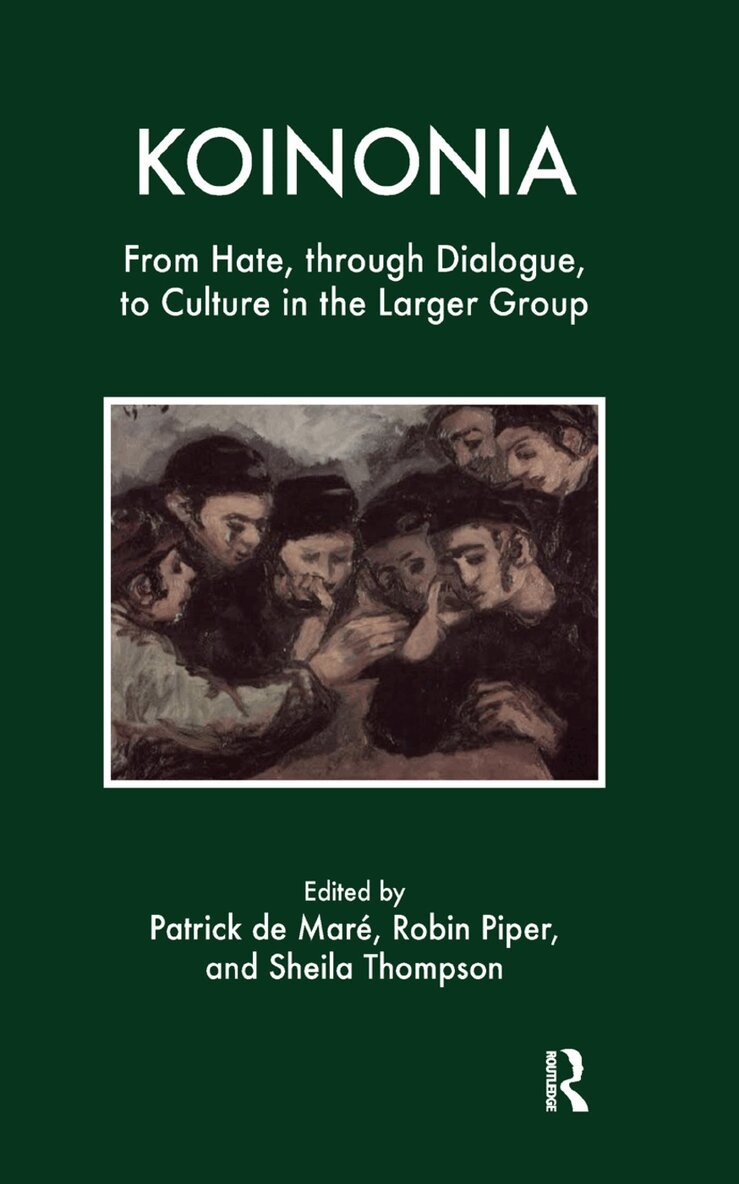
A study of the larger group, focusing on the processes and dynamics whereby the group micro-culture emerges. As the initial frustrations of the group find expression in hate, this is transformed through dialogue to what the Greeks knew as 'koinonia', or the state of impersonal fellowship. Essentially, Koinonia concerns itself with an opera
E-bok
PDF, Engelska, 2018869 kr
Läs direkt efter köp
A study of the larger group, focusing on the processes and dynamics whereby the group micro-culture emerges. As the initial frustrations of the group find expression in hate, this is transformed through dialogue to what the Greeks knew as ‘koinonia’, or the state of impersonal fellowship. Essentially, Koinonia concerns itself with an operational approach to dialogue, culture and the human mind through the medium of a larger group context, and adopts a direction similar in many ways to the groupanalytic method of S. H. Foulkes. In attempting to link the most intimate aspect of individual beings naturally and spontaneously in the socio-cultural setting of the larger group, by the very nature of its size, offers a structure or medium for linking inner world with cultural context, and is thus able to establish a unique dimension – that of the micro-culture. Until now neither psychoanalysis nor small groups have been able to handle this aspect empirically, since, in the former, the analyst represents the assumed culture, while in the small group situation the hierarchy of the family culture inevitably prevails. The larger group displays the other side of the coin to the inner world, namely the socio-cultural dimension in which interpersonal relationships take place. The exploration of this field shows how objects, including part objects of the mind, can be related to systems and structures in a manner not previously attempted, and raises the vexed question of the relationship of systems to structures and of culture to social context. In this study of the larger group, particular attention is paid to the processes and dynamics whereby the group micro-culture emerges, as the initial frustrations of the group find their expression through hate; as hate initiates, and is transformed by, dialogue; and as dialogue ultimately establishes what the Greeks knew as ‘koinonia’, or the state of impersonal fellowship.
E-bok
Engelska, 2018869 kr
Läs direkt efter köp
A study of the larger group, focusing on the processes and dynamics whereby the group micro-culture emerges. As the initial frustrations of the group find expression in hate, this is transformed through dialogue to what the Greeks knew as ‘koinonia’, or the state of impersonal fellowship. Essentially, Koinonia concerns itself with an operational approach to dialogue, culture and the human mind through the medium of a larger group context, and adopts a direction similar in many ways to the groupanalytic method of S. H. Foulkes. In attempting to link the most intimate aspect of individual beings naturally and spontaneously in the socio-cultural setting of the larger group, by the very nature of its size, offers a structure or medium for linking inner world with cultural context, and is thus able to establish a unique dimension – that of the micro-culture. Until now neither psychoanalysis nor small groups have been able to handle this aspect empirically, since, in the former, the analyst represents the assumed culture, while in the small group situation the hierarchy of the family culture inevitably prevails. The larger group displays the other side of the coin to the inner world, namely the socio-cultural dimension in which interpersonal relationships take place. The exploration of this field shows how objects, including part objects of the mind, can be related to systems and structures in a manner not previously attempted, and raises the vexed question of the relationship of systems to structures and of culture to social context. In this study of the larger group, particular attention is paid to the processes and dynamics whereby the group micro-culture emerges, as the initial frustrations of the group find their expression through hate; as hate initiates, and is transformed by, dialogue; and as dialogue ultimately establishes what the Greeks knew as ‘koinonia’, or the state of impersonal fellowship.
Häftad, Engelska, 1991
715 kr
Skickas inom 10-15 vardagar
A study of the larger group, focusing on the processes and dynamics whereby the group micro-culture emerges. As the initial frustrations of the group find expression in hate, this is transformed through dialogue to what the Greeks knew as 'koinonia', or the state of impersonal fellowship.Essentially, Koinonia concerns itself with an operational approach to dialogue, culture and the human mind through the medium of a larger group context, and adopts a direction similar in many ways to the group-analytic method of S.H. Foulkes. In attempting to link the most intimate aspect of individual beings naturally and spontaneously in the socio-cultural setting of the larger group, by the very nature of its size, offers a structure or medium for linking inner world with cultural context, and is thus able to establish a unique dimension-that of the micro-culture. Until now neither psychoanalysis nor small groups have been able to handle this aspect empirically, since, in the former, the analyst represents the assumed culture, while in the small group situation the hierarchy of the family culture inevitably prevails. The larger group displays the other side of the coin to the inner world, namely the socio-cultural dimension in which interpersonal relationships take place. The exploration of this field shows how objects, including part objects of the mind, can be related to systems and structures in a manner not previously attempted, and raises the vexed question of the relationship of systems to structures and of culture to social context.In this study of the larger group, particular attention is paid to the processes and dynamics whereby the group micro-culture emerges, as the initial frustrations of the group find their expression through hate; as hate initiates, and is transformed by, dialogue; and as dialogue ultimately establishes what the Greeks knew as 'koinonia', or the state of impersonal fellowship.
Inbunden, Engelska, 2022
1 678 kr
Skickas inom 5-8 vardagar
Häftad, Tyska, 2024
386 kr
Skickas inom 3-6 vardagar
E-bok
PDF, Tyska, 2024306 kr
Läs direkt efter köp
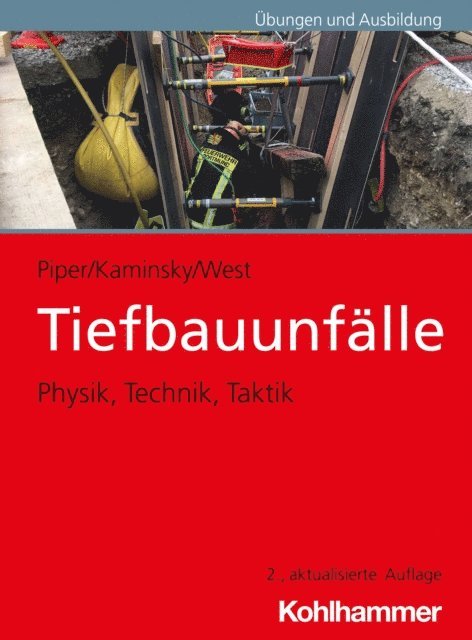
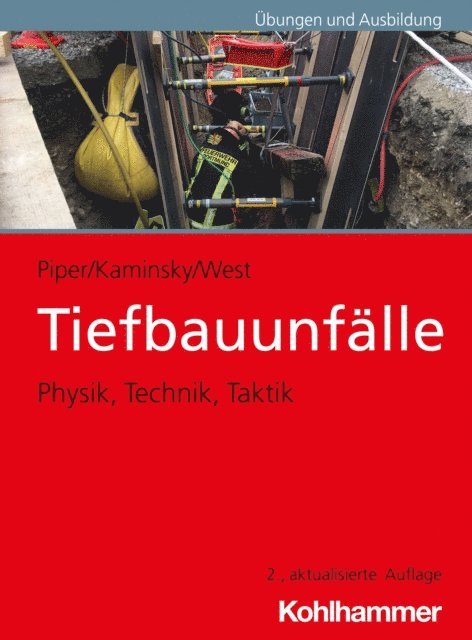
Unfälle im Bereich von Baugruben und Gräben bedeuten für Einsatzkräfte eine Vielzahl von Herausforderungen bei zugleich fehlender Routine und Erfahrung. Die Autoren erörtern Hintergründe und Besonderheiten und zeigen der Leserschaft technische und taktische Lösungsansätze zum Befreien von verschütteten Personen auf. Leicht verständlich werden Rettungskräfte auf die unterschiedlichen Szenarien eines Tiefbauunfalls vorbereitet. Zahlreiche Abbildungen sowie Tipps aus der Praxis helfen bei der Umsetzung im eigenen Einsatzbereich; in der zweiten Auflage dieses Buches erfolgt zudem erstmalig auch eine ingenieurstechnische Betrachtung des Rettungsverbaus als Stand der Technik zur Menschenrettung.
E-bok
Tyska, 2024306 kr
Läs direkt efter köp
Unfälle im Bereich von Baugruben und Gräben bedeuten für Einsatzkräfte eine Vielzahl von Herausforderungen bei zugleich fehlender Routine und Erfahrung. Die Autoren erörtern Hintergründe und Besonderheiten und zeigen der Leserschaft technische und taktische Lösungsansätze zum Befreien von verschütteten Personen auf. Leicht verständlich werden Rettungskräfte auf die unterschiedlichen Szenarien eines Tiefbauunfalls vorbereitet. Zahlreiche Abbildungen sowie Tipps aus der Praxis helfen bei der Umsetzung im eigenen Einsatzbereich; in der zweiten Auflage dieses Buches erfolgt zudem erstmalig auch eine ingenieurstechnische Betrachtung des Rettungsverbaus als Stand der Technik zur Menschenrettung.