Rodney Stark – författare
172 kr
Skickas inom 5-8 vardagar
161 kr
Skickas inom 5-8 vardagar
172 kr
Skickas inom 5-8 vardagar
138 kr
Skickas inom 5-8 vardagar
100 kr
Läs direkt efter köp
90 kr
Läs direkt efter köp
113 kr
Läs direkt efter köp
150 kr
Skickas inom 5-8 vardagar
101 kr
Läs direkt efter köp
1 036 kr
Skickas inom 3-6 vardagar
834 kr
Läs direkt efter köp
Will Mormonism be the next world faith, one that will rival Catholicism, Islam, and other major religions in terms of numbers and global appeal? This was the question Rodney Stark addressed in his much-discussed and much-debated article, "The Rise of a New World Faith" (1984), one of several essays on Mormonism included in this new collection. Examining the religion''s growing appeal, Rodney Stark concluded that Mormons could number 267 million members by 2080. In what would become known as "the Stark argument," Stark suggested that the Mormon Church offered contemporary sociologists and historians of religion an opportunity to observe a rare event: the birth of a new world religion.In the years following that article, Stark has become one of the foremost scholars of Mormonism and the sociology of religion. This new work, the first to collect his influential writings on the Mormon Church, includes previously published essays, revised and rewritten for this volume. His work sheds light on both the growth of Mormonism and on how and why certain religions continue to grow while others fade away. Stark examines the reasons behind the spread of Mormonism, exploring such factors as cultural continuity with the faiths from which it seeks converts, a volunteer missionary force, and birth rates. He explains why a demanding faith like Mormonism has such broad appeal in today''s world and considers the importance of social networks in finding new converts. Stark''s work also presents groundbreaking perspectives on larger issues in the study of religion, including the nature of revelation and the reasons for religious growth in an age of modernization and secularization.
191 kr
Skickas
140 kr
Skickas
2 416 kr
Skickas inom 10-15 vardagar
889 kr
Skickas inom 10-15 vardagar
388 kr
Skickas inom 5-8 vardagar
351 kr
Skickas inom 5-8 vardagar
269 kr
Skickas inom 5-8 vardagar
589 kr
Läs direkt efter köp
453 kr
Läs direkt efter köp
453 kr
Läs direkt efter köp
745 kr
Skickas inom 5-8 vardagar
417 kr
Skickas inom 5-8 vardagar
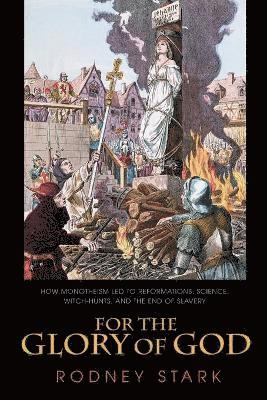
For the Glory of God
How Monotheism Led to Reformations, Science, Witch-Hunts, and the End of Slavery
376 kr
Skickas inom 5-8 vardagar
580 kr
Läs direkt efter köp
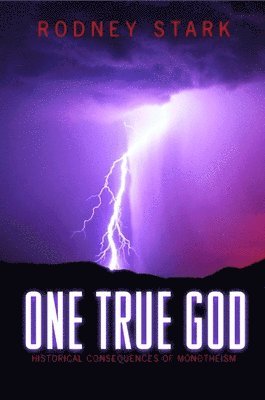
Western history would be unrecognizable had it not been for people who believed in One True God. There would have been wars, but no religious wars. There would have been moral codes, but no Commandments. Had the Jews been polytheists, they would today be only another barely remembered people, less important, but just as extinct as the Babylonians. Had Christians presented Jesus to the Greco-Roman world as ''''another'''' God, their faith would long since have gone the way of Mithraism. And surely Islam would never have made it out of the desert had Muhammad not removed Allah from the context of Arab paganism and proclaimed him as the only God. The three great monotheisms changed everything. With his customary clarity and vigor, Rodney Stark explains how and why monotheism has such immense power both to unite and to divide. Why and how did Jews, Christians, and Muslims missionize, and when and why did their efforts falter? Why did both Christianity and Islam suddenly become less tolerant of Jews late in the eleventh century, prompting outbursts of mass murder? Why were the Jewish massacres by Christians concentrated in the cities along the Rhine River, and why did the pogroms by Muslims take place mainly in Granada? How could the Jews persist so long as a minority faith, able to withstand intense pressures to convert? Why did they sometimes assimilate? In the final chapter, Stark also examines the American experience to show that it is possible for committed monotheists to sustain norms of civility toward one another. A sweeping social history of religion, One True God shows how the great monotheisms shaped the past and created the modern world.
249 kr
Läs direkt efter köp
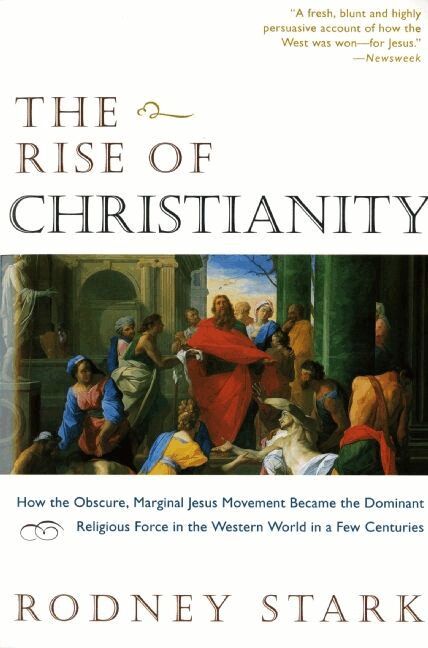
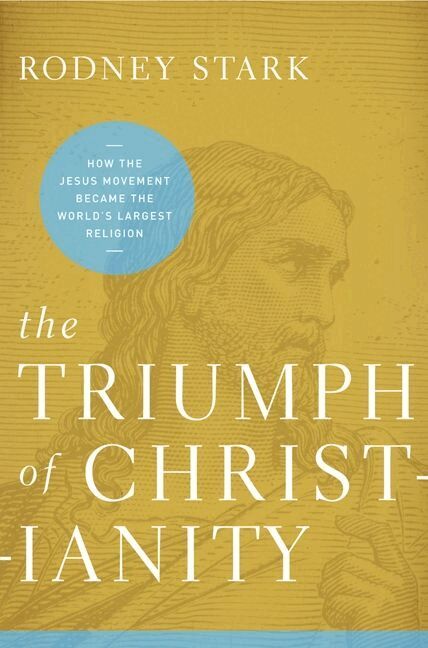
A landmark reinterpretation of why Christianity became the dominant faith of the WestThe idea that Christianity started as a clandestine movement among the poor is a widely accepted notion. Yet it is one of many myths that must be discarded if we are to understand just how a tiny messianic movement on the edge of the Roman Empire became the dominant faith of Western civilization. In a fast-paced, highly readable book that addresses beliefs as well as historical facts, Rodney Stark brings a sociologist''s perspective to bear on the puzzle behind the success of early Christianity. He comes equipped not only with the logic and methods of social science but also with insights gathered firsthand into why people convert and how new religious groups recruit members. He digs deep into the historical evidence on many issues—such as the social background of converts, the mission to the Jews, the status of women in the church, the role of martyrdom—to provide a vivid and unconventional account of early Christianity.The author plots the most plausible curve of Christian growth from the year 40 to 300. By the time of Constantine, Christianity had become a considerable force, with growth patterns very similar to those of modern-day successful religious movements. An unusual number of Christian converts, for example, came from the educated, cosmopolitan classes. Because it offered a new perspective on familiar concepts and was not linked to ethnicity, Christianity had a large following among persons seeking to assimilate into the dominant culture, mainly Hellenized Jews. The oversupply of women in Christian communities—due partly to the respect and protection they received—led to intermarriages with pagans, hence more conversions, and to a high fertility rate. Stark points out, too, the role played by selflessness and faith. Amidst the epidemics, fires, and other disasters that beleaguered Greco-Roman cities, Christian communities were a stronghold of mutual aid, which resulted in a survival rate far greater than that of the pagans. In the meantime, voluntary martyrdom, especially a generation after the death of Christ, reinforced the commitment of the Christian rank and file. What Stark ultimately offers is a multifaceted portrait of early Christianity, one that appeals to practical reasoning, historical curiosity, and personal reflection.
231 kr
Skickas inom 5-8 vardagar
553 kr
Skickas inom 5-8 vardagar
401 kr
Skickas inom 5-8 vardagar
441 kr
Skickas inom 5-8 vardagar