Roger D. Sell – författare
Visar alla böcker från författaren Roger D. Sell. Handla med fri frakt och snabb leverans.
11 produkter
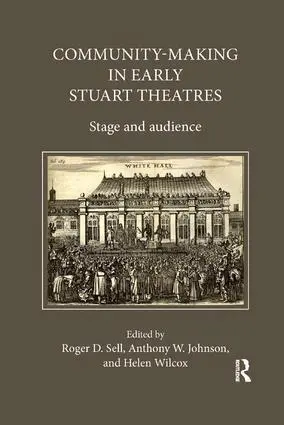
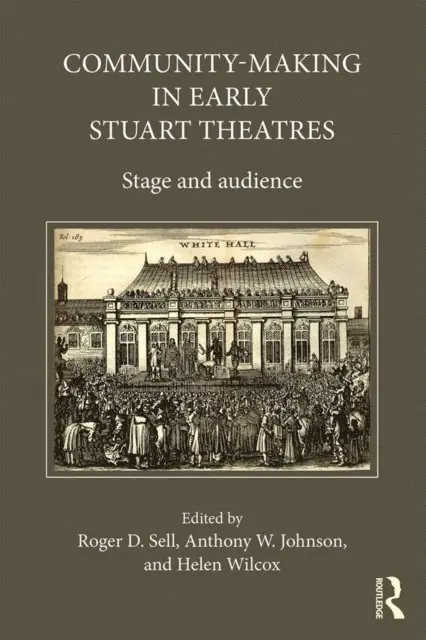
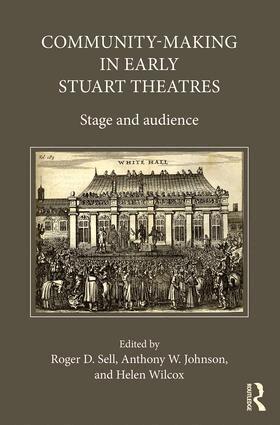
Community-Making in Early Stuart Theatres
Stage and audience
Av Anthony W. Johnson, Roger D. Sell m. fl.
Häftad, 2019
877 kr
Lägg i varukorg
Twenty-two leading experts on early modern drama collaborate in this volumeto explore three closely interconnected research questions. To what extent didplaywrights represent dramatis personae in their entertainments as forming, orfailing to form, communal groupings? How far were theatrical …
Writing and Religion in England, 1558-1689
Studies in Community-Making and Cultural Memory
Av Anthony W. Johnson, Roger D. Sell
Inbunden, 2010
2886 kr
Lägg i varukorg
The fruit of intensive collaboration among leading international specialists on the literature, religion and culture of early modern England, this volume examines the relationship between writing and religion in England from 1558, the year of the Elizabethan Settlement, up until the Act of …
Writing and Religion in England, 1558-1689
Studies in Community-Making and Cultural Memory
Av Anthony W. Johnson, Roger D. Sell
E-bok, 2016
935 kr
Lägg i varukorg
The fruit of intensive collaboration among leading international specialists on the literature, religion and culture of early modern England, this volume examines the relationship between writing and religion in England from 1558, the year of the Elizabethan Settlement, up until the Act of …
Writing and Religion in England, 1558-1689
Studies in Community-Making and Cultural Memory
Av Anthony W. Johnson, Roger D. Sell
E-bok, 2016
956 kr
Lägg i varukorg
The fruit of intensive collaboration among leading international specialists on the literature, religion and culture of early modern England, this volume examines the relationship between writing and religion in England from 1558, the year of the Elizabethan Settlement, up until the Act of …
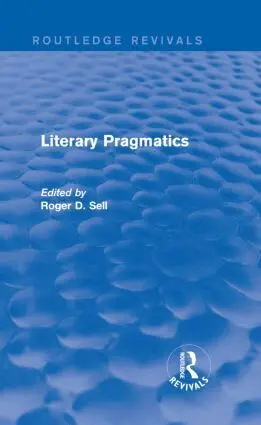
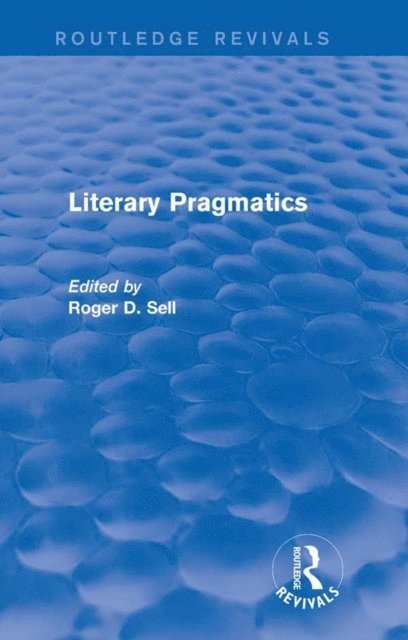
Literary Pragmatics (Routledge Revivals)
Inbunden, 2014
2590 kr
Lägg i varukorg
Up until the mid-1980s most pragmatic analysis had been done on spoken language use, considerably less on written use, and very little at all on literary activity. This has now radically changed. ‘Pragmatics’ could be informally defined as the study of relationships between language and its users. …
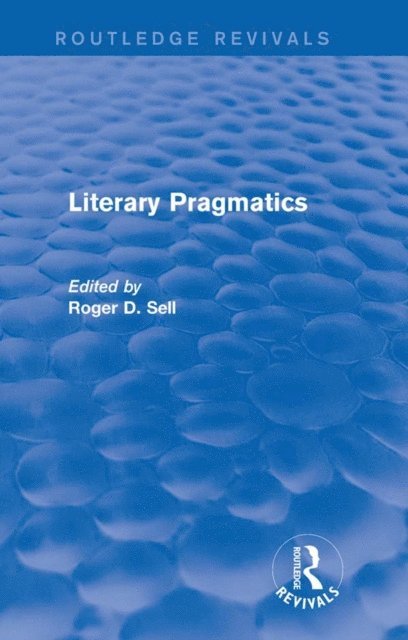
Literary Pragmatics (Routledge Revivals)
Häftad, 2016
668 kr
Lägg i varukorg
Up until the mid-1980s most pragmatic analysis had been done on spoken language use, considerably less on written use, and very little at all on literary activity. This has now radically changed. ‘Pragmatics’ could be informally defined as the study of relationships between language and its users. …
Community-Making in Early Stuart Theatres
Stage and audience
Av Helen Wilcox, Roger D. Sell m. fl.
E-bok, 2016
1036 kr
Lägg i varukorg
Twenty-two leading experts on early modern drama collaborate in this volume to explore three closely interconnected research questions. To what extent did playwrights represent dramatis personae in their entertainments as forming, or failing to form, communal groupings? How far were theatrical …
Community-Making in Early Stuart Theatres
Stage and audience
Av Helen Wilcox, Roger D. Sell m. fl.
E-bok, 2016
1013 kr
Lägg i varukorg
Twenty-two leading experts on early modern drama collaborate in this volume to explore three closely interconnected research questions. To what extent did playwrights represent dramatis personae in their entertainments as forming, or failing to form, communal groupings? How far were theatrical …
Literary Pragmatics (Routledge Revivals)
E-bok, 2014
876 kr
Lägg i varukorg
Up until the mid-1980s most pragmatic analysis had been done on spoken language use, considerably less on written use, and very little at all on literary activity. This has now radically changed. ‘Pragmatics’ could be informally defined as the study of relationships between language and its users. …
Literary Pragmatics (Routledge Revivals)
E-bok, 2014
857 kr
Lägg i varukorg
Up until the mid-1980s most pragmatic analysis had been done on spoken language use, considerably less on written use, and very little at all on literary activity. This has now radically changed. ‘Pragmatics’ could be informally defined as the study of relationships between language and its users. …
Community-Making in Early Stuart Theatres
Stage and audience
Av Anthony W. Johnson, Roger D. Sell m. fl.
Inbunden, 2016
2893 kr
Lägg i varukorg
Twenty-two leading experts on early modern drama collaborate in this volumeto explore three closely interconnected research questions. To what extent didplaywrights represent dramatis personae in their entertainments as forming, orfailing to form, communal groupings? How far were theatrical …