Roghieh Hajiboland – författare
Visar alla böcker från författaren Roghieh Hajiboland. Handla med fri frakt och snabb leverans.
3 produkter
3 produkter
Inbunden, Engelska, 2027
2 637 kr
Kommande
Essential and Non-essential Metals in Plants: Deficiency, Phytotoxicity, and Tolerance offers a comprehensive exploration of the critical roles that metals play in plant health and agriculture. This book delves into the physiological functions of essential metals like iron, zinc, copper, and manganese, and examines the harmful effects of non-essential metals such as cadmium, lead, and arsenic. Each chapter focuses on a specific metal, detailing its importance in plant growth, the impact of its deficiency, and the toxic consequences of its excess.The book addresses the growing concerns of metal deficiencies in modern agriculture, especially in the face of climate change and soil degradation. It also covers broader themes, including the mechanisms of metal uptake and transport within plants, the role of microbial interactions in enhancing metal availability, and the potential of phytoremediation to mitigate metal toxicity in contaminated soils.By integrating insights from molecular biology, environmental science, and agronomy, this book bridges the gap between fundamental research and practical applications. It is an invaluable resource for researchers, educators, and practitioners aiming to develop effective nutrient management strategies, ultimately contributing to sustainable agricultural practices and food security. This book provides up-to-date information, practical insights, and innovative research, establishing itself as an essential guide in the field.
Inbunden, Engelska, 2024
2 371 kr
Skickas inom 10-15 vardagar
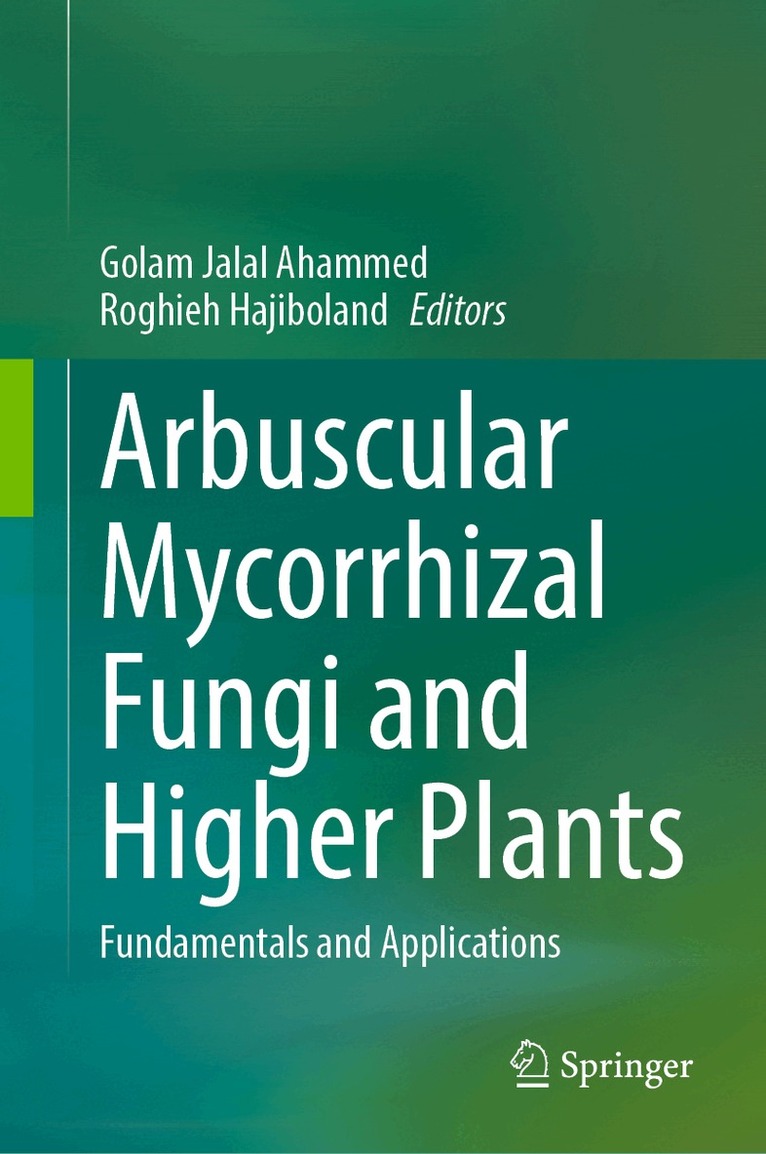
This book covers the fundamentals of arbuscular mycorrhizal fungi (AMF) and higher plant symbiosis with potential implications in crop production. It provides new insights into our understanding of the mechanisms of AMF-mediated plant growth regulation and stress tolerance covering the most recent biochemical, physiological, molecular, environmental, and ecological studies. Focusing on AMF-induced physiological and molecular mechanisms of enhanced tolerance to stress, environmental stress is discussed in several dedicated chapters. The book provides not only updated information with new insights and perspectives but also several new topics, such as a comprehensive discussion on biotic stressors, AMF interaction with other microorganisms, non-host plant species, plant secondary metabolism, signaling events in plant-AMF symbiosis, AMF-mediated nutrient acquisition and subsequent stress tolerance. The book also discusses the potential implications of AMF for sustainable crop production inthe context of climate change. The book can be a useful reference book for academics and scientists involved in related research, such as academics in agronomy and plant sciences, scientists involved in beneficial fungi research, chemists, industrialists, and employees involved in the production and marketing of biofertilizers, master and doctoral degree students of agronomy, horticulture, and plant protection, consultants working on the production of crops in marginal environments as well as environmental scientists working for assisted phytoremediation programs. It would also be suitable for agronomy, ecology, and plant science-related courses, such as plant stress physiology, plant growth-promoting microbes, and plant pathology to teach undergraduate, graduate, and postgraduate students at colleges and universities.
E-bok
Engelska, 20243 157 kr
Läs direkt efter köp
This book covers the fundamentals of arbuscular mycorrhizal fungi (AMF) and higher plant symbiosis with potential implications in crop production. It provides new insights into our understanding of the mechanisms of AMF-mediated plant growth regulation and stress tolerance covering the most recent biochemical, physiological, molecular, environmental, and ecological studies. Focusing on AMF-induced physiological and molecular mechanisms of enhanced tolerance to stress, environmental stress is discussed in several dedicated chapters. The book provides not only updated information with new insights and perspectives but also several new topics, such as a comprehensive discussion on biotic stressors, AMF interaction with other microorganisms, non-host plant species, plant secondary metabolism, signaling events in plant-AMF symbiosis, AMF-mediated nutrient acquisition and subsequent stress tolerance. The book also discusses the potential implications of AMF for sustainable crop production inthe context of climate change. The book can be a useful reference book for academics and scientists involved in related research, such as academics in agronomy and plant sciences, scientists involved in beneficial fungi research, chemists, industrialists, and employees involved in the production and marketing of biofertilizers, master and doctoral degree students of agronomy, horticulture, and plant protection, consultants working on the production of crops in marginal environments as well as environmental scientists working for assisted phytoremediation programs. It would also be suitable for agronomy, ecology, and plant science-related courses, such as plant stress physiology, plant growth-promoting microbes, and plant pathology to teach undergraduate, graduate, and postgraduate students at colleges and universities.