Romano Penna – författare
Visar alla böcker från författaren Romano Penna. Handla med fri frakt och snabb leverans.
2 produkter
2 produkter
Häftad, Engelska, 2026
345 kr
Kommande
This newest volume in the CUA Press Verbum Domini series by the late Professor Romano Penna, represents a synthesis of Penna's thought, which often engaged with the question of Christian originality. The relationship between Law and liberty is a theme that effectively runs like a red thread through the "grand narrative" of the Bible. Law and liberty represent two values that mutually call forth one another and require thorough and nuanced reflection on multiple levels.The book offers a biblical-theological journey that enables the reader to grasp the central aspects of the Law-liberty dialectic and to focus on the uniqueness of the Christian message. Through engagement with the Greek and Jewish cultural backgrounds, Romano Penna demonstrates the richness of the Law understood as a gift from God and embraced as a commitment to responsible living—a commitment that presupposes the gift of a new kind of liberty and demands existential involvement.In the message of Jesus of Nazareth and in its Pauline reinterpretation, one perceives how the dialectic between Law and liberty reveals the "filial" condition of the Christian. It is precisely the ability to understand and synthesize the Law-liberty pairing that defines Christian conduct and its testimonial power. The originality of Christianity can be well summarized by the expression "free because children". This phrase encapsulates an unprecedented vision and an extraordinary fecundity, much needed by humanity in our time.
E-bok
Spanska, 2014310 kr
Läs direkt efter köp
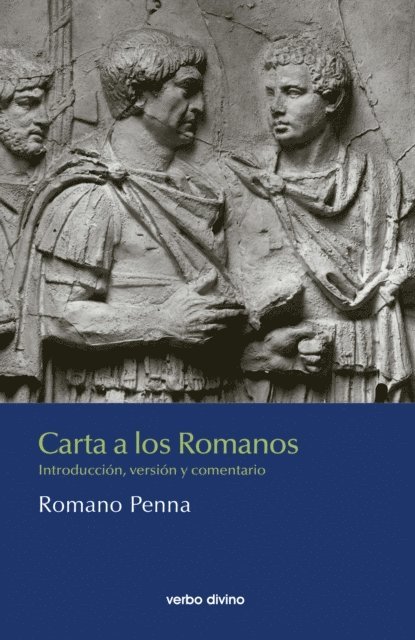
Acercarse a san Pablo conlleva un descubrimiento: el cristianismo, sobre todo y precisamente en su versión paulina, no es un mero divertissement, un juego, sino que está hecho para gente adulta que sabe reflexionar sobre sí misma y sobre lo que verdaderamente cuenta en la vida. El euangèlion es el motivo más adecuado para etiquetar en su conjunto la argumentación de la Carta a los Romanos. Y no solo porque ese anuncio constituye el orgullo del apóstol, sino sobre todo porque la carta ofrece una amplia reflexión hermenéutica sobre el anuncio cristiano y sobre las diversas implicaciones de su contenido y su eficacia. Estas implicaciones configuran en cada caso los diversos aspectos del Evangelio, sean teológicos, cristológicos, antropológicos, bíblicos, histórico-salvíficos, ecuménicos o morales.