Romit Bhandari – författare
Visar alla böcker från författaren Romit Bhandari. Handla med fri frakt och snabb leverans.
3 produkter
3 produkter
1 947 kr
Skickas inom 10-15 vardagar
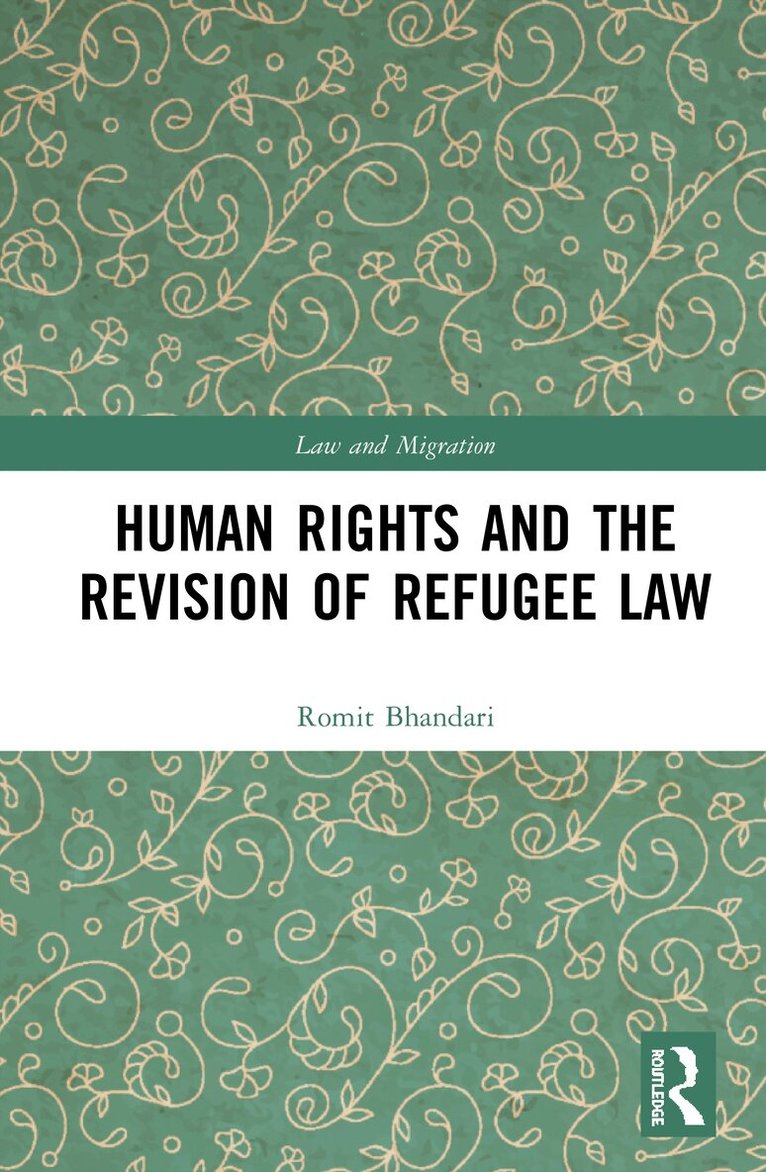
This book addresses the relationship between International Refugee Law and International Human Rights Law. Using international refugee law’s analytical turn to human rights as its object of inquiry, it represents a critical intervention into the revisionism that has led to conceptual fragmentation and restrictive practices.Mainstream literature in refugee law reflects a mood of celebration, a narrative of progress which praises the discipline’s rescue from obsolescence. This is commonly ascribed to its repositioning alongside human rights law, its veritable rediscovery as an arm of this far greater edifice. By using human rights logic to construct the current legal paradigm and inform us of who qualifies as a refugee, this purportedly lent areas of conceptual uncertainty a set of objective, modern criteria and increased enfranchisement to new, non-traditional claimants.The present work challenges this dominant position by finding the untold limits of its current paradigm. It stands alone in this orientation and hereby represents one of the most comprehensive, heterodox and structurally detailed reviews of this connection. The exploration of the gap between modern approaches and the unsatisfactory realities of seeking asylum forms the substance of this book. It asserts, by contrast, the existence of revolution rather than evolution. Human rights law has erased the founding tenets of the Refugee Convention, enabling powerful states to contain refugees in their region of origin.The book will be essential reading for those interested in Refugee Law, Refugee Studies, Postcolonial Legal Studies, Postmodern Critiques and Critical Legal Theory. Additionally, given its relevance for the adjudication of refugee claims, it will be an important resource for solicitors, barristers and judges.
570 kr
Skickas inom 10-15 vardagar
This book addresses the relationship between International Refugee Law and International Human Rights Law. Using international refugee law’s analytical turn to human rights as its object of inquiry, it represents a critical intervention into the revisionism that has led to conceptual fragmentation and restrictive practices.Mainstream literature in refugee law reflects a mood of celebration, a narrative of progress which praises the discipline’s rescue from obsolescence. This is commonly ascribed to its repositioning alongside human rights law, its veritable rediscovery as an arm of this far greater edifice. By using human rights logic to construct the current legal paradigm and inform us of who qualifies as a refugee, this purportedly lent areas of conceptual uncertainty a set of objective, modern criteria and increased enfranchisement to new, non-traditional claimants.The present work challenges this dominant position by finding the untold limits of its current paradigm. It stands alone in this orientation and hereby represents one of the most comprehensive, heterodox and structurally detailed reviews of this connection. The exploration of the gap between modern approaches and the unsatisfactory realities of seeking asylum forms the substance of this book. It asserts, by contrast, the existence of revolution rather than evolution. Human rights law has erased the founding tenets of the Refugee Convention, enabling powerful states to contain refugees in their region of origin.The book will be essential reading for those interested in Refugee Law, Refugee Studies, Postcolonial Legal Studies, Postmodern Critiques and Critical Legal Theory. Additionally, given its relevance for the adjudication of refugee claims, it will be an important resource for solicitors, barristers and judges.
1 202 kr
Kommande
This timely edited collection offers a critical and multidisciplinary examination of the European Union’s Migration and Asylum Pact, marking the third major reform phase of the Common European Asylum System.As the EU seeks to present a unified and effective response to migration challenges, the Pact introduces sweeping changes—from border procedures and asylum processing to external partnerships and data-driven governance.Bringing together leading scholars, legal practitioners, and NGO experts, the collection explores the Pact’s implications ahead of its implementation. Contributors interrogate its legal foundations, political motivations, and operational mechanisms, offering insights into how the EU balances efficiency with fundamental rights, solidarity with sovereignty, and innovation with accountability.Organised around four central themes - political solidarity, border management, external cooperation, and rights compliance - the volume highlights the tensions and contradictions within the Pact. It asks: Can the EU harmonise divergent national approaches to migration? Will faster procedures compromise legal safeguards? How will partnerships with third countries affect asylum seekers’ rights?With chapters covering topics such as AI at the border, the coloniality of digital technologies, and the role of EU institutions in enforcement and oversight, this book is an essential resource for academics, policymakers, lawyers, and students. It offers not only a critique but also a roadmap for understanding the future of asylum governance in Europe.