Ronald J. Brachman – författare
Visar alla böcker från författaren Ronald J. Brachman. Handla med fri frakt och snabb leverans.
4 produkter
4 produkter
Inbunden, Engelska, 2022
299 kr
Skickas
E-bok
Engelska, 2022305 kr
Läs direkt efter köp
Häftad, Engelska, 2023
308 kr
Skickas
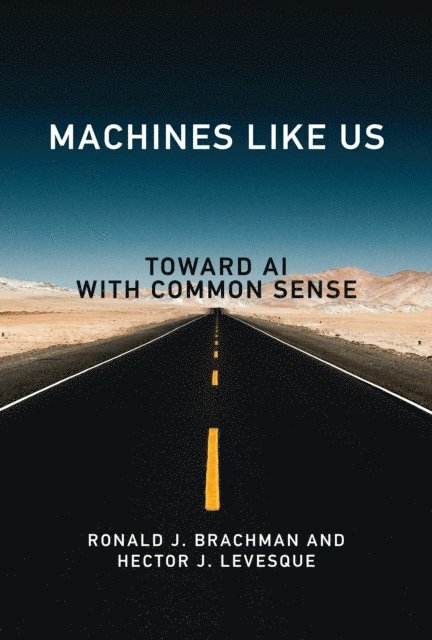
How we can create artificial intelligence with broad, robust common sense rather than narrow, specialized expertise.It’s sometime in the not-so-distant future, and you send your fully autonomous self-driving car to the store to pick up your grocery order. The car is endowed with as much capability as an artificial intelligence agent can have, programmed to drive better than you do. But when the car encounters a traffic light stuck on red, it just sits there—indefinitely. Its obstacle-avoidance, lane-following, and route-calculation capacities are all irrelevant; it fails to act because it lacks the common sense of a human driver, who would quickly figure out what’s happening and find a workaround. In Machines like Us, Ron Brachman and Hector Levesque—both leading experts in AI—consider what it would take to create machines with common sense rather than just the specialized expertise of today’s AI systems.Using the stuck traffic light and other relatable examples, Brachman and Levesque offer an accessible account of how common sense might be built into a machine. They analyze common sense in humans, explain how AI over the years has focused mainly on expertise, and suggest ways to endow an AI system with both common sense and effective reasoning. Finally, they consider the critical issue of how we can trust an autonomous machine to make decisions, identifying two fundamental requirements for trustworthy autonomous AI systems: having reasons for doing what they do, and being able to accept advice. Both in the end are dependent on having common sense.
E-bok
PDF, Engelska, 20141 015 kr
Läs direkt efter köp
Representations of Commonsense Knowledge provides a rich language for expressing commonsense knowledge and inference techniques for carrying out commonsense knowledge. This book provides a survey of the research on commonsense knowledge. Organized into 10 chapters, this book begins with an overview of the basic ideas on artificial intelligence commonsense reasoning. This text then examines the structure of logic, which is roughly analogous to that of a programming language. Other chapters describe how rules of universal validity can be applied to facts known with absolute certainty to deduce other facts known with absolute certainty. This book discusses as well some prominent issues in plausible inference. The final chapter deals with commonsense knowledge about the interrelations and interactions among agents and discusses some issues in human and social interactions that have been studied in the artificial intelligence literature. This book is a valuable resource for students on a graduate course on knowledge representation.