Ronald W. Pies – författare
Visar alla böcker från författaren Ronald W. Pies. Handla med fri frakt och snabb leverans.
14 produkter
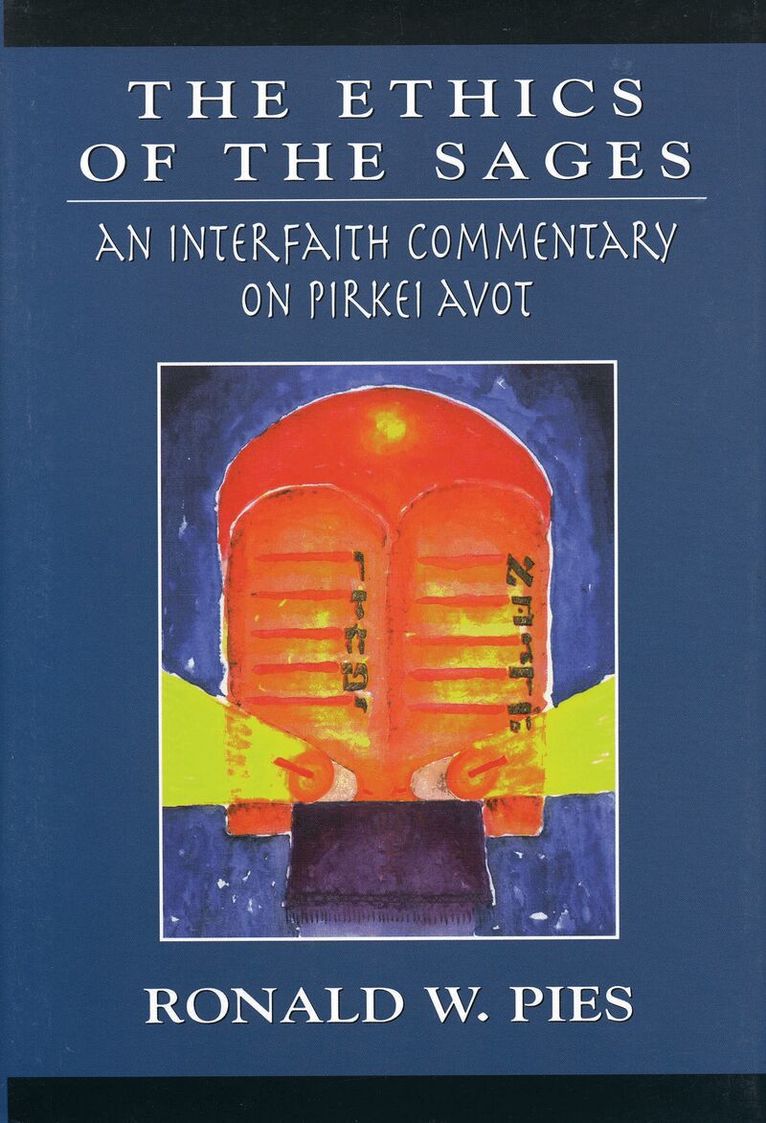
Ethics of the Sages
An Interfaith Commentary of Pirkei Avot
Inbunden, 1999
1560 kr
Lägg i varukorg
The author of this unique volume, Dr. Ronald W. Pies is a psychiatrist with a long-standing inerest in Jewish thought. Readers will surely note Dr. Pies's efforts to connect the teachings found within Pirkei Avot with the larger fabric of psychology, philosophy, and literature. While Pirkei Avot is …
Judaic Foundations of Cognitive-Behavioral Therapy
Rabbinical and Talmudic Underpinnings of CBT and Rebt
Häftad, 2010
149 kr
Lägg i varukorg
Three-Petalled Rose
How the Synthesis of Judaism, Buddhism, and Stoicism Can Create a Healthy, Fulfilled and Flourishing Life
Häftad, 2013
237 kr
Lägg i varukorg
Three-Petalled Rose
How the Synthesis of Judaism, Buddhism, and Stoicism Can Create a Healthy, Fulfilled and Flourishing Life
E-bok, 2013
53 kr
Lägg i varukorg
This is a book for anyone who wants to live the good life, but who has not yet found a clear path to that goal. By examining the common threads that unite three, great spiritual traditions--Judaism, Buddhism, and Stoicism--the author provides a framework for achieving a fulfilled and ethically …
Director of Minor Tragedies
E-bok, 2014
59 kr
Lägg i varukorg
Adam Levtov teaches drama at a small college in the tiny town of Hope Falls. He usually gets stuck with directing one of Shakespeares minor tragedies, but this year, he is staging Othello, and the pressure is mounting. Unfortunately for Levtov, his students are rebelling; his teenage son is wearing …
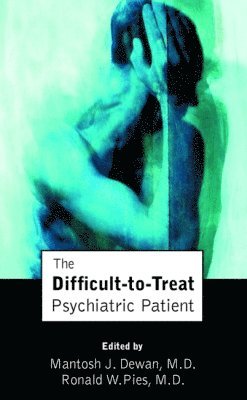
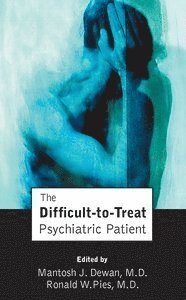
Difficult-to-Treat Psychiatric Patient
Av Mantosh J. Dewan, Ronald W. Pies
Häftad, 2002
1073 kr
Lägg i varukorg
Why do some psychiatric patients fail to get better, even when in the care of competent clinicians? Treatment-refractory conditions are all too common in everyday clinical practice. Treatment resistance occurs across the full spectrum of psychiatric disorders, incurring enormous emotional, …
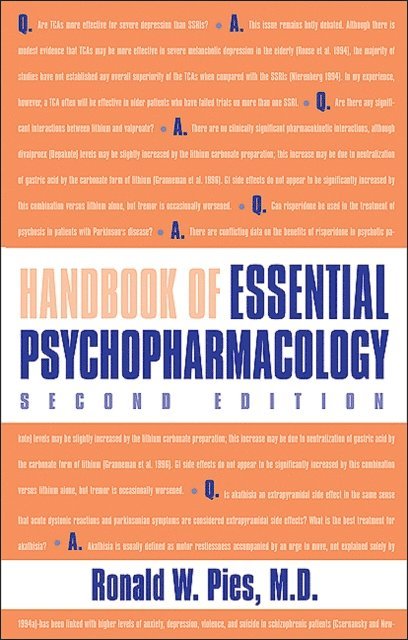
Handbook of Essential Psychopharmacology
Häftad, 2005
1296 kr
Lägg i varukorg
Handbook of Essential Psychopharmacology, Second Edition, provides an indispensable guide to vital information in the rapidly expanding field of psychopharmacology. The updated edition of this popular handbook will continue to be a reference that is simply the essential starting point in …
Handbook of Essential Psychopharmacology
E-bok, 2007
1445 kr
Lägg i varukorg
Handbook of Essential Psychopharmacology, Second Edition, provides an indispensable guide to vital information in the rapidly expanding field of psychopharmacology. The updated edition of this popular handbook will continue to be a reference that is simply the essential starting point in …
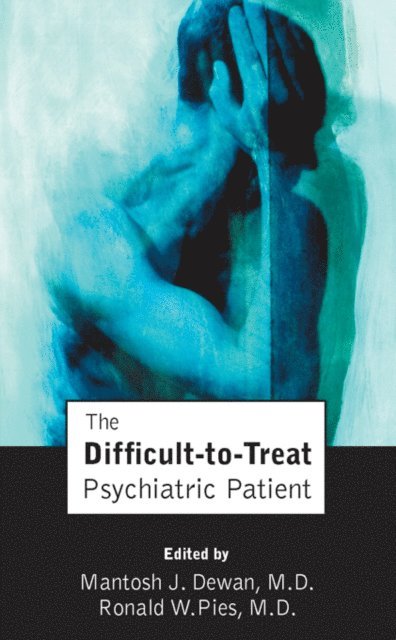
Difficult-to-Treat Psychiatric Patient
Av Ronald W. Pies, Mantosh J. Dewan
E-bok, 2008
1143 kr
Lägg i varukorg
Why do some psychiatric patients fail to get better, even when in the care of competent clinicians? Treatment-refractory conditions are all too common in everyday clinical practice. Treatment resistance occurs across the full spectrum of psychiatric disorders, incurring enormous emotional, …
Difficult-to-Treat Psychiatric Patient
Av Mantosh J. Dewan, Ronald W. Pies
Inbunden, 2001
927 kr
Tillfälligt slut
Why do some psychiatric patients fail to get better, even when in the care of competent clinicians? This clinical guide begins where standard textbooks end, focusing on clinical strategies to be used after all basic treatment options, such as medication and psychotherapy, have failed. Expert …