Roundtable on Health Literacy – författare
597 kr
Skickas
393 kr
Läs direkt efter köp
410 kr
Läs direkt efter köp
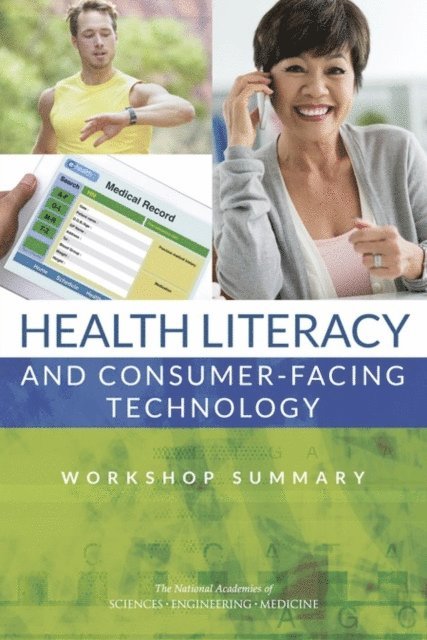
There is great enthusiasm over the use of emerging interactive health information technologies-often referred to as eHealth-and the potential these technologies have to improve the quality, capacity, and efficiency of the health care system. However, many doctors, advocacy groups, policy makers and consumers are concerned that electronic health systems might help individuals and communities with greater resources while leaving behind those with limited access to technology.
In order to address this problem, the Institute of Medicine''s Roundtable on Health Literacy held a workshop to explore the current status of communication technology, the challenges for its use in populations with low health literacy, and the strategies for increasing the benefit of these technologies for populations with low health literacy. The summary of the workshop, "Health Literacy, eHealth, and Communication: Putting the Consumer First," includes participants'' comments on these issues.
368 kr
Läs direkt efter köp
To receive the greatest value for health care, it is important to focus on issues of quality and disparity, and the ability of individuals to make appropriate decisions based on basic health knowledge and services. The Forum on the Science of Health Care Quality Improvement and Implementation, the Roundtable on Health Disparities, and the Roundtable on Health Literacy jointly convened the workshop "Toward Health Equity and Patient-Centeredness: Integrating Health Literacy, Disparities Reduction, and Quality Improvement" to address these concerns. During this workshop, speakers and participants explored how equity in care delivered and a focus on patients could be improved.
632 kr
Skickas
452 kr
Läs direkt efter köp
Health literacy—the ability for individuals to obtain, process, and understand basic health information and services to facilitate appropriate health decisions—is increasingly recognized as an important facet of health care and health outcomes. Although research on health literacy has grown tremendously in the past decade, there is no widely agreed-upon framework for health literacy as a determinant of health outcomes. Most instruments focus on assessing an individual''s health literacy, yet the scope of health literacy reaches far beyond an individual''s skills and abilities. Health literacy occurs in the context of the health care system, and therefore measures of health literacy must also assess the demands and complexities of the health care systems with which patients interact. For example, measures are needed to determine how well the system has been organized so that it can be navigated by individuals with different levels of health literacy and how well health organizations are doing at making health information understandable and actionable.To examine what is known about measures of health literacy, the Institute of Medicine convened a workshop. The workshop, summarized in this volume, reviews the current status of measures of health literacy, including those used in the health care setting; discusses possible surrogate measures that might be used to assess health literacy; and explores ways in which health literacy measures can be used to assess patient-centered approaches to care.
602 kr
Läs direkt efter köp
Health literacy—the ability for individuals to obtain, process, and understand basic health information and services to facilitate appropriate health decisions—is increasingly recognized as an important facet of health care and health outcomes. Although research on health literacy has grown tremendously in the past decade, there is no widely agreed-upon framework for health literacy as a determinant of health outcomes. Most instruments focus on assessing an individual''s health literacy, yet the scope of health literacy reaches far beyond an individual''s skills and abilities. Health literacy occurs in the context of the health care system, and therefore measures of health literacy must also assess the demands and complexities of the health care systems with which patients interact. For example, measures are needed to determine how well the system has been organized so that it can be navigated by individuals with different levels of health literacy and how well health organizations are doing at making health information understandable and actionable.To examine what is known about measures of health literacy, the Institute of Medicine convened a workshop. The workshop, summarized in this volume, reviews the current status of measures of health literacy, including those used in the health care setting; discusses possible surrogate measures that might be used to assess health literacy; and explores ways in which health literacy measures can be used to assess patient-centered approaches to care.
276 kr
Läs direkt efter köp
Every year at least 1.5 million people suffer adverse effects from medication. These problems occur because people misunderstand labels, are unaware of drug interactions, or otherwise use medication improperly. The Food and Drug Administration''s Safe Use Initiative seeks to identify preventable medication risks and develop solutions to them. The IOM held a workshop to discuss the FDA''s Safe Use Initiative and other efforts to improve drug labeling and safety.
376 kr
Läs direkt efter köp
Nearly nine out of 10 adults have difficulty using everyday health information to make good health decisions. The Institute of Medicine (IOM) Roundtable on Health Literacy held a meeting on May 27, 2010, to explore areas for research in health literacy, the relationship between health literacy and health disparities, and ways to apply information technology to improve health literacy.
418 kr
Läs direkt efter köp
Health literacy is the degree to which one can understand and make decisions based on health information. Nearly 90 million adults in the United States have limited health literacy. While poor health literacy spans all demographics, rates of low health literacy are disproportionately higher among those with lower socioeconomic status, limited education, or limited English proficiency, as well as among the elderly and individuals with mental or physical disabilities. Studies have shown that there is a correlation between low health literacy and poor health outcomes.
In 2010, President Obama signed the Affordable Care Act designed to extend access to health care coverage to millions of Americans who have been previously uninsured. Many of the newly eligible individuals who should benefit most from the ACA, however, are least prepared to realize those benefits as a result of low health literacy. They will face significant challenges understanding what coverage they are eligible for under the ACA, making informed choices about the best options for themselves and their families, and completing the enrollment process. Health Literacy Implications for Health Care Reform explores opportunities to advance health literacy in association with the implementation of health care reform. The report focuses on building partnerships to advance the field of health literacy by translating research findings into practical strategies for implementation, and on educating the public, press, and policymakers regarding issues of health literacy.
435 kr
Läs direkt efter köp
There is great enthusiasm over the use of emerging interactive health information technologies-often referred to as eHealth-and the potential these technologies have to improve the quality, capacity, and efficiency of the health care system. However, many doctors, advocacy groups, policy makers and consumers are concerned that electronic health systems might help individuals and communities with greater resources while leaving behind those with limited access to technology.
In order to address this problem, the Institute of Medicine''s Roundtable on Health Literacy held a workshop to explore the current status of communication technology, the challenges for its use in populations with low health literacy, and the strategies for increasing the benefit of these technologies for populations with low health literacy. The summary of the workshop, "Health Literacy, eHealth, and Communication: Putting the Consumer First," includes participants'' comments on these issues.
535 kr
Läs direkt efter köp
To receive the greatest value for health care, it is important to focus on issues of quality and disparity, and the ability of individuals to make appropriate decisions based on basic health knowledge and services. The Forum on the Science of Health Care Quality Improvement and Implementation, the Roundtable on Health Disparities, and the Roundtable on Health Literacy jointly convened the workshop "Toward Health Equity and Patient-Centeredness: Integrating Health Literacy, Disparities Reduction, and Quality Improvement" to address these concerns. During this workshop, speakers and participants explored how equity in care delivered and a focus on patients could be improved.
552 kr
Läs direkt efter köp
401 kr
Läs direkt efter köp
Every year at least 1.5 million people suffer adverse effects from medication. These problems occur because people misunderstand labels, are unaware of drug interactions, or otherwise use medication improperly. The Food and Drug Administration''s Safe Use Initiative seeks to identify preventable medication risks and develop solutions to them. The IOM held a workshop to discuss the FDA''s Safe Use Initiative and other efforts to improve drug labeling and safety.
535 kr
Läs direkt efter köp
Nearly nine out of 10 adults have difficulty using everyday health information to make good health decisions. The Institute of Medicine (IOM) Roundtable on Health Literacy held a meeting on May 27, 2010, to explore areas for research in health literacy, the relationship between health literacy and health disparities, and ways to apply information technology to improve health literacy.
361 kr
Skickas
502 kr
Läs direkt efter köp
Health literacy is the degree to which individuals can obtain, process, and understand the basic health information and services they need to make appropriate health decisions. According to Health Literacy: A Prescription to End Confusion (IOM, 2004), nearly half of all American adults—90 million people—have inadequate health literacy to navigate the healthcare system.
To address issues raised in that report, the Institute of Medicine convened the Roundtable on Health Literacy, which brings together leaders from the federal government, foundations, health plans, associations, and private companies to discuss challenges facing health literacy practice and research and to identify approaches to promote health literacy in both the public and private sectors. On November 30, 2010, the roundtable cosponsored a workshop with the University of California, Los Angeles (UCLA), Anderson School of Management in Los Angeles.
Improving Health Literacy Within a State serves as a summary of what occurred at the workshop. The workshop focused on understanding what works to improve health literacy across a state, including how various stakeholders have a role in improving health literacy. The focus of the workshop was on presentations and discussions that address (1) the clinical impacts of health literacy improvement approaches; (2) economic outcomes of health literacy implementation; and (3) how various stakeholders can affect health literacy.
535 kr
Läs direkt efter köp
Health literacy is the degree to which individuals can obtain, process, and understand the basic health information and services they need to make appropriate health decisions. According to Health Literacy: A Prescription to End Confusion (IOM, 2004), nearly half of all American adults—90 million people—have inadequate health literacy to navigate the healthcare system.
To address issues raised in that report, the Institute of Medicine convened the Roundtable on Health Literacy, which brings together leaders from the federal government, foundations, health plans, associations, and private companies to discuss challenges facing health literacy practice and research and to identify approaches to promote health literacy in both the public and private sectors. On November 30, 2010, the roundtable cosponsored a workshop with the University of California, Los Angeles (UCLA), Anderson School of Management in Los Angeles.
Improving Health Literacy Within a State serves as a summary of what occurred at the workshop. The workshop focused on understanding what works to improve health literacy across a state, including how various stakeholders have a role in improving health literacy. The focus of the workshop was on presentations and discussions that address (1) the clinical impacts of health literacy improvement approaches; (2) economic outcomes of health literacy implementation; and (3) how various stakeholders can affect health literacy.
452 kr
Läs direkt efter köp
Health literacy has been shown to affect health outcomes. The use of preventive services improves health and prevents costly health care expenditures. Several studies have found that health literacy makes a difference in the extent to which populations use preventive services. On September 15, 2009, the Institute of Medicine Roundtable on Health Literacy held a workshop to explore approaches to integrate health literacy into primary and secondary prevention.
Promoting Health Literacy to Encourage Prevention and Wellness serves as a factual account of the discussion that took place at the workshop. The report describes the inclusion of health literacy into public health prevention programs at the national, state, and local levels; reviews how insurance companies factor health literacy into their prevention programs; and discusses industry contributions to providing health literate primary and secondary prevention.
468 kr
Läs direkt efter köp
Health literacy has been shown to affect health outcomes. The use of preventive services improves health and prevents costly health care expenditures. Several studies have found that health literacy makes a difference in the extent to which populations use preventive services. On September 15, 2009, the Institute of Medicine Roundtable on Health Literacy held a workshop to explore approaches to integrate health literacy into primary and secondary prevention.
Promoting Health Literacy to Encourage Prevention and Wellness serves as a factual account of the discussion that took place at the workshop. The report describes the inclusion of health literacy into public health prevention programs at the national, state, and local levels; reviews how insurance companies factor health literacy into their prevention programs; and discusses industry contributions to providing health literate primary and secondary prevention.
501 kr
Läs direkt efter köp
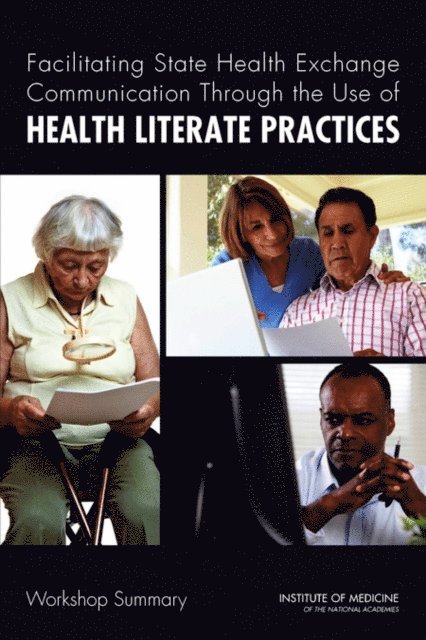
Implementation of the Affordable Care Act (ACA) of 2010 will result in significant changes to the U.S. health care system. Among its many provisions, the ACA will extend access to health care coverage to millions of Americans who have been previously uninsured. Many of the newly eligible health insurance consumers will be individuals of low health literacy, some speakers of English and others more comfortable using languages other than English. Health insurance terms such as "deductible," "co-insurance," and "out-of-pocket limit" are difficult to communicate even to those with moderate-to-high levels of health literacy and so health exchanges will face challenges as they attempt to communicate to the broader community. In addition to having to convey some of these basic, and yet complex, principles of insurance, state exchanges will be attempting to adapt to the many changes to enrollment and eligibility brought about by ACA.The Institute of Medicine (IOM) convened the Roundtable on Health Literacy that brings together leaders from the federal government, foundations, health plans, associations, and private companies to discuss challenges facing health literacy practice and research and to identify approaches to promote health literacy in both the public and private sectors. The roundtable sponsored a workshop in Washington, DC, on July 19, 2011, that focused on ways in which health literacy can facilitate state health insurance exchange communication with potential enrollees. The roundtable''s workshop focused on four topics: (1) lessons learned from existing state insurance exchanges; (2) the impact of state insurance exchanges on consumers; (3) the relevance of health literacy to health insurance exchanges; and (4) current best practices in developing materials and communicating with consumers.Facilitating State Health Exchange Communication Through the Use of Health Literate Practices summarizes the presentations and discussion that occurred during the workshop. The report provides an overview of health insurance exchanges, presents evidence on the extent to which consumers understand underlying health insurance concepts, and describes the relevancy of health literacy to health insurance reform and how health literacy interventions can facilitate the implementation of health insurance reforms. The report also provides a review of best practices in developing materials and communicating with consumers, and concludes with reflections on the workshop presentations and discussions by members of the roundtable and its chair. Further information is provided in the appendixes, the workshop agenda (Appendix A), workshop speaker biosketches (Appendix B), and testimony provided by the organization America''s Health Insurance Plans (AHIP) (Appendix C).
451 kr
Läs direkt efter köp
Health literacy is the degree to which one can understand and make decisions based on health information. Nearly 90 million adults in the United States have limited health literacy. While poor health literacy spans all demographics, rates of low health literacy are disproportionately higher among those with lower socioeconomic status, limited education, or limited English proficiency, as well as among the elderly and individuals with mental or physical disabilities. Studies have shown that there is a correlation between low health literacy and poor health outcomes.
In 2010, President Obama signed the Affordable Care Act designed to extend access to health care coverage to millions of Americans who have been previously uninsured. Many of the newly eligible individuals who should benefit most from the ACA, however, are least prepared to realize those benefits as a result of low health literacy. They will face significant challenges understanding what coverage they are eligible for under the ACA, making informed choices about the best options for themselves and their families, and completing the enrollment process. Health Literacy Implications for Health Care Reform explores opportunities to advance health literacy in association with the implementation of health care reform. The report focuses on building partnerships to advance the field of health literacy by translating research findings into practical strategies for implementation, and on educating the public, press, and policymakers regarding issues of health literacy.
518 kr
Läs direkt efter köp
Approximately 80 million adults in the United States have low health literacy - an individual''s ability to obtain, process, and understand basic health information. Low health literacy creates difficulties in communicating with clinicians, poses barriers in managing chronic illness, lessens the likelihood of receiving preventive care, heightens the possibility of experiencing serious medication errors, increased risk of hospitalization, and results in poorer quality of life. It is important for health care organizations to develop strategies that can improve their health literacy, yet organizations often find it difficult to determine exactly what it means to be health literate. How Can Health Care Organizations Become More Health Literate?: Workshop defines a health literate health care organization as "an organization that makes it easier for people to navigate, understand, and use information and services to take care of their health." In November 2011, the IOM Roundtable on Health Literacy held a workshop to discuss the growing recognition that health literacy depends not only on individual skills and abilities but also on the demands and complexities of the health care system. How Can Health Care Organizations Become More Health Literate?: Workshop summarizes the workshop.
676 kr
Skickas inom 3-6 vardagar
602 kr
Läs direkt efter köp
The Institute of Medicine (IOM) Roundtable on Health Literacy focuses on bringing together leaders from the federal government, foundations, health plans, associations, and private companies to address challenges facing health literacy practice and research and to identify approaches to promote health literacy in both the public and private sectors. The roundtable serves to educate the public, press, and policy makers regarding the issues of health literacy, sponsoring workshops to discuss approaches to resolve health literacy challenges. It also builds partnerships to move the field of health literacy forward by translating research findings into practical strategies for implementation. The Roundtable held a workshop March 29, 2012, to explore the field of oral health literacy.
The workshop was organized by an independent planning committee in accordance with the procedures of the National Academy of Sciences. The planning group was composed of Sharon Barrett, Benard P. Dreyer, Alice M. Horowitz, Clarence Pearson, and Rima Rudd. The role of the workshop planning committee was limited to planning the workshop. Unlike a consensus committee report, a workshop summary may not contain conclusions and recommendations, except as expressed by and attributed to individual presenters and participants. Therefore, the summary has been prepared by the workshop rapporteur as a factual summary of what occurred at the workshop.
769 kr
Läs direkt efter köp
The roots of health literacy can be traced back to the national literacy movement in India under Gandhi and to aid groups working in Africa to promote education and health. The term health literacy was first used in 1974 and described as "health education meeting minimal standards for all school grade levels". From that first use the definition of health literacy evolved during the next 30 years with official definitions promulgated by government agencies and large programs. Despite differences among these definitions, they all hold in common the idea that health literacy involves the need for people to understand information that helps them maintain good health.
Although the United States produces a majority of the research on health literacy, Europe has strong multinational programs as well as research efforts, and health literacy experts in developing countries have created successful programs implemented on a community level. Given these distinct strengths of efforts worldwide, there are many opportunities for collaboration. International collaboration can harness the United States'' research power, Europe''s multilingual and multinational experience, and developing nations'' community-based programs to create robust programs and research that reach people—not based on language or nationality but on need and value.
A workshop on international health literacy efforts that feature presentations and discussion about health literacy interventions from various countries as well as other topics related to international health literacy was held as the basis for this report. Health Literacy: Improving Health, Health Systems, and Health Policy Around the World summarizes the findings and discussions at the workshop.
518 kr
Läs direkt efter köp
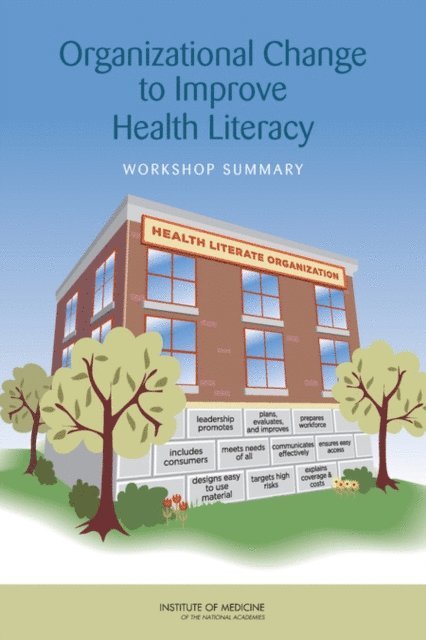
Organizational Change to Improve Health Literacy is the summary of a workshop convened in April 2013 by the Institute of Medicine Board on Population Health and Public Health Practice Roundtable on Health Literacy. As a follow up to the 2012 discussion paper Ten Attributes of a Health Literate Health Care Organization, participants met to examine what is known about implementation of the attributes of a health literate health care organization and to create a network of health literacy implementers who can share information about health literacy innovations and problem solving. This report discusses implementation approaches and shares tools that could be used in implementing specific literacy strategies.
Although health literacy is commonly defined as an individual trait, there is a growing appreciation that health literacy does not depend on the skills of individuals alone. Health literacy is the product of the interaction between individuals'' capacities and the health literacy-related demands and complexities of the health care system. System changes are needed to better align health care demands with the public''s skills and abilities. Organizational Change to Improve Health Literacy focuses on changes that could be made to achieve this goal.
385 kr
Skickas
568 kr
Läs direkt efter köp
Although health literacy is commonly defined as an individual trait, it does not depend on the skills of individuals alone. Health literacy is the product of the interaction between individuals'' capacities and the health literacy-related demands and complexities of the healthcare system. Specifically, the ability to understand, evaluate, and use numbers is important to making informed health care choices.
Health Literacy and Numeracy is the summary of a workshop convened by The Institute of Medicine Roundtable on Health Literacy in July 2013 to discuss topics related to numeracy, including the effects of ill health on cognitive capacity, issues with communication of health information to the public, and communicating numeric information for decision making. This report includes a paper commissioned by the Roundtable, "Numeracy and the Affordable Care Act: Opportunities and Challenges," that discusses research findings about people''s numeracy skill levels; the kinds of numeracy skills that are needed to select a health plan, choose treatments, and understand medication instructions; and how providers should communicate with those with low numeracy skills. The paper was featured in the workshop and served as the basis of discussion.
702 kr
Läs direkt efter köp
Health literacy is the degree to which individuals can obtain, process, and understand the basic health information and services they need to make appropriate health decisions. Nearly half of all American adults - 90 million people - have inadequate health literacy to navigate the health care system. Implications of Health Literacy for Public Health is the summary of a workshop convened by the Institute of Medicine Roundtable on Health Literacy in November 2013 that focused on the implications of health literacy for the mission and essential services of public health. The workshop featured the presentation of a commissioned paper on health literacy activities under way in public health organizations. Other presentations examined the implications of health literacy for the mission and essential services of public health, for example, community health and safety, disease prevention, disaster management, or health communication. This report includes the commissioned paper and summaries of the workshop presentations.