Rudolf Arnheim – författare
Visar alla böcker från författaren Rudolf Arnheim. Handla med fri frakt och snabb leverans.
27 produkter
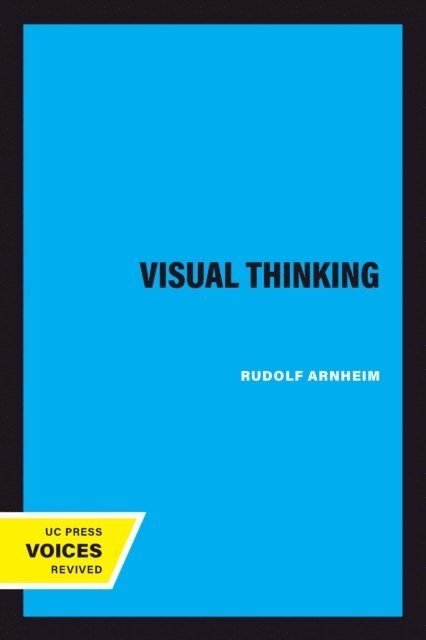
Visual Thinking
E-bok, 2004
433 kr
Lägg i varukorg
For thirty-five years Visual Thinking has been the gold standard for art educators, psychologists, and general readers alike. In this seminal work, Arnheim, author of The Dynamics of Architectural Form, Film as Art, Toward a Psychology of Art, and Art and Visual Perception, asserts that all …
Visual Thinking
Häftad, 2004
256 kr
Lägg i varukorg
For thirty-five years Visual Thinking has been the gold standard for art educators, psychologists, and general readers alike. In this seminal work, Arnheim, author of "The Dynamics of Architectural Form", "Film as Art", "Toward a Psychology of Art", and "Art and Visual Perception", asserts that all …
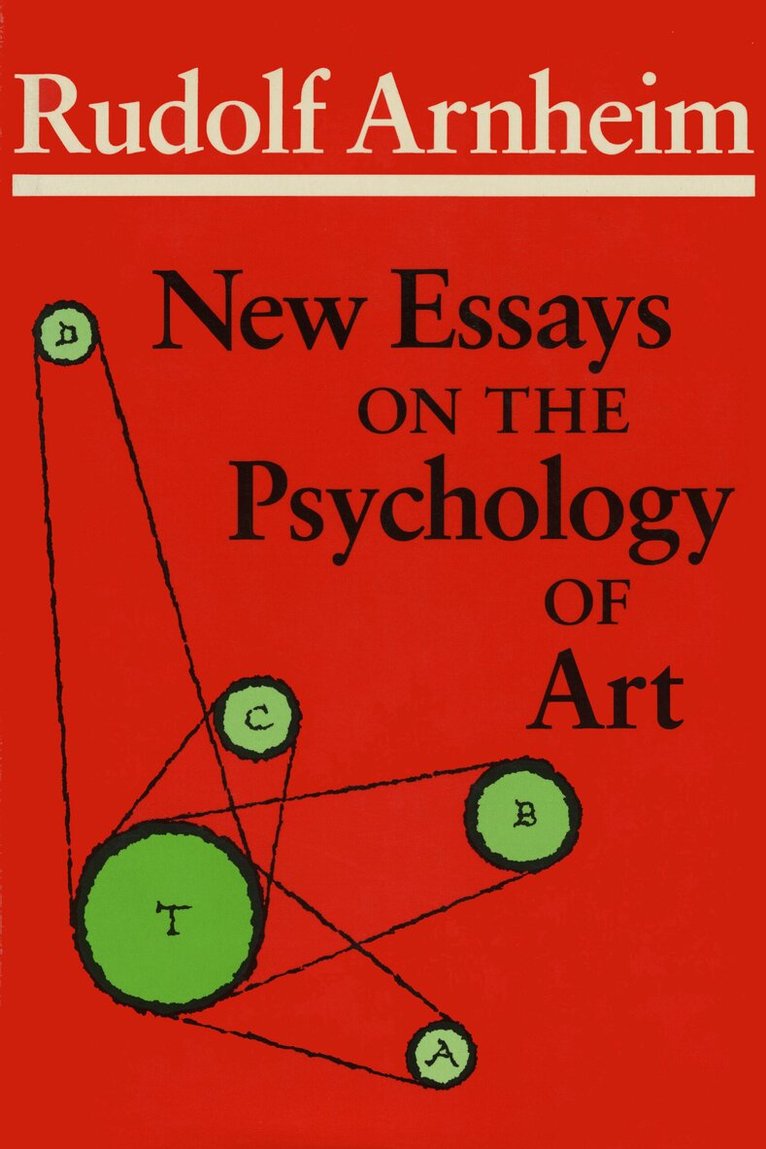
New Essays on the Psychology of Art
Häftad, 1986
289 kr
Lägg i varukorg
Thousands of readers who have profited from engagement with the lively mind of Rudolf Arnheim over the decades will receive news of this new collection of essays expectantly. In the essays collected here, as in his earlier work on a large variety of art forms, Arnheim explores concrete poetry and …
Film Essays and Criticism
Häftad, 1997
232 kr
Lägg i varukorg
This is an English translation of Arnheim's ""Kritiken und Aufsatze zum Film"", which collects both film reviews and theoretical essays, most of them written between 1925 and 1940. Arnheim began writing about film in the 1920s for a satirical magazine, ""Das Stachelschwein"" and later became a film …
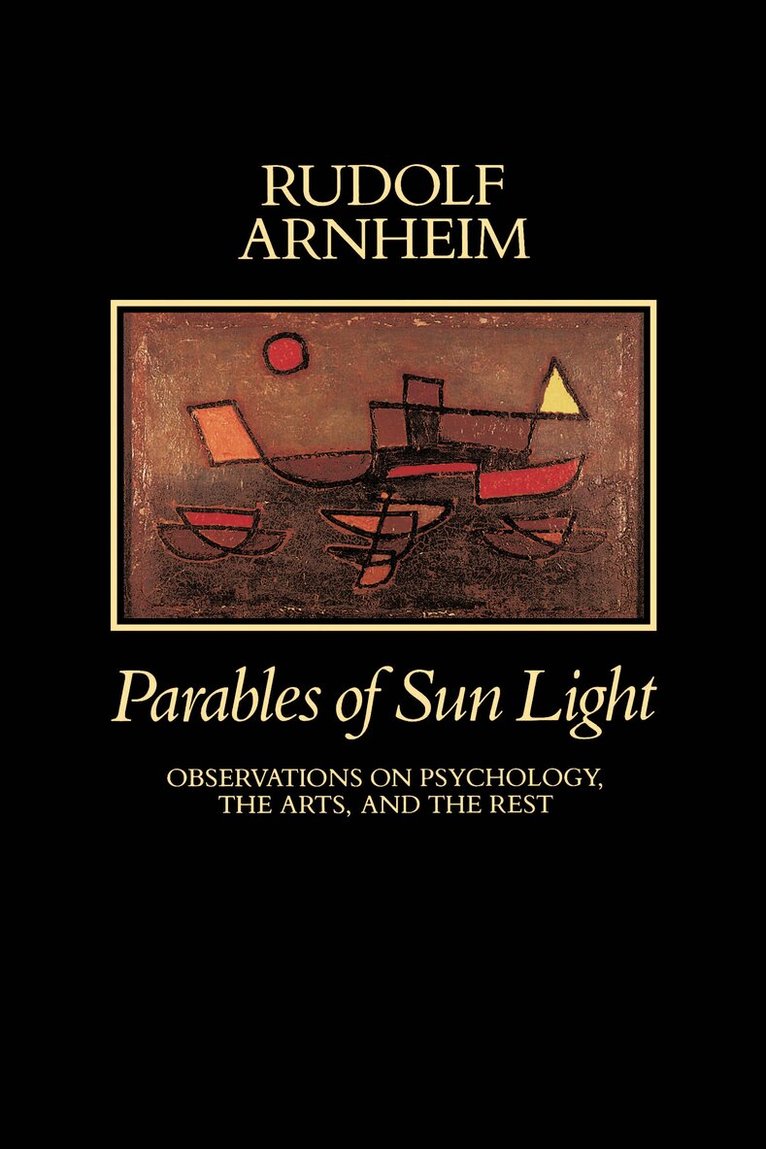
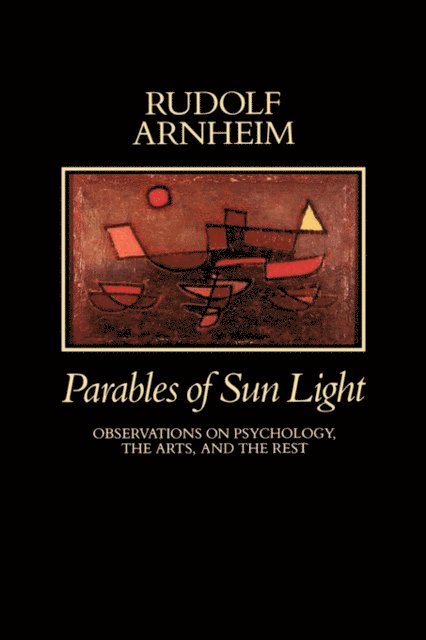
Parables of Sun Light
Observations on Psychology, the Arts, and the Rest
Häftad, 1990
456 kr
Lägg i varukorg
For many years Rudolf Arnheim, known as the leading psychologist of art, has been keeping notebooks in which to jot down observations, ideas, questions, and even (after a stay in Japan for a year) poems in the haiku pattern. Some of these notes found their way into his books - known and prized the …
To the Rescue of Art
Twenty-Six Essays
Häftad, 1991
382 kr
Lägg i varukorg
Never before published essays by the widely admired psychologist of art. Arnheim spiritedly asserts art's fundamental achievements. Rudolf Arnheim has spent a lifetime analyzing the basic psychological principles that make works of visual art meaningful, stirring, indispensable, and lasting. But …
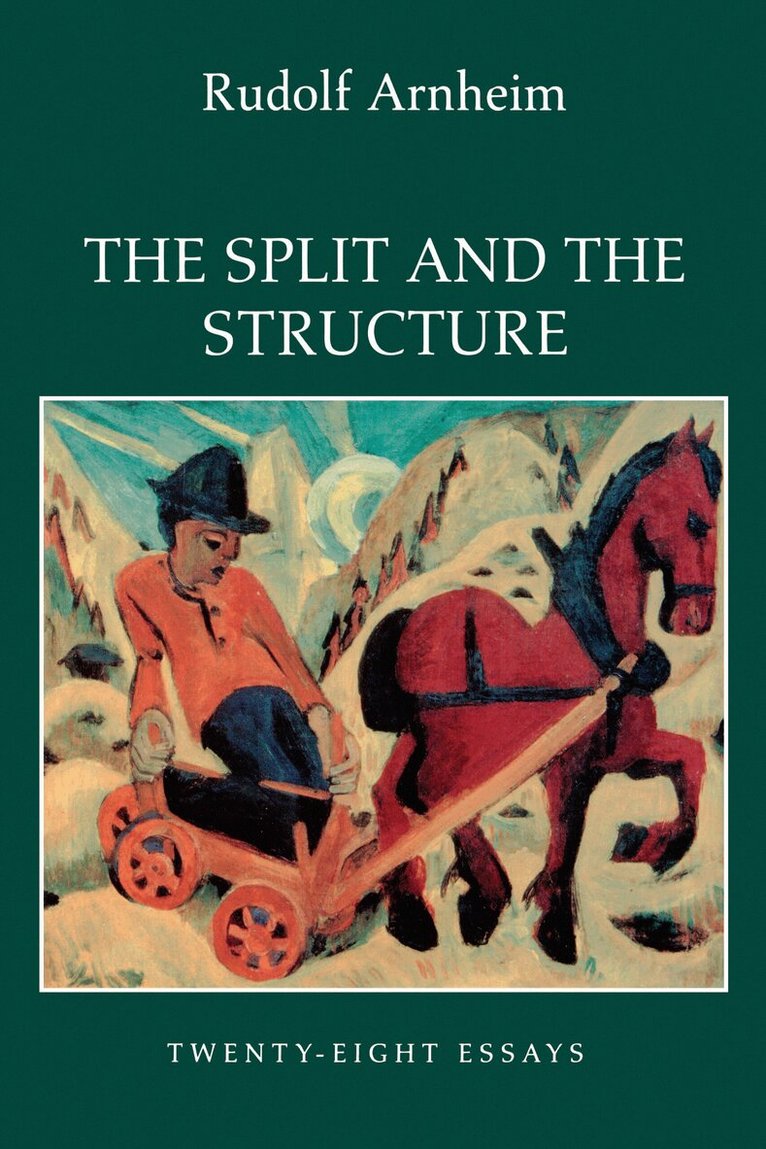
Split and the Structure
Twenty-Eight Essays
Häftad, 1996
382 kr
Lägg i varukorg
Rudolf Arnheim's great forte is his ability to illuminate the perceptual processes that go into the making and reception of artworks - painting, sculpture, architecture, and film. Over the years, his pioneering mode of 'reading' art from a unique scientific/philosophic perspective has garnered him …
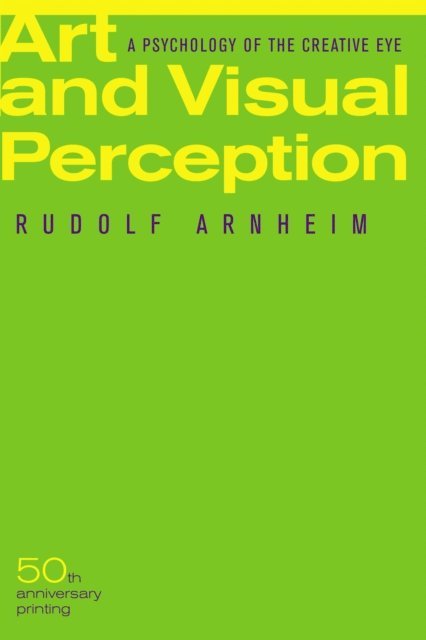
Art and Visual Perception, Second Edition
A Psychology of the Creative Eye
Häftad, 2004
5,0 utav 5 stjärnor. Totalt antal röster: (2)
298 kr
Lägg i varukorg
Since its publication fifty years ago, this work has established itself as a classic. It casts the visual process in psychological terms and describes the creative way one's eye organizes visual material according to specific psychological premises. In 1974 this book was revised and expanded, and …
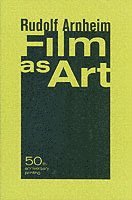
Film as Art, 50th Anniversary Printing
Häftad, 2006
325 kr
Lägg i varukorg
In the fall of 1957 the University of California Press expanded Arnheim's 1933 book "Film" by four essays and brought that landmark work back into print as "Film as Art". Now nearly fifty years after that re-edition, this book continues to occupy an important place in the literature of film. …
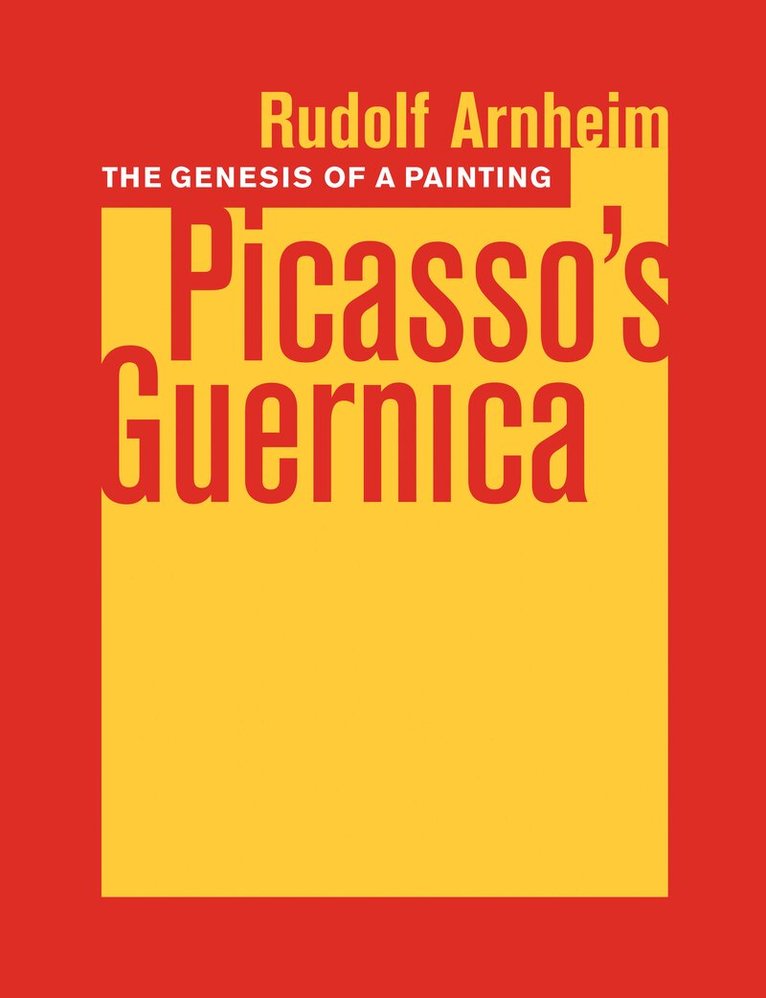
Genesis of a Painting
Picasso's Guernica
Häftad, 2006
315 kr
Lägg i varukorg
Rudolf Arnheim explores the creative process through the sketches executed by Picasso for his mural Guernica. The drawings and paintings shown herein, as well as the photographs of the stages of the final painting, represent the complete visual record of the creative stages of a major work of art.
Dynamics of Architectural Form, 30th Anniversary Edition
Häftad, 2009
315 kr
Lägg i varukorg
Rudolf Arnheim has been known, since the publication of his groundbreaking "Art and Visual Perception" in 1974, as an authority on the psychological interpretation of the visual arts. Two anniversary volumes celebrate the landmark anniversaries of his works in 2009. In "The Power of the Center", …
Power of the Center
A Study of Composition in the Visual Arts, 20th Anniversary Edition
Häftad, 2009
315 kr
Lägg i varukorg
Rudolf Arnheim has been known, since the publication of his groundbreaking "Art and Visual Perception" in 1974, as an authority on the psychological interpretation of the visual arts. Two anniversary volumes celebrate the landmark anniversaries of his works in 2009. In "The Power of the Center", …
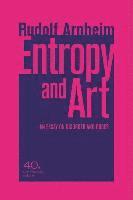
Entropy and Art
An Essay on Disorder and Order
Häftad, 2010
227 kr
Lägg i varukorg
This essay is an attempt to reconcile the disturbing contradiction between the striving for order in nature and in man and the principle of entropy implicit in the second law of thermodynamics - between the tendency toward greater organization and the general trend of the material universe toward …
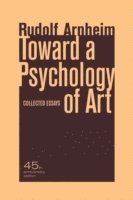
Toward a Psychology of Art
Collected Essays
Häftad, 2010
315 kr
Lägg i varukorg
From the Introduction: The papers collected in this book are based on the assumption that art, as any other activity of the mind, is subject to psychology, accessible to understanding, and needed for any comprehensive survey of mental functioning. The author believes, furthermore, that the science …
Art and Visual Perception, Second Edition
A Psychology of the Creative Eye
E-bok, 2004
485 kr
Lägg i varukorg
Since its publication fifty years ago, this work has established itself as a classic. It casts the visual process in psychological terms and describes the creative way one''s eye organizes visual material according to specific psychological premises. In 1974 this book was revised and expanded, and …
Parables of Sun Light
Observations on Psychology, the Arts, and the Rest
E-bok, 1990
535 kr
Lägg i varukorg
For many years Rudolf Arnheim, known as the leading psychologist of art, has been keeping notebooks in which to jot down observations, ideas, questions, and even (after a stay in Japan for a year) poems in the haiku pattern. Some of these notes found their way into his books—known and prized the …
New Essays on the Psychology of Art
E-bok, 1986
455 kr
Lägg i varukorg
Thousands of readers who have profited from engagement with the lively mind of Rudolf Arnheim over the decades will receive news of this new collection of essays expectantly. In the essays collected here, as in his earlier work on a large variety of art forms, Arnheim explores concrete poetry and …
Parables of Sun Light
Observations on Psychology, the Arts, and the Rest
E-bok, 1990
560 kr
Lägg i varukorg
For many years Rudolf Arnheim, known as the leading psychologist of art, has been keeping notebooks in which to jot down observations, ideas, questions, and even (after a stay in Japan for a year) poems in the haiku pattern. Some of these notes found their way into his books—known and prized the …
Split and the Structure
Twenty-Eight Essays
E-bok, 1996
433 kr
Lägg i varukorg
Rudolf Arnheim''s great forte is his ability to illuminate the perceptual processes that go into the making and reception of artworks—painting, sculpture, architecture, and film. Over the years, his pioneering mode of "reading" art from a unique scientific/philosophic perspective has garnered him …
Kunst und Sehen
Eine Psychologie des schöpferischen Auges
E-bok, 2013
635 kr
Lägg i varukorg
Die Kunst der Bildanalyse ist so alt wie die Kunst selbst. Arnheims Anleitung zum Sehen ist aber immer noch so jung wie bei ihrem ersten Erscheinen 1954. Kaum ein Buch hat Generationen von Lesern so einfach und so gründlich in die Welt der Kunst eingeführt. Kaum ein Buch schlug so seine Leser von …
Rudolf Arnheim
(dOCUMENTA (13): 100 Notes - 100 Thoughts, 100 Notizen - 100 Gedanken # 100)
E-bok, 2012
46 kr
Lägg i varukorg
Mit dem hundertsten Notizbuch zur dOCUMENTA (13), einer erneuten Lektüre des Hauptwerkes von Rudolf Arnheim, Art and Visual Perception: A Psychology of the Creative Eye (1954), setzt Carolyn Christov-Bakargiev dem abstrakten Kunstdiskurs der Gegenwart die konkrete Wahrnehmung und das Werk selbst …
Rudolf Arnheim
(dOCUMENTA (13): 100 Notes - 100 Thoughts, 100 Notizen - 100 Gedanken # 100)
E-bok, 2023
45 kr
Lägg i varukorg
Mit dem hundertsten Notizbuch zur dOCUMENTA (13), einer erneuten Lektüre des Hauptwerkes von Rudolf Arnheim, Art and Visual Perception: A Psychology of the Creative Eye (1954), setzt Carolyn Christov-Bakargiev dem abstrakten Kunstdiskurs der Gegenwart die konkrete Wahrnehmung und das Werk selbst …
Film Essays and Criticism
Inbunden, 1997
661 kr
Tillfälligt slut
This is an English translation of Arnheim's ""Kritiken und Aufsatze zum Film"", which collects both film reviews and theoretical essays, most of them written between 1925 and 1940. Arnheim began writing about film in the 1920s for a satirical magazine, ""Das Stachelschwein"" and later became a film …