Russell J Snell – författare
Visar alla böcker från författaren Russell J Snell. Handla med fri frakt och snabb leverans.
5 produkter
5 produkter
Inbunden, Engelska, 2013
417 kr
Skickas inom 5-8 vardagar
Inbunden, Engelska, 2014
430 kr
Skickas inom 5-8 vardagar
Häftad, Engelska, 2014
285 kr
Skickas inom 5-8 vardagar
E-bok
Engelska, 2013390 kr
Läs direkt efter köp
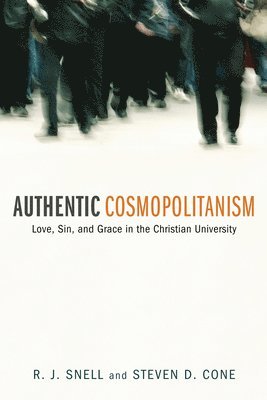
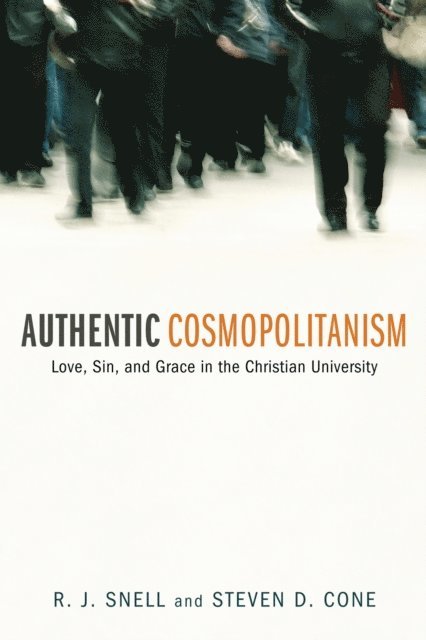
Humans are lovers, and yet a good deal of pedagogical theory, Christian or otherwise, assumes an anthropology at odds with human nature, fixed in a model of humans as thinking things. Turning to Augustine, or at least Augustine in conversation with Aquinas, Martin Heidegger, the overlooked Jesuit thinker Bernard Lonergan, and the important contemporary Charles Taylor, this book provides a normative vision for Christian higher education. A phenomenological reappropriation of human subjectivity reveals an authentic order to love, even when damaged by sin, and loves, made authentic by grace, allow the intellectually, morally, and religiously converted person to attain an integral unity. Properly understanding the integral relation between love and the fullness of human life overcomes the split between intellectual and moral formation, allowing transformed subjects--authentic lovers--to live, seek, and work towards the values of a certain kind of cosmopolitanism. Christian universities exist to make cosmopolitans, properly understood, namely, those persons capable of living authentically. In other words, this text gives a full-orbed account of human flourishing, rooted in a phenomenological account of the human as basis for the mission of the university.
E-bok
Engelska, 2014422 kr
Läs direkt efter köp
While many of the Reformers considered natural law unproblematic, many Protestants consider natural law a Catholic thing, and not persuasive. Natural law, it is thought, competes with the Gospel, overlooks the centrality of Christ, posits a domain of pure nature, and overlooks the noetic effects of sin. This Protestant Prejudice, however strong, overlooks developments in contemporary natural law quite capable and willing to incorporate the usual objections into natural law.While the natural law itself is universal and invariant, theories about the natural law vary widely. The Protestant Prejudice may respond to natural law understood from within the modes of common sense and classical metaphysics, but largely overlooks contemporary natural law beginning from the first-person account of subjectivity and practical reason. Consequently, the sophisticated thought of John Paul II, Martin Rhonheimer, Germain Grisez, and John Finnis is overlooked. Further, the work of Bernard Lonergan allows for a natural law admitting of noetic sin, eagerly incorporating grace, community, the limits of history, a real but limited autonomy, and the centrality of Christ in a natural law that is both graced and natural.