Russell K. Monson - Böcker
Visar alla böcker från författaren Russell K. Monson. Handla med fri frakt och snabb leverans.
6 produkter
6 produkter
1 081 kr
Skickas inom 7-10 vardagar
Due to many issues related to long-term carbon dynamics, an improved understanding of the biology of C4 photosynthesis is required by more than the traditional audience of crop scientists, plant physiologists, and plant ecologists. This work synthesizes the latest developments in C4 biochemistry, physiology, systematics, and ecology. The book concludes with chapters discussing the role of C4 plants in the future development of the biosphere, particularly their interactive effects on soil, hydrological, and atmospheric processes.
4 673 kr
Skickas inom 10-15 vardagar
Today global changes and human activities affect plants within each of the world’s ecosystems. Plant Ecology in a Changing World provides a foundation for understanding how the changes underway impact structure and function in the world’s major biomes, while also describing how evolution has resulted in the biochemical, physiological, structural, and life history features that shaped plants and their capacities to persist across widely contrasting environments. This textbook is designed for undergraduate students and graduate students as well to serve as a resource for climate change and ecosystem scientists seeking a foundation on the principles of plant ecology and the basis of plant adaptations. While many textbooks focus primarily on natural ecosystems, Plant Ecology in a Changing World also recognizes the ecological importance of invasive, managed, and urban ecosystems and of the ways in which ecosystems are already being impacted by both human activities and a warming planet.Key features:Replete with 450+ figures that help to elucidate concepts and charts to clearly present key dataBoxes within chapters allow those who wish to delve into more advanced aspects of topics and of those key methodological approaches used to quantify processesHighlights of key plant ecologists and of their contributionsEach chapter concludes with a bulleted summary, enabling students to recap the key points of the chapterEach chapter comes with both a list of references, as well as with suggested readings, allowing the student to expand their knowledge on a particular topicAssociated with the book is an array of supplementary materials. These are available and constantly updated at http://plantecology.site.
2 115 kr
Skickas inom 10-15 vardagar
Topics are developed to provide a rudimentary understanding of how plant-environment interactions span multiple spatiotemporal scales, and how this rudimentary knowledge can be applied to understand the causes of ecosystem vulnerabilities in the face of global climate change and expansion of natural resource use by human societies.
1 897 kr
Skickas inom 10-15 vardagar
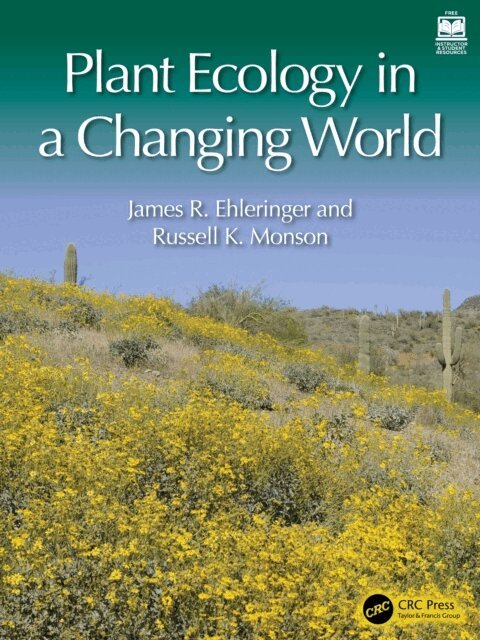
Today global changes and human activities affect plants within each of the world’s ecosystems. Plant Ecology in a Changing World provides a foundation for understanding how the changes underway impact structure and function in the world’s major biomes, while also describing how evolution has resulted in the biochemical, physiological, structural, and life history features that shaped plants and their capacities to persist across widely contrasting environments. This textbook is designed for undergraduate students and graduate students as well to serve as a resource for climate change and ecosystem scientists seeking a foundation on the principles of plant ecology and the basis of plant adaptations. While many textbooks focus primarily on natural ecosystems, Plant Ecology in a Changing World also recognizes the ecological importance of invasive, managed, and urban ecosystems and of the ways in which ecosystems are already being impacted by both human activities and a warming planet.Key features:Replete with 450+ figures that help to elucidate concepts and charts to clearly present key dataBoxes within chapters allow those who wish to delve into more advanced aspects of topics and of those key methodological approaches used to quantify processesHighlights of key plant ecologists and of their contributionsEach chapter concludes with a bulleted summary, enabling students to recap the key points of the chapterEach chapter comes with both a list of references, as well as with suggested readings, allowing the student to expand their knowledge on a particular topicAssociated with the book is an array of supplementary materials. These are available and constantly updated at http://plantecology.site.
1 588 kr
Skickas inom 10-15 vardagar
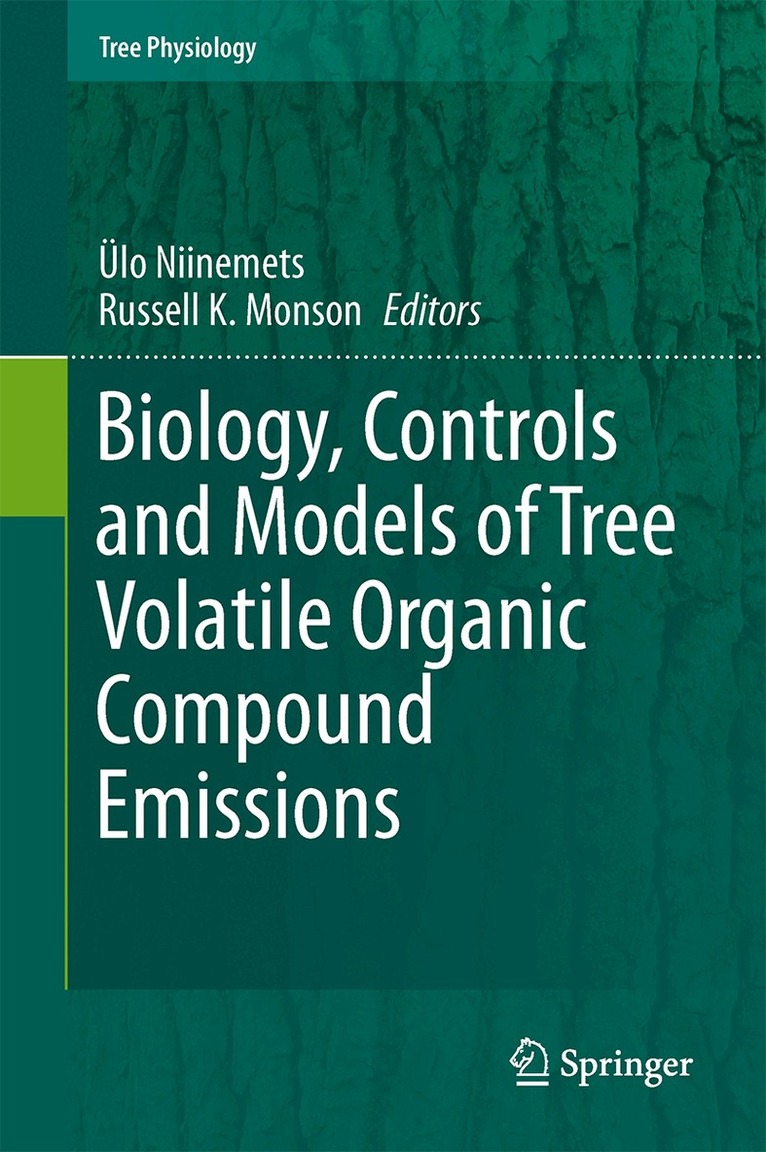
Plant-driven volatile organic compound (BVOC) emissions play a major role in atmospheric chemistry, including ozone and photochemical smog formation in the troposphere, and they extend the atmospheric lifetime of the key greenhouse gas, methane. Furthermore, condensation of photo-oxidation products of BVOCs leads to formation of secondary organic aerosols with profound implications for the earth's solar radiation budget and climate. Trees represent the plant life form that most contributes to BVOC emissions, which gives global forests a unique role in regulating atmospheric chemistry.Written by leading experts in the field, the focus is on recent advancements in understanding the controls on plant-driven BVOC emissions, including efforts to quantitatively predict emissions using computer models, particularly on elicitation of emissions under biotic and abiotic stresses, molecular mechanisms of volatile synthesis and emission and the role of emissions in plant stress tolerance.
1 588 kr
Skickas inom 10-15 vardagar
Plant-driven volatile organic compound (BVOC) emissions play a major role in atmospheric chemistry, including ozone and photochemical smog formation in the troposphere, and they extend the atmospheric lifetime of the key greenhouse gas, methane. Furthermore, condensation of photo-oxidation products of BVOCs leads to formation of secondary organic aerosols with profound implications for the earth's solar radiation budget and climate. Trees represent the plant life form that most contributes to BVOC emissions, which gives global forests a unique role in regulating atmospheric chemistry.Written by leading experts in the field, the focus is on recent advancements in understanding the controls on plant-driven BVOC emissions, including efforts to quantitatively predict emissions using computer models, particularly on elicitation of emissions under biotic and abiotic stresses, molecular mechanisms of volatile synthesis and emission and the role of emissions in plant stress tolerance.