Ruth Boeker – författare
Visar alla böcker från författaren Ruth Boeker. Handla med fri frakt och snabb leverans.
6 produkter
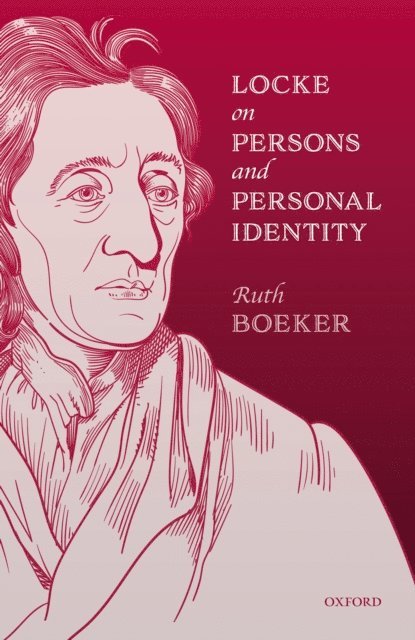
Locke on Persons and Personal Identity
Av Ruth Boeker
E-bok, 2021
1265 kr
Lägg i varukorg
Ruth Boeker offers a new perspective on Locke''s account of persons and personal identity by considering it within the context of his broader philosophical project and the philosophical debates of his day. Her interpretation emphasizes the importance of the moral and religious dimensions of his …
Locke on Persons and Personal Identity
Av Ruth Boeker
E-bok, 2021
1265 kr
Lägg i varukorg
Ruth Boeker offers a new perspective on Locke''s account of persons and personal identity by considering it within the context of his broader philosophical project and the philosophical debates of his day. Her interpretation emphasizes the importance of the moral and religious dimensions of his …
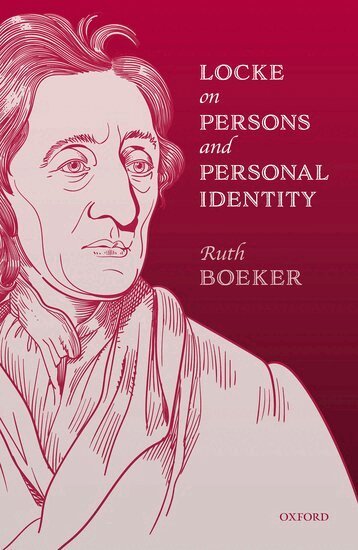
Locke on Persons and Personal Identity
Av Ruth Boeker
Inbunden, 2021
1404 kr
Lägg i varukorg
Ruth Boeker offers a new perspective on Locke's account of persons and personal identity by considering it within the context of his broader philosophical project and the philosophical debates of his day. Her interpretation emphasizes the importance of the moral and religious dimensions of his …
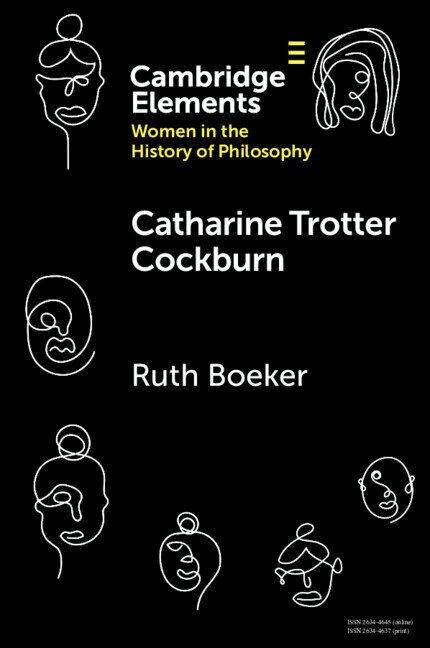
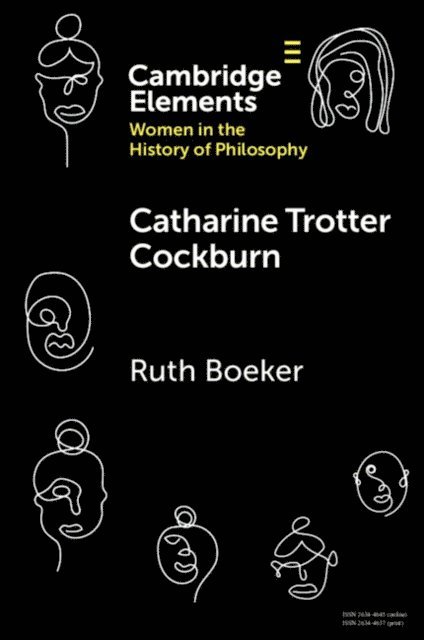
Catharine Trotter Cockburn
Av Ruth Boeker
Häftad, 2023
467 kr
Lägg i varukorg
This Element offers the first detailed study of Catharine Trotter Cockburn's philosophy and covers her contributions to philosophical debates in epistemology, metaphysics, moral philosophy, and philosophy of religion. It not only examines Cockburn's view that sensation and reflection are the …
Catharine Trotter Cockburn
Av Ruth Boeker
E-bok, 2023
338 kr
Lägg i varukorg
This Element offers the first detailed study of Catharine Trotter Cockburn''s philosophy and covers her contributions to philosophical debates in epistemology, metaphysics, moral philosophy, and philosophy of religion. It not only examines Cockburn''s view that sensation and reflection are the …
Catharine Trotter Cockburn
Av Ruth Boeker
E-bok, 2023
338 kr
Lägg i varukorg
This Element offers the first detailed study of Catharine Trotter Cockburn''s philosophy and covers her contributions to philosophical debates in epistemology, metaphysics, moral philosophy, and philosophy of religion. It not only examines Cockburn''s view that sensation and reflection are the …