R.W. Wissler – författare
Visar alla böcker från författaren R.W. Wissler. Handla med fri frakt och snabb leverans.
4 produkter
4 produkter
Häftad, Engelska, 1978
1 124 kr
Skickas inom 10-15 vardagar
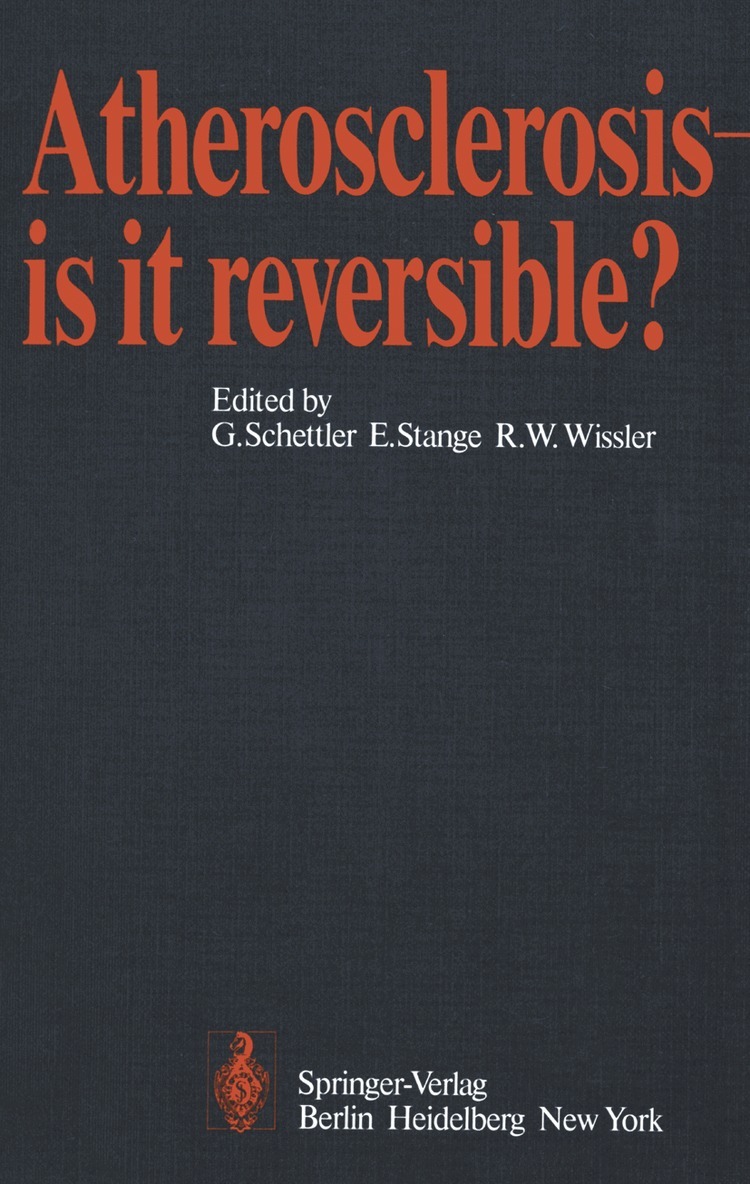
Even though numerous questions with regard to the pathogenesis of athero sclerosis have not yet been answered, the accumulated evidence indicates significant regression of lesions in experimental animals. This is discussed extensively in this monograph, as are the mechanisms involved in regression of lesions. Whether human atherosclerosis has the potential for regression appears to be the most important, but at the same time the most difficult question to answer. Contrary to experimental atherosclerosis in animals, which can be produced and which can regress within a few months, human lesions in general develop slowly over many years. Therefore, measures aimed at modifying this process may also require many years to be successful. In addition, repeated direct examination of lesions in the human is usually not possible. Nevertheless, recent reports in patients with hyperlipoproteinemias indicate that pronounced and maintained control of hyperlipidemias may lead, even within months, to regression as evidenced by angiography or sophisticated measurements of peripheral circulation. The monograph is divided into two sections. The first will deal with of lipid deposition in the arterial wall, whether "atherogenesis": mechanisms or not there is evidence of monoclonal origin of human atherosclerosis plaques, cell culture and factors that stimulate smooth muscle proliferation, and animal models of atherogenesis. This section is concluded with a discussion of dietary factors other than lipids in atherogenesis.
E-bok
PDF, Engelska, 20121 408 kr
Läs direkt efter köp
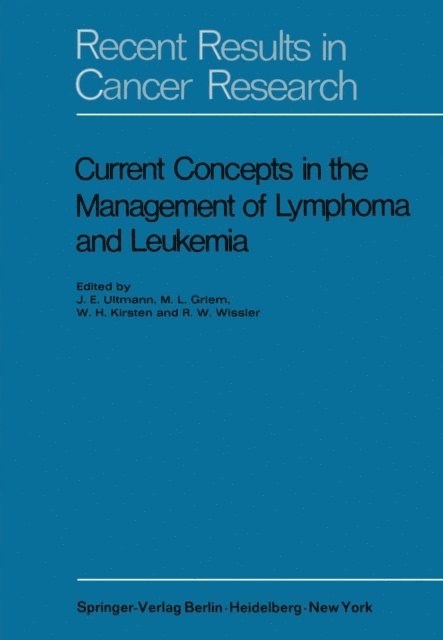
This volume summarizes the Proceedings of the fourth biennial Cancer Teaching Symposium held on March 7 and 8, 1970, at the University of Chicago Pritzker School of Medicine. The program was prepared by Drs. LAWRENCE ALLEN, MELVIN GRIEM, WERNER KIRSTEN, LEON JACOBSON, JOHN ULTMANN, ROBERT WISSLER, and STANLEY Y ACHNIN. The purpose of the Symposium was to present current advances in the area of lymphoma and leukemia to the staff and students of this medical center and to students and interested physicians from other institutions in the Chicago area. Like the other teaching symposia held in 1964, 1966, and 1968, this Symposium attracted over 450 physicians and scientists. In the course of one and a half days the audience had the opportunity to listen to the twenty-four invited speakers and to lively discussions. The formal presentations as well as discussions are recorded in these pages. This Teaching Symposium could not have been undertaken without the faithful assistance of the Program Committee, the Cancer Training Grant Advisory Com mittee, the staff who recorded and transcribed the Proceedings, and the editorial assistants. We wish to thank the following for their efforts: DOROTHY A. WILLIS, Administrative Secretary for Institutional Cancer Training Grant, Dr. ROBERT L. HUNTER, Dr. ROBERT H. KIRSCHNER, Dr. ROBERT A. ORLANDO, Dr. STEPHEN STRUM, RANDOLPH HUGHES, JULIA KANT, GEORGIA MOHR, TERRY PEARSON, FRIEDA RANNEY, and CAROL REESE. This Symposium received financial support from the Cancer Training Program Tt2 CA 08077-04 and The Chicago Tumor Institute.
Häftad, Engelska, 2012
1 124 kr
Skickas inom 10-15 vardagar
This volume summarizes the Proceedings of the fourth biennial Cancer Teaching Symposium held on March 7 and 8, 1970, at the University of Chicago Pritzker School of Medicine. The program was prepared by Drs. LAWRENCE ALLEN, MELVIN GRIEM, WERNER KIRSTEN, LEON JACOBSON, JOHN ULTMANN, ROBERT WISSLER, and STANLEY Y ACHNIN. The purpose of the Symposium was to present current advances in the area of lymphoma and leukemia to the staff and students of this medical center and to students and interested physicians from other institutions in the Chicago area. Like the other teaching symposia held in 1964, 1966, and 1968, this Symposium attracted over 450 physicians and scientists. In the course of one and a half days the audience had the opportunity to listen to the twenty-four invited speakers and to lively discussions. The formal presentations as well as discussions are recorded in these pages. This Teaching Symposium could not have been undertaken without the faithful assistance of the Program Committee, the Cancer Training Grant Advisory Com mittee, the staff who recorded and transcribed the Proceedings, and the editorial assistants. We wish to thank the following for their efforts: DOROTHY A. WILLIS, Administrative Secretary for Institutional Cancer Training Grant, Dr. ROBERT L. HUNTER, Dr. ROBERT H. KIRSCHNER, Dr. ROBERT A. ORLANDO, Dr. STEPHEN STRUM, RANDOLPH HUGHES, JULIA KANT, GEORGIA MOHR, TERRY PEARSON, FRIEDA RANNEY, and CAROL REESE. This Symposium received financial support from the Cancer Training Program Tt2 CA 08077-04 and The Chicago Tumor Institute.
E-bok
PDF, Engelska, 20121 420 kr
Läs direkt efter köp
Even though numerous questions with regard to the pathogenesis of athero sclerosis have not yet been answered, the accumulated evidence indicates significant regression of lesions in experimental animals. This is discussed extensively in this monograph, as are the mechanisms involved in regression of lesions. Whether human atherosclerosis has the potential for regression appears to be the most important, but at the same time the most difficult question to answer. Contrary to experimental atherosclerosis in animals, which can be produced and which can regress within a few months, human lesions in general develop slowly over many years. Therefore, measures aimed at modifying this process may also require many years to be successful. In addition, repeated direct examination of lesions in the human is usually not possible. Nevertheless, recent reports in patients with hyperlipoproteinemias indicate that pronounced and maintained control of hyperlipidemias may lead, even within months, to regression as evidenced by angiography or sophisticated measurements of peripheral circulation. The monograph is divided into two sections. The first will deal with of lipid deposition in the arterial wall, whether "atherogenesis": mechanisms or not there is evidence of monoclonal origin of human atherosclerosis plaques, cell culture and factors that stimulate smooth muscle proliferation, and animal models of atherogenesis. This section is concluded with a discussion of dietary factors other than lipids in atherogenesis.