S. Manian – författare
Visar alla böcker från författaren S. Manian. Handla med fri frakt och snabb leverans.
3 produkter
3 produkter
E-bok
Engelska, 20115 725 kr
Läs direkt efter köp
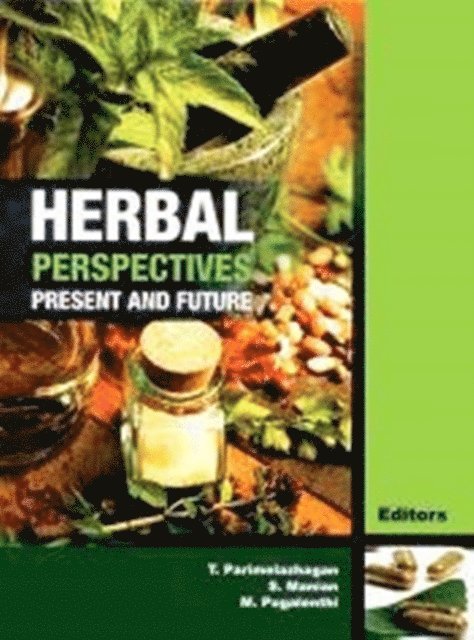
The principal aim of this book has been to collate the latest information, and to review the viewpoints of eminent investigators, who excel in the areas of herbal research. An attempt has been made to encapsulate scientific information pertinent to ethnomedicine, pharmacology, phytochemistry, post harvest technology and value addition of herbals. In this book, 30 articles by eminent academicians and scientists of the country on different aspect of the subject have been compiled. All recent scientific innovations/advances have been incorporated in a simple and lucid manner. A special emphasis has been laid on screening of herbal drugs for pharmacological activity, antioxidant potential and bioinformatics tools involved in herbal research. A brief discussion on ‘Intellectual Property Rights’ related to herbal research is also included. This book discusses the WHO protocol, different methods used for standardisation, quality control, standards for herbal extracts and validation of herbal products. The book will be useful to students and professionals in the fields of pharmacy, ayurveda, unani and siddha. We hope that the present compilation will be useful for the academicians, scientists, researchers and people associated in herbal research.
687 kr
Läs direkt efter köp
Rhizobium species involved in root nodule formation on legume plants are one of the best known groups of micro organisms. The Rhizobium legume symbiosis continues to be of strategic importance particularly in the context of food production. As the world population grows, it is also neces sary to have new developments taking place in crop improve ment. The development and application of new technologies in biological sciences over the past number of years have made the entire area of plant-microbial interaction an exciting and challenging research area to be involved in. In view of the importance of symbiotic nitrogen fixation, it is not surpris ing that it still represents one of the priority areas for commercial development in agricultural biotechnology. Since this symbiosis involves an association between procaryotic and eucaryotic partners, it requires of necessity a co-ordinated and interdisciplinary approach. It was in this spirit that this international conference was organised. The scientific programme was designed to focus on physio logical limitations affecting symbiotic nitrogen fixation and the potential for overcoming such limitations using genetic technologies. Participants were drawn from contractants of the EEC DGVI "Energy in Agriculture" nitrogen fixation prog ramme. The scientific programme was also supplemented with invited scientists from Europe and North America to provide appropriate expertise on the various conference topics.
548 kr
Skickas inom 10-15 vardagar
Rhizobium species involved in root nodule formation on legume plants are one of the best known groups of micro organisms. The Rhizobium legume symbiosis continues to be of strategic importance particularly in the context of food production. As the world population grows, it is also neces sary to have new developments taking place in crop improve ment. The development and application of new technologies in biological sciences over the past number of years have made the entire area of plant-microbial interaction an exciting and challenging research area to be involved in. In view of the importance of symbiotic nitrogen fixation, it is not surpris ing that it still represents one of the priority areas for commercial development in agricultural biotechnology. Since this symbiosis involves an association between procaryotic and eucaryotic partners, it requires of necessity a co-ordinated and interdisciplinary approach. It was in this spirit that this international conference was organised. The scientific programme was designed to focus on physio logical limitations affecting symbiotic nitrogen fixation and the potential for overcoming such limitations using genetic technologies. Participants were drawn from contractants of the EEC DGVI "Energy in Agriculture" nitrogen fixation prog ramme. The scientific programme was also supplemented with invited scientists from Europe and North America to provide appropriate expertise on the various conference topics.