S. R. Savithri – författare
Visar alla böcker från författaren S. R. Savithri. Handla med fri frakt och snabb leverans.
3 produkter
3 produkter
E-bok
PDF, Engelska, 20192 977 kr
Läs direkt efter köp
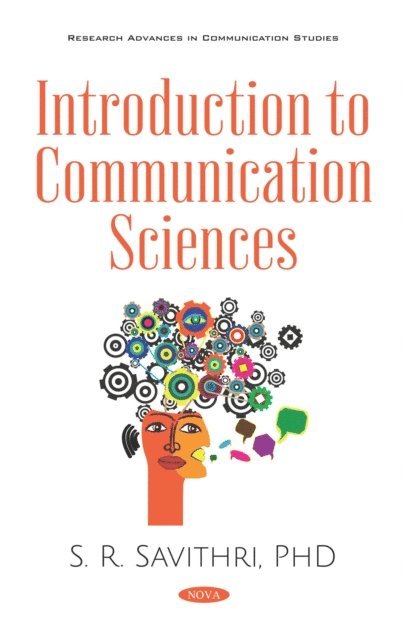
The main theme of the book Introduction to Communication Sciences is to provide information on (a) communication, language, speech and their components in brief with illustrations, (b) production, characteristics and generation of sound in detail, (c) sound intensity and concept of decibel, (d) hearing mechanism, audibility and hearing, and (e) introduction to the field of speech-language pathology and audiology including historical aspects of these two fields in five chapters. It is primarily written for libraries and with an intention of helping students studying in the first year of the speech and hearing Bachelor’s programme, master’s students in Speech Pathology, research scholars, and faculty teaching Speech Pathology and Audiology. The book is different from others as it incorporates literature from ancient Sanskrit literature and includes several illustrations for ease of understanding. It incorporates definitions of speech, language, communication, and their components, functions of communication, normal development of speech and language, pre-requisites and factors affecting speech-language development, cultural and linguistic issues in communication; bi/multilingual issues. It addresses overview of speech production, speech mechanism, the acoustic theory of speech production, and bases of speech and language. In addition, the book focuses on acoustic energy and power, absolute and relative units and measurements, Bel and deciBel, sound pressure and decibel sound pressure levels, and characteristics and application of decibels. Hearing mechanism, audibility and hearing is also dealt with along with hearing range, procedures of estimating minimum audible levels, minimum audible pressure and field, reference equivalent threshold sound pressure levels and hearing levels, and other related issues. Finally, it introduces the historical aspects of the field of Speech-Language Pathology and Audiology, development of the field in global context, interdisciplinary nature of the field, development of instrumentation in the field, and scope of practice of the field. As historical aspects are dealt with, material from WWW were included and hence internet references were inevitable. The course is required / hard core / discipline specific core course, and hence the proposed book would be used as a primary text. With its reader-friendly content and valuable online resources, Introduction to Communication Sciences is an ideal text for beginning speech pathology and audiology students and faculty.
E-bok
PDF, Engelska, 20204 063 kr
Läs direkt efter köp
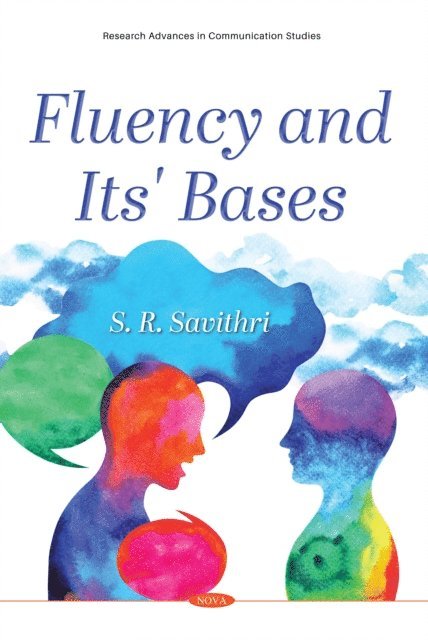
This book is written in response to several demands. Of course, the information presented in it is available in several other books and journal articles on fluency and stuttering. Nevertheless, the book puts together information that most books and journal articles have not considered in the literature commonly available in India, with the exception of articles in international journals. This information will be helpful to graduate students, researchers, and faculty, I hope. Several books have provided extensive literature on particular topics, but a comprehensive compilation is not available. Therefore, this book is written. Stuttering is a heterogenous disorder of speech, and unlike other speech disorders, it has much variability in terms of time, situation, a person with whom the Persons With Stuttering (PWS) are communicating etc. Also, it appears that there may be sub-groups among PWS. Several hypotheses have been postulated to understand normal speech production, but this area is still naïve as none of the theories address all of the questions related to stuttering and its treatment. To understand and diagnose stuttering, it is extremely important to know about fluency. Thus, this book covers definitions of fluency, disfluency and dysfluency in chapter 1, fluency development in normal children in chapter 2, the anatomical and physiological bases of fluency in chapter 3, the acoustic basis of fluency in chapter 4, genetic basis in chapter 5, and linguistic basis in chapter 6. Of course there are additional bases of fluency, such as psychological or prosodic, which are not covered in the book. The reason is that Children With Stuttering (CWS), especially in the initial stages, may not have any psychological basis, and prosody- intonation, stress, and rhythm - is difficult to measure. Yet, some parts of prosody like stress and rhythm are covered as fluency enhancers in chapters 1 and 2. Relevant journal articles are reviewed and presented where necessary. I thought that in the last chapter, I would try synthesizing all the information presented in the first six chapters. However, the views of authors are so diverse that there are probabilities of sub-groups within PWS. The data so far collected on typical children is mostly in English and it is insufficient to build a database in English or other languages. The data in English may not be useful to other languages owing to variations in phonetic and syllabic structure, stress and rhythm. Hence, a multicentric and multilingual database in typical children and adults is warranted. Though the book is titled Fluency, most of the literature comes from experiments on stuttering, or what could have contributed to fluency failures in PWS. From abnormal fluency, we are trying to deduce an understanding of normal fluency in CWS and PWS. Further, as I have observed, spectrograms and glottograms of fluency failures (repetitions) of PWS, reveal that the repetitions may be because PWS are not reaching the target phoneme and hence they keep iterating speech over and again to reach the target phoneme, which they may or may not achieve. These are mostly on respiratory, laryngeal, and articulatory efforts, neural commands, and may be the lack of coordination of these sub-systems. Most of these so-called repetitions are on stop consonants and hence, the listener may be unable to differentiate the bursts, aspirations, and voicing of various stop consonants as they are very minute events. For example, a burst may be of a duration of 3-11 ms. Therefore, more carful observations on these aspects are warranted. The book is an attempt to put together what we really know about fluency and its clinical application. The final goal in the research of fluency is a complete understanding of the speech production system in typical children and adults, which is unavailable at present. But something valuable is better than nothing, and several scientists have provided it.
E-bok
PDF, Engelska, 20223 492 kr
Läs direkt efter köp
This book is undeniably an informative and stimulating read for students, professionals, educators, and researchers with an interest in speech perception. The seven engaging chapters in the book encourage the reader to critically analyze issues in speech perception research and identify relevant areas for future examination. The first chapter introduces speech perception and raises some fundamental challenges associated with its study. In the subsequent chapters, the authors gradually immerse the reader in discussions about the anatomy and physiology of speech perception, theories, experimental methods, acoustic cues, spoken word recognition and development of speech perception to cover the depth and breadth of the field. Examples from different languages and comparisons with extant research in English highlight universal and language-specific aspects of speech perception. Scrutiny of research lacunae throughout the book make it a thought-provoking read. It calls for a collective scientific effort across languages around the world to continue unraveling the mystery of speech perception in human beings.