Sabah Abboud Jasim - Böcker
Visar alla böcker från författaren Sabah Abboud Jasim. Handla med fri frakt och snabb leverans.
3 produkter
3 produkter
Del 267 - BAR International
Ubaid Period in Iraq, Part i
Recent excavations in the Hamrin region
Häftad, Engelska, 1985
797 kr
Skickas inom 5-8 vardagar
Del 267 - BAR International
Ubaid Period in Iraq, Part ii
Recent excavations in the Hamrin region
Häftad, Engelska, 1985
797 kr
Skickas inom 5-8 vardagar
Del 147 - Oriental Institute Publications
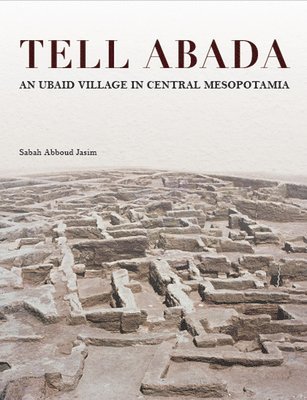
Tell Abada
An Ubaid Village in Central Mesopotamia
Inbunden, Engelska, 2022
2 233 kr
Skickas inom 5-8 vardagar
In the winter of 1978, an extensive archaeological campaign was launched in the Hamrin Basin area in the east-central part of Iraq to salvage many archaeological sites before their flooding, due to the construction of a large dam. This volume documents the excavations carried out in two of the sites-Tell Abada and Tell Rashid-dating back to the Ubaid period in the fifth millennium BC. The first site (Tell Abada) is of particular importance; it is an almost complete village with three occupational levels unearthed. Several residential houses and buildings with distinctive architectural features are exposed. Industrial workshops dedicated to the manufacture of pottery vessels are present. Of express interest was the first-time discovery of pottery-making equipment, notably the potter's wheel. An equally exciting discovery is the presence of many fire installations dedicated to pottery vessels' burning. The pottery products are enormous, varied, and richly decorated, reflecting aesthetic features and agility. The presence of the pottery in a very well stratified sequence enhances our understanding of Ubaid pottery, clarifies its chronological classifications, and establishes cultural links with other Ubaid sites in the region. Among other remarkable discoveries are many infant burial urns, granaries, water ducts, and proto-tablets. The varied aspects of the cultural material revealed throughout the excavations provides significant insight into daily life, settlement patterns, craft specialization, religious practices, and socioeconomic status, and sheds new light on the Ubaid period in general in Mesopotamia.