Sachin Yashwant Kale - Böcker
Visar alla böcker från författaren Sachin Yashwant Kale. Handla med fri frakt och snabb leverans.
4 produkter
4 produkter
232 kr
Skickas
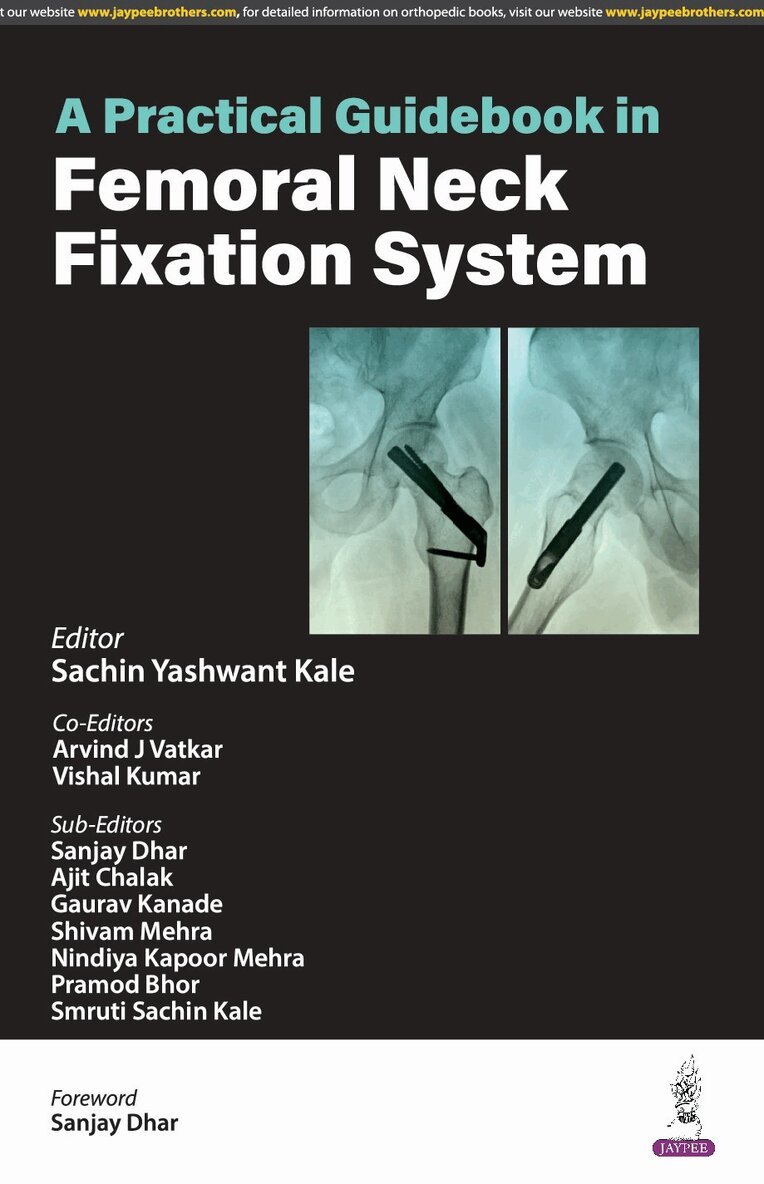
The femur, or thigh bone, is the only bone in the thigh and is the longest bone in the body. It acts as the site of origin and attachment for many muscles and ligaments, and the head forms a ball and socket joint with the hip.The femoral neck connects the femoral shaft with the femoral head. Femoral neck fractures are a type of intracapsular hip fracture – the junctional location makes the neck prone to fracture.The Femoral Neck System (FNS) addresses clinical challenges associated with the fixation of femoral neck fractures.Authored by a team of highly experienced trauma surgeons and orthopaedic specialists, this book provides a comprehensive overview of the FNS, detailing its design, biomechanical principles, clinical applications, and rehabilitation protocols.The book begins with a detailed examination of femoral neck fractures, including definitions, classifications, epidemiology, and incidence rates, as well as comparative analysis of various fixation methods.The next chapter covers design and components of implants, including screws, plates, and locking mechanisms.The following sections provide step-by-step surgical procedures for femoral neck fracture fixation, explaining positioning, intraoperative considerations, tips for optimal implant placement, and postoperative care and rehabilitation.The book concludes with discussion on common complications and their management, clinical outcomes and studies, and future perspectives and innovations.Compiling the latest data, research and expert opinions, chapters feature anecdotal notes for the fixation system, pearls, charts, figures, and diagrams, to provide an invaluable resource for specialists involved in the management of femoral neck fractures.
414 kr
Skickas inom 5-8 vardagar
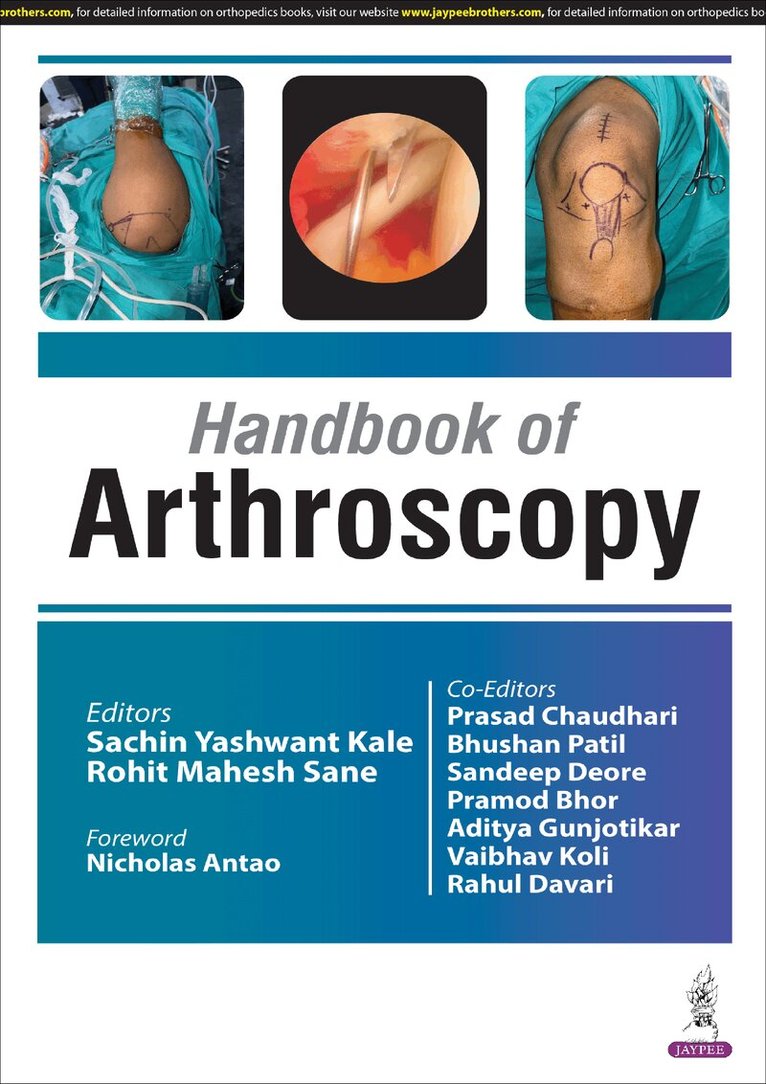
Arthroscopy is a minimally invasive surgical procedure used to diagnose and treat joint problems, such as pain, swelling, and stiffness, in joints like the knee, shoulder, hip, ankle, wrist, and elbow. It involves making small incisions to insert an arthroscope, a thin tube with a camera, to view the joint's interior on a screen. Tiny surgical instruments can also be inserted to repair damaged tissues or remove loose fragments during the procedure. Arthroscopy has revolutionised orthopaedic surgery, offering minimally invasive solutions for diagnosing and treating a wide range of joint disorders. With advancements in technology and surgical techniques, arthroscopy has become an indispensable tool in modern orthopaedic practice.This handbook is a practical guide for orthopaedic surgeons, residents, and fellows seeking to deepen their understanding and refine their skills in arthroscopy.The text provides both foundational knowledge and practical insights into the evolving field of arthroscopic surgery, covering key topics such as knee and shoulder arthroscopy, graft selection, ligament reconstructions, and rehabilitation.The book offers a structured approach to the essential concepts and techniques required for successful arthroscopic procedures. Each chapter is written by experienced surgeons and specialists in the field, ensuring that the content is evidence-based, clinically relevant, and easy to apply in practice.The book is structured to facilitate quick reference, with step-by-step explanations of surgical procedures, illustrations, and case-based discussions.Special attention has been given to aspects such as patient positioning, portal placements, and postsurgical rehabilitation, which are critical for optimal patient outcomes.
246 kr
Skickas inom 5-8 vardagar
653 kr
Skickas inom 5-8 vardagar
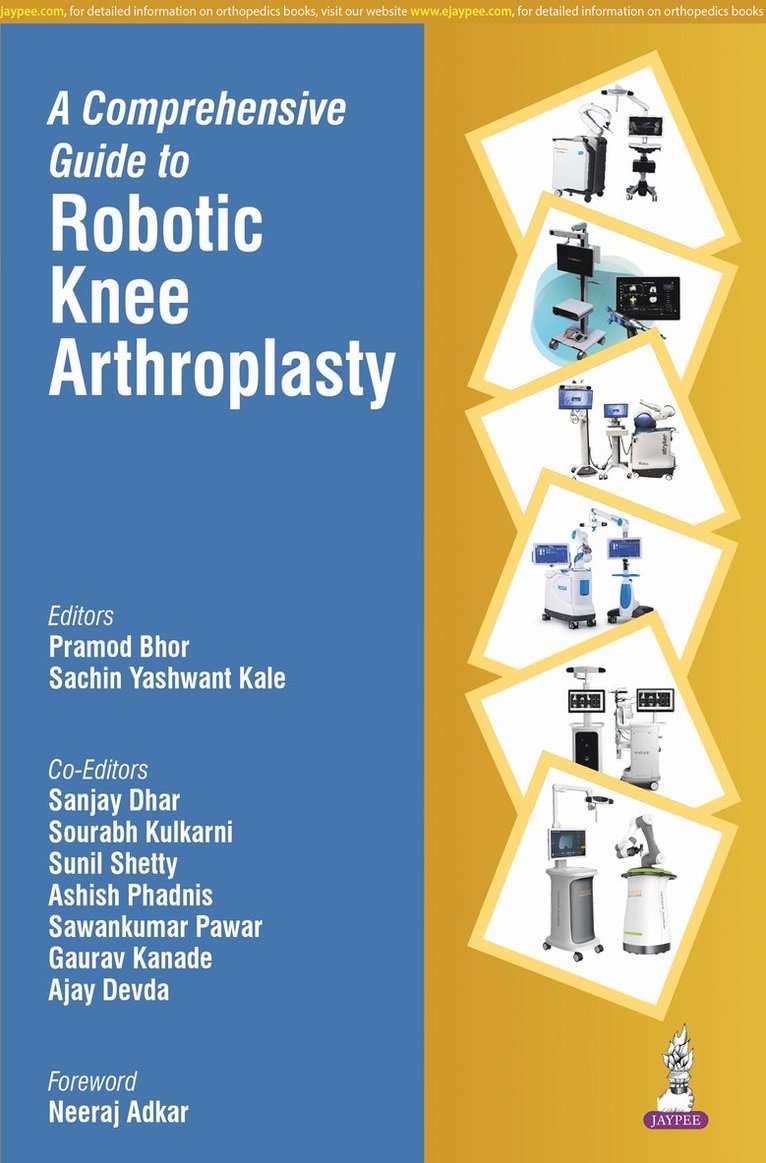
Orthopaedic surgery stands at a transformative crossroads, where precision, personalisation, and technological innovation are reshaping conventional practices.One of the most significant advances in recent years is the integration of robotic technology into total knee arthroplasty (TKA). Once considered futuristic, robotic-assisted knee replacement has now become an essential and evolving aspect of modern surgical care, offering improved accuracy, consistency, and patient outcomes.Based on the authors’ vast array of experience, this book is a comprehensive guide to robotic knee arthroplasty, not only explaining the mechanics of various robotic platforms, but also contextualising their use in real-world clinical scenarios.Throughout this book, a conscious effort is made to keep the content evidence-based, yet clinically oriented and easy to navigate.Chapters begin with the evolution and rationale behind robotic TKA and gradually unfold into detailed discussions on different robotic systems—CUVIS, MISSO, MAKO, VALYS, CORI, ROSA, and more.Each system is examined with a focus on its unique features, operational workflow, indications, benefits, limitations, and clinical outcomes. Comparisons between systems are drawn when relevant to aid in practical decision making.