Sai Balakrishnan – författare
Visar alla böcker från författaren Sai Balakrishnan. Handla med fri frakt och snabb leverans.
3 produkter
3 produkter
813 kr
Skickas inom 10-15 vardagar
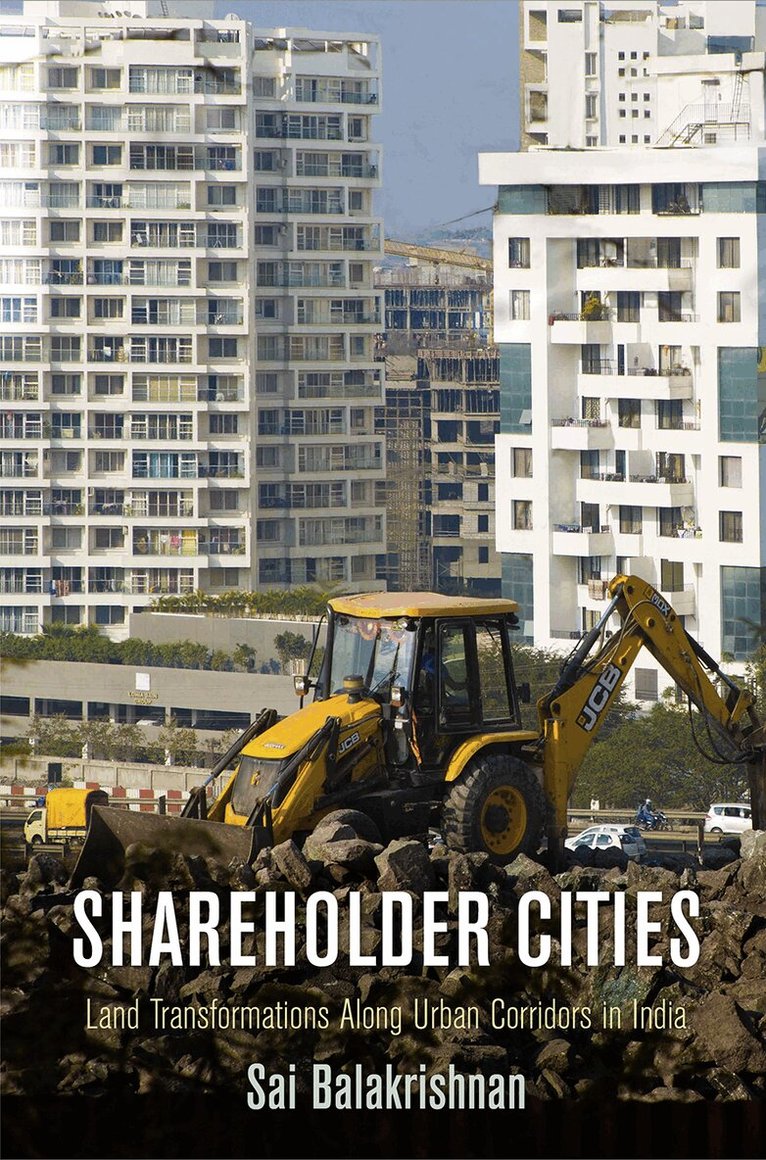
Economic corridors-ambitious infrastructural development projects that newly liberalizing countries in Asia and Africa are undertaking-are dramatically redefining the shape of urbanization. Spanning multiple cities and croplands, these corridors connect metropolises via high-speed superhighways in an effort to make certain strategic regions attractive destinations for private investment. As policy makers search for decentralized and market-oriented means for the transfer of land from agrarian constituencies to infrastructural promoters and urban developers, the reallocation of property control is erupting into volatile land-based social conflicts.In Shareholder Cities, Sai Balakrishnan argues that some of India's most decisive conflicts over its urban future will unfold in the regions along the new economic corridors where electorally strong agrarian propertied classes directly encounter financially powerful incoming urban firms. Balakrishnan focuses on the first economic corridor, the Mumbai-Pune Expressway, and the construction of three new cities along it. The book derives its title from a current mode of resolving agrarian-urban conflicts in which agrarian landowners are being transformed into shareholders in the corridor cities, and the distributional implications of these new land transformations.Shifting the focus of the study of India's contemporary urbanization away from megacities to these in-between corridor regions, Balakrishnan explores the production of uneven urban development that unsettles older histories of agrarian capitalism and the emergence of agrarian propertied classes as protagonists in the making of urban real estate markets. Shareholder Cities highlights the possibilities for a democratic politics of inclusion in which agrarian-urban encounters can create opportunities for previously excluded groups to stake new claims for themselves in the corridor regions.
3 545 kr
Kommande
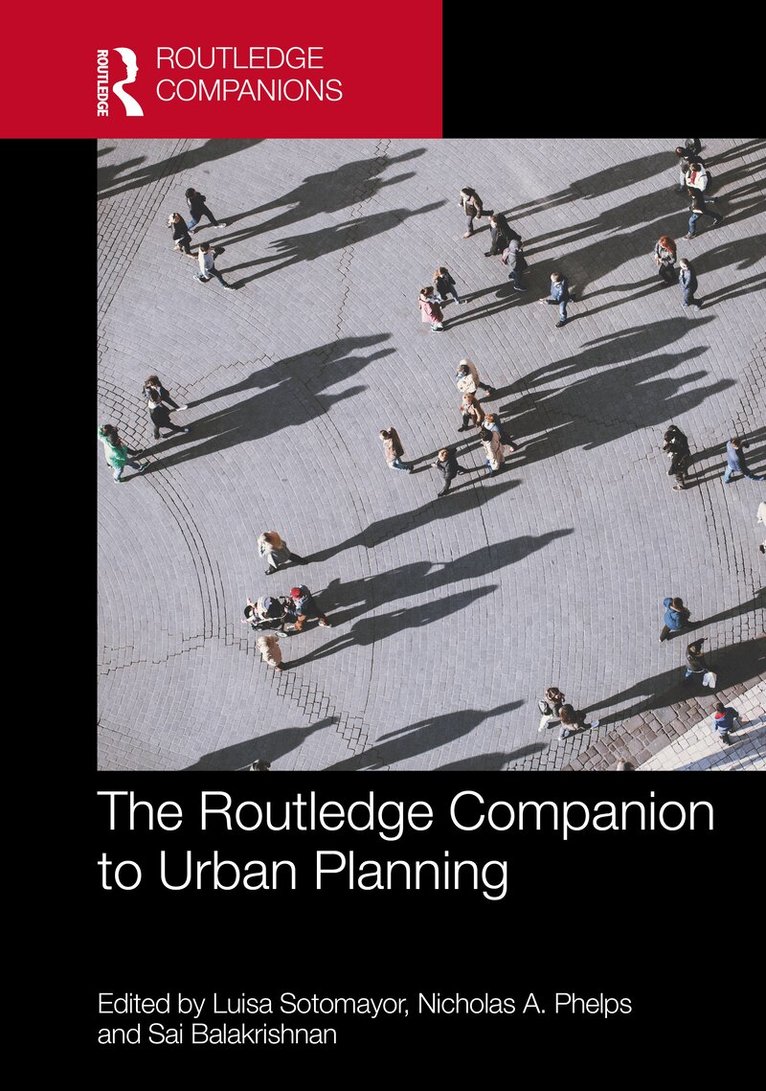
The Routledge Companion to Urban Planning challenges the conventional boundaries of urban planning, urging the field to embrace the complexities and ambiguities of the urban experience. It contends that urban planning must move beyond binary classifications—such as city/country or society/nature—and instead renew itself through language, theory, policy, and practices that engage with mixed forms, overlapping functions, and ethical concerns that lie in the in-between.Urban planning, as a discipline, is inherently dialectical, simultaneously producing and undermining classifications that shape how we understand, navigate, and transform the world. Yet, within this tension lies a latent spectrum of alternatives. This volume takes this spectrum as its starting point, assembling 32 contributions from scholars and practitioners across the global North and South to critically interrogate and rework the epistemological foundations of planning. Through diverse empirical and theoretical contexts, the chapters explore how mixed forms, overlapping functions, and substantive questions unsettle conventional approaches to governance and intervention. Contributors examine the origins, contestations, and exclusions embedded in urban planning’s classifications, probing their limits and omissions. In doing so, the volume repositions planning as a field that must engage ambiguity, rethink its classificatory logics, and cultivate more adaptive, inclusive, and context-sensitive practices for the worlds between.This companion will interest scholars and professionals in the areas of Urban Studies, Urban Planning, Governance, Policy Studies, Social Theory, Territorial Management, and Sustainable Development.
312 kr
Skickas inom 5-8 vardagar
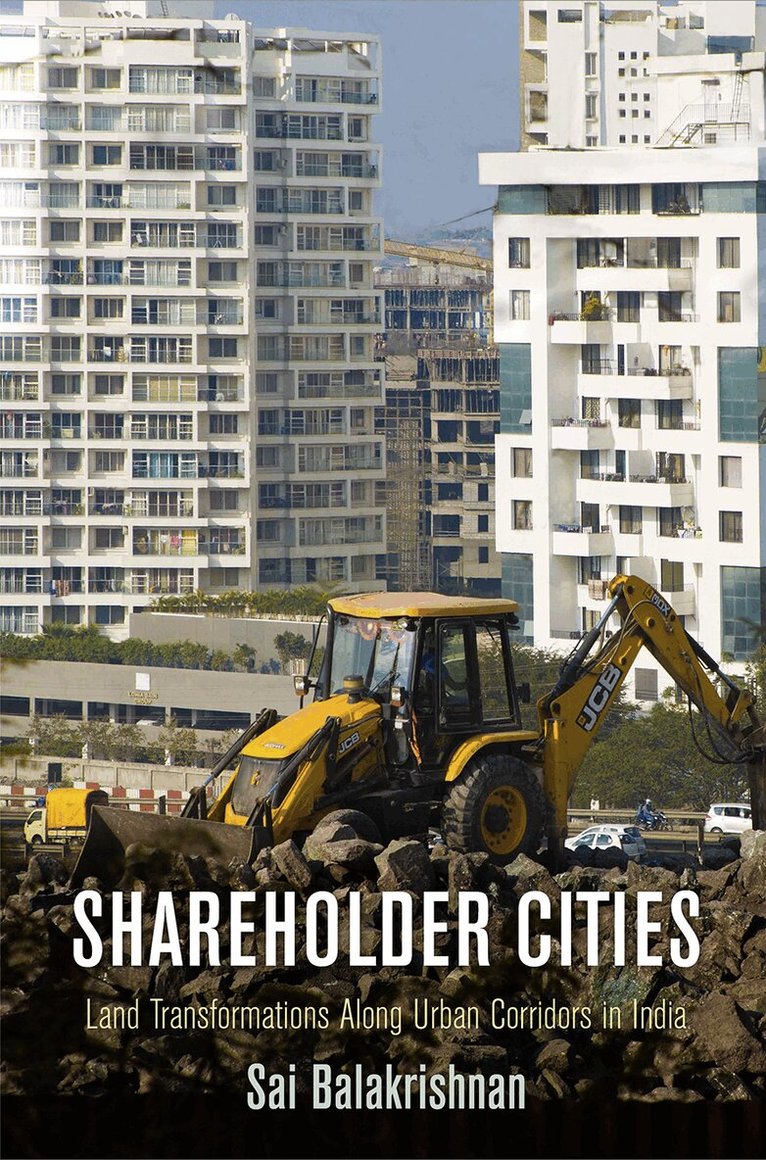
Economic corridors-ambitious infrastructural development projects that newly liberalizing countries in Asia and Africa are undertaking-are dramatically redefining the shape of urbanization. Spanning multiple cities and croplands, these corridors connect metropolises via high-speed superhighways in an effort to make certain strategic regions attractive destinations for private investment. As policy makers search for decentralized and market-oriented means for the transfer of land from agrarian constituencies to infrastructural promoters and urban developers, the reallocation of property control is erupting into volatile land-based social conflicts.In Shareholder Cities, Sai Balakrishnan argues that some of India's most decisive conflicts over its urban future will unfold in the regions along the new economic corridors where electorally strong agrarian propertied classes directly encounter financially powerful incoming urban firms. Balakrishnan focuses on the first economic corridor, the Mumbai-Pune Expressway, and the construction of three new cities along it. The book derives its title from a current mode of resolving agrarian-urban conflicts in which agrarian landowners are being transformed into shareholders in the corridor cities, and the distributional implications of these new land transformations.Shifting the focus of the study of India's contemporary urbanization away from megacities to these in-between corridor regions, Balakrishnan explores the production of uneven urban development that unsettles older histories of agrarian capitalism and the emergence of agrarian propertied classes as protagonists in the making of urban real estate markets. Shareholder Cities highlights the possibilities for a democratic politics of inclusion in which agrarian-urban encounters can create opportunities for previously excluded groups to stake new claims for themselves in the corridor regions.