Sailaja Priyadarsini – författare
Visar alla böcker från författaren Sailaja Priyadarsini. Handla med fri frakt och snabb leverans.
3 produkter
3 produkter
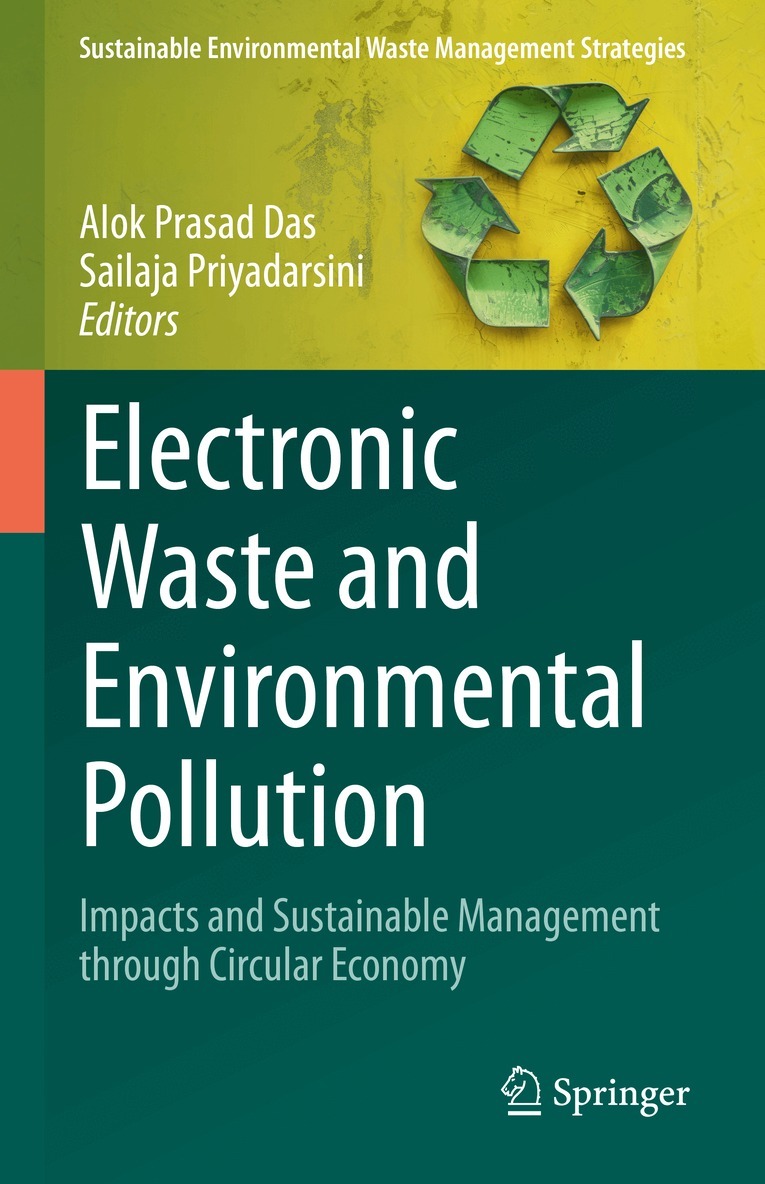
Electronic Waste and Environmental Pollution
Impacts and Sustainable Management through Circular Economy
Inbunden, Engelska, 2026
1 696 kr
Skickas inom 5-8 vardagar
Electronic waste or E-waste is the term for expired and end-of-life electronics that have been dumped by their owners. Examples include televisions, laptops, freezers, generators, computers, and other electrical devices, which contains toxic metal like Ni, Pb, Sn, Al, Cu Mn, and Fe, along with many kinds of metal oxide, glass Fiber, plastics, and ceramics that are bonded to and covered in the waste. Improper waste management techniques of these e-waste may have a serious effect on living beings. The presence of these hazardous wastes in the environment will make vulnerable conditions to aquatic as well as terrestrial life. To date, several conventional techniques have been implemented to treat this hazardous e-waste but biological treatment is more efficient from all, basic economic and environmental points of view. Through the utilization of microorganisms like bacteria or archaea, the extraction technique known as "bio-recovery of metals" can remove valuable metals from low-grade ore.The purpose of this book is to discuss the challenges that have arisen due to e-waste, their harmful effects on the ecosystem, and limitations as well as the improvement of current biological techniques used for the management and recovery of e-waste. This book focuses on the role of advanced green engineering technologies for sustainable e-waste management in building an economically supportable society as a basic need of developing countries.
2 389 kr
Kommande
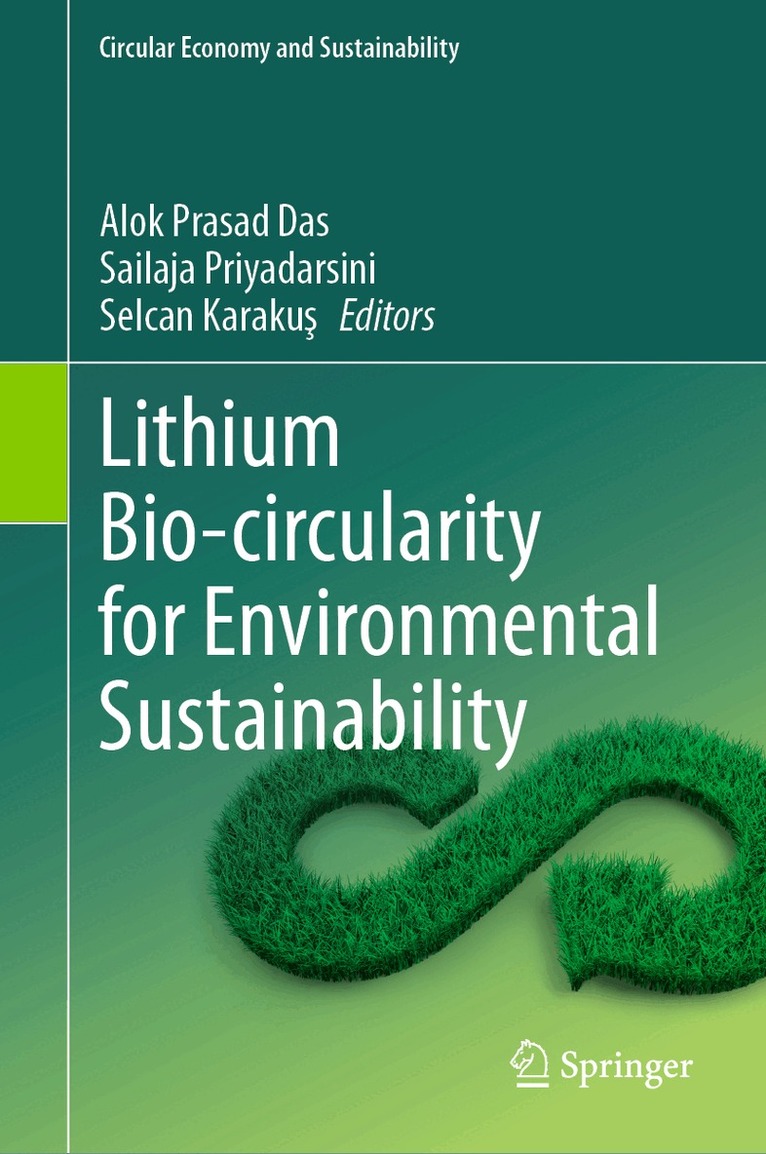
This book describes about Lithium has become an indispensable part of the modern electronic world, due to the rapid advancement in the energy storage solution. However, its extraction, uses, and recycling create a huge environmental solution damaging human health and the environment. The primary purpose of writing this book is to provide a comprehensive thoughtful understanding of sustainable lithium management through bio-circularity to minimize energy investment and waste generation. This book aims to address the main sources, transport, and impact of LIB pollution in different ecosystems. It also highlights the challenges faced during lithium recycling, and sustainability, which leads to loss of precious metals. This book offers insight and knowledge into the mechanism of microbial bioleaching approaches and biotechnological innovation in bioleaching to maximize the efficiency of bioleaching. The main part of the book will also cover the innovative approaches to lithium bio-circular economy principles to promote green sustainable lithium recovery. By exploring the microbial bioleaching technology aligned with the bio-circular economy lithium can be efficiently recovered from secondary resources known as urban mines. This book also provides the policy framework, and technology innovation for the industry sector to follow closed-loop bio-circular economy approaches, ensuring resource efficiency for the long-term run. It also bridges the knowledge gap between research and industry by facilitating the case study example of real-world applications. This book will open a new world of lithium recycling where the microbial leaching technology aligned with bio-circular economy principles enhances the recycling process, reducing environmental impact and ensuring sustainable energy transition
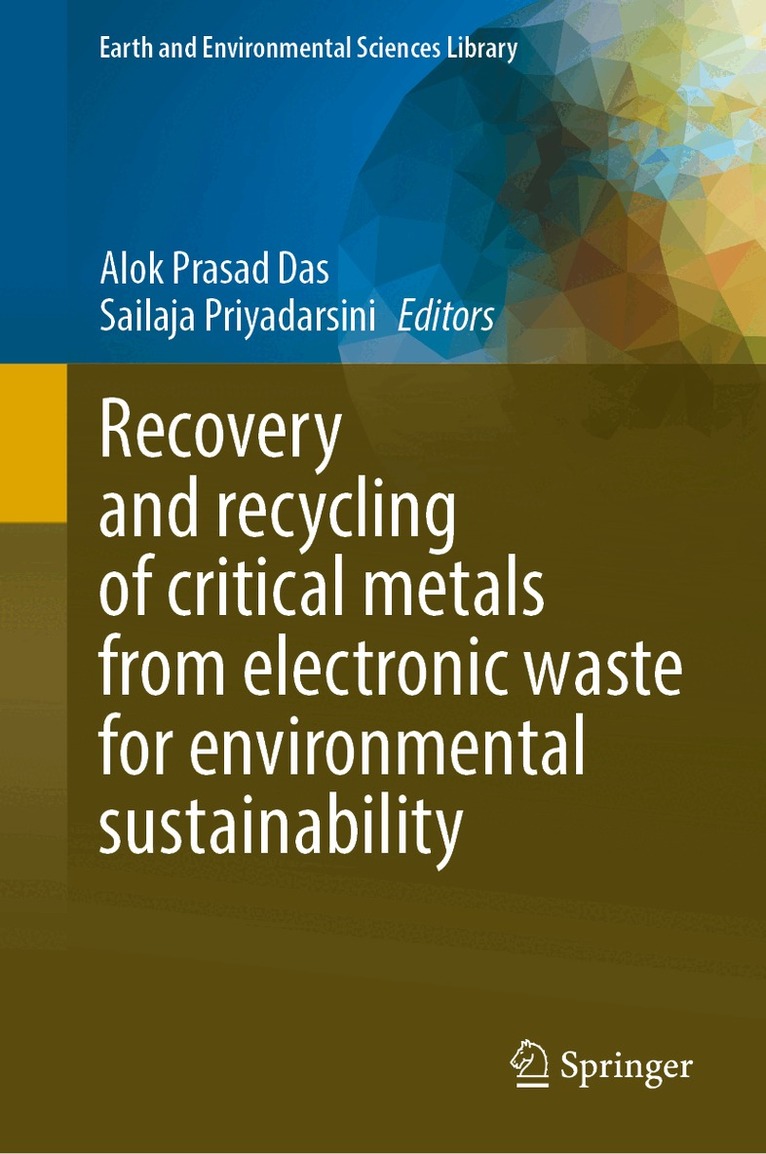
Recovery and recycling of critical metals from electronic waste for environmental sustainability
Inbunden, Engelska, 2026
3 672 kr
Kommande
Electronic waste (e-waste) is one of the fastest-growing waste streams globally due to industrialization, posing significant environmental and health hazards because of its complex composition, very short lifespan, and improper disposal practices. E-waste also contains many toxic substances like lead, cadmium, and mercury, which leach into soil and water, causing contamination. Prolonged exposure to these toxins leads to serious human health issues, including neurological damage, respiratory problems, and cancers. Additionally, e-waste is a rich secondary source of critical and strategic metals such as lithium, cobalt, and nickel, vital for manufacturing mobile phones, laptops, electric vehicles, toys, and many other consumer electronics. Critical metals mining from the natural ores leads to water pollution and scarcity. Improper disposal and mismanagement of LIBs end up in resource depletion and loss of many precious metals. Proper disposal practices and sustainable management of LIBs are now a central concern to mitigate LIB pollution. Pyrometallurgy, hydrometallurgy, direct recycling, and bioleaching are the most important methods used in the recycling of critical metals from e-waste. Whereas, bioleaching is the environmentally friendly, sustainable method for the solubilization and recovery of critical metals from e-waste, leveraging the natural potential of microorganisms. A bio-circular economy approach aligned with microbial bioleaching technology diminishes the environmental impact and enhances the efficiency of critical metal recovery by reducing the dependency on traditional mining. This book promotes the recovery and recycling of critical metals by integrating with microbial leaching technology for sustainable management. It also explores the industrial applications and their environmental and economic impact during critical metals extraction and mismanagement. This book also highlights the cutting-edge biotechnological innovation in critical metals recovery from e-waste to promote a closed-loop bio-circular economy system for critical metal extraction, recovery, and reuse. A crucial part of the book will also describe the case study of critical metals recovery, policy frameworks, and industry initiatives to promote the bio-circularity of critical metals. Integrating the scientific approaches of microbial leaching and circular economy can shape critical metals.