Sally Cummings – författare
Visar alla böcker från författaren Sally Cummings. Handla med fri frakt och snabb leverans.
15 produkter
Power and Change in Central Asia
Inbunden, 2001
3156 kr
Lägg i varukorg
This volume offers the first systematic comparison of political change, leadership style and stability in Central Asia. The contributors, all leading international specialists on the region, offer focused case-studies of Kazakhstan, Kyrgyzstan, Tajikistan, Turkmenistan and Uzbekistan, comparing how …
Oil, Transition and Security in Central Asia
Inbunden, 2003
2512 kr
Lägg i varukorg
Approaching Central Asia from the perspective of geopolitics, transition, oil and stability, the authors provide a very broad and diverse analysis of the region, examining domestic and international developments since 1991. The book both provides an introduction to the region and presents advanced …
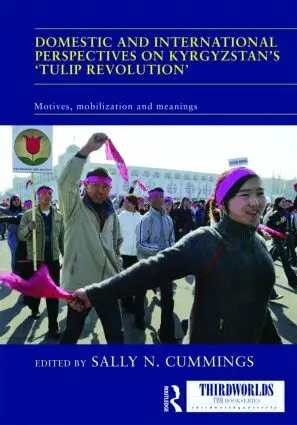
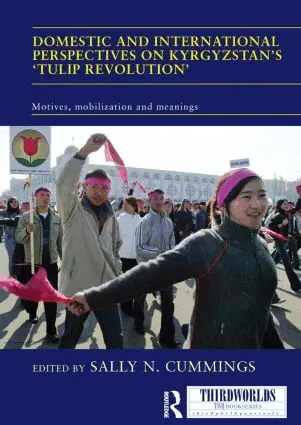
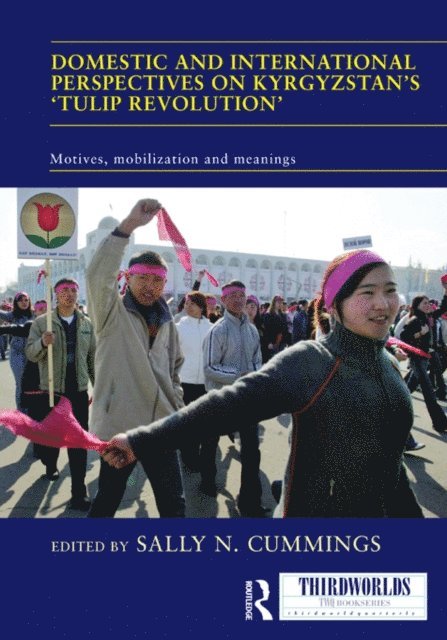
Domestic and International Perspectives on Kyrgyzstan’s ‘Tulip Revolution’
Motives, Mobilization and Meanings
Inbunden, 2009
2586 kr
Lägg i varukorg
In early 2005 regional protests in Kyrgyzstan soon became national ones as protesters seized control of the country’s capital, Bishkek. The country’s president for fifteen years, Askar Akaev, fled the country and after a night of extensive looting, a new president, Kurmanbek Bakiev, came to power. …
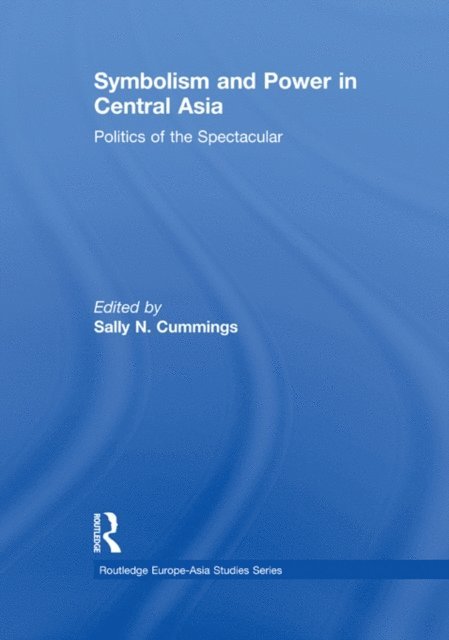
Symbolism and Power in Central Asia
Politics of the Spectacular
Inbunden, 2010
2512 kr
Lägg i varukorg
With the collapse of communism, post-communist societies scrambled to find meaning to their new independence. Central Asia was no exception. Events, relationships, gestures, spatial units and objects produced, conveyed and interpreted meaning. The new power container of the five independent states …
Oil, Transition and Security in Central Asia
Häftad, 2010
950 kr
Lägg i varukorg
Approaching Central Asia from the perspective of geopolitics, transition, oil and stability, the authors provide a very broad and diverse analysis of the region, examining domestic and international developments since 1991. The book both provides an introduction to the region and presents advanced …
Symbolism and Power in Central Asia
Politics of the Spectacular
Häftad, 2012
648 kr
Lägg i varukorg
With the collapse of communism, post-communist societies scrambled to find meaning to their new independence. Central Asia was no exception. Events, relationships, gestures, spatial units and objects produced, conveyed and interpreted meaning. The new power container of the five independent states …
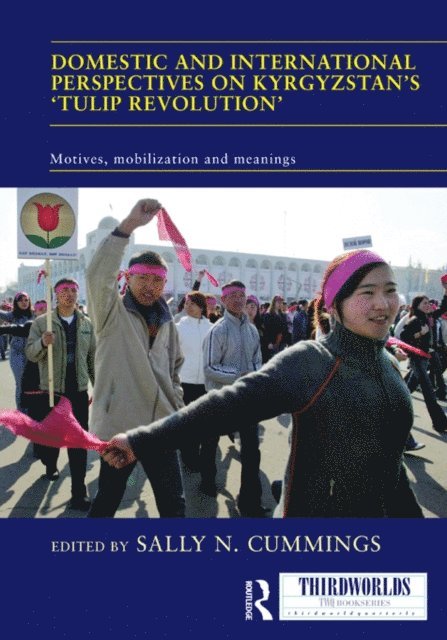
Domestic and International Perspectives on Kyrgyzstan’s ‘Tulip Revolution’
Motives, Mobilization and Meanings
Häftad, 2013
772 kr
Lägg i varukorg
In early 2005 regional protests in Kyrgyzstan soon became national ones as protesters seized control of the country’s capital, Bishkek. The country’s president for fifteen years, Askar Akaev, fled the country and after a night of extensive looting, a new president, Kurmanbek Bakiev, came to power. …
Oil, Transition and Security in Central Asia
E-bok, 2004
813 kr
Lägg i varukorg
Approaching Central Asia from the perspective of geopolitics, transition, oil and stability, the authors provide a very broad and diverse analysis of the region, examining domestic and international developments since 1991. The book both provides an introduction to the region and presents advanced …
Oil, Transition and Security in Central Asia
E-bok, 2004
795 kr
Lägg i varukorg
Approaching Central Asia from the perspective of geopolitics, transition, oil and stability, the authors provide a very broad and diverse analysis of the region, examining domestic and international developments since 1991. The book both provides an introduction to the region and presents advanced …
Power and Change in Central Asia
E-bok, 2004
831 kr
Lägg i varukorg
This volume offers the first systematic comparison of political change, leadership style and stability in Central Asia. The contributors, all leading international specialists on the region, offer focused case-studies of Kazakhstan, Kyrgyzstan, Tajikistan, Turkmenistan and Uzbekistan, comparing how …
Power and Change in Central Asia
E-bok, 2004
831 kr
Lägg i varukorg
This volume offers the first systematic comparison of political change, leadership style and stability in Central Asia. The contributors, all leading international specialists on the region, offer focused case-studies of Kazakhstan, Kyrgyzstan, Tajikistan, Turkmenistan and Uzbekistan, comparing how …
Symbolism and Power in Central Asia
Politics of the Spectacular
E-bok, 2013
762 kr
Lägg i varukorg
With the collapse of communism, post-communist societies scrambled to find meaning to their new independence. Central Asia was no exception. Events, relationships, gestures, spatial units and objects produced, conveyed and interpreted meaning. The new power container of the five independent states …
Symbolism and Power in Central Asia
Politics of the Spectacular
E-bok, 2013
746 kr
Lägg i varukorg
With the collapse of communism, post-communist societies scrambled to find meaning to their new independence. Central Asia was no exception. Events, relationships, gestures, spatial units and objects produced, conveyed and interpreted meaning. The new power container of the five independent states …
Domestic and International Perspectives on Kyrgyzstan's 'Tulip Revolution'
Motives, Mobilization and Meanings
E-bok, 2013
864 kr
Lägg i varukorg
In early 2005 regional protests in Kyrgyzstan soon became national ones as protesters seized control of the country’s capital, Bishkek. The country’s president for fifteen years, Askar Akaev, fled the country and after a night of extensive looting, a new president, Kurmanbek Bakiev, came to …
Domestic and International Perspectives on Kyrgyzstan's 'Tulip Revolution'
Motives, Mobilization and Meanings
E-bok, 2013
883 kr
Lägg i varukorg
In early 2005 regional protests in Kyrgyzstan soon became national ones as protesters seized control of the country’s capital, Bishkek. The country’s president for fifteen years, Askar Akaev, fled the country and after a night of extensive looting, a new president, Kurmanbek Bakiev, came to …