Sally Foreman Griffith – författare
Visar alla böcker från författaren Sally Foreman Griffith. Handla med fri frakt och snabb leverans.
4 produkter
4 produkter
Inbunden, Engelska, 1989
388 kr
Skickas inom 5-8 vardagar
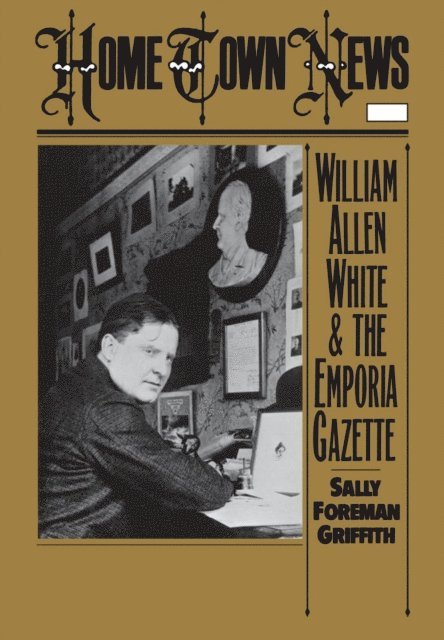
William Allen White was the best known newspaper editor of the first three decades of the twentieth century in America. He chose always to work with the Emporia (Kansas) Gazette, where he had begun his career, but achieved a national reputation, through his books, and articles in the magazines Atlantic and Harpers. This book is concerned with small-town values and achievements in turn-of-the-century America when the nation was changing dramatically. The author's dissertation, on which this book is based, won the Allan Nevins prize of the Society of American Historians.
E-bok
PDF, Engelska, 1989322 kr
Läs direkt efter köp
In 1895, a 27-year-old journalist named William Allen White returned to his home town of Emporia, Kansas, to edit a little down-at-the-heels newspaper he had just purchased for $3,000. "The new editor," he wrote in his first editorial, "hopes to live here until he is the old editor, until some of the visions which rise before him as he dreams shall have come true." White did become "the old editor," remaining with the Emporia Gazette until his death 50 years later. During his long tenure he gained nation-wide fame as an author, political leader, and social commentator. But more than anything else, he became the national embodiment of the small-town newspaperman and all the treasured virtues that small towns represented in the minds of Americans. Home Town News is both a fascinating biography and a compelling social history. As Sally Foreman Griffith shows, White''s popular image--kindly yet crusading, fiercely independent yet deeply rooted in his community--doesn''t do justice to the man''s complexity. Shrewdly carving out a position of leadership in a faction-torn town, White carefully shaped his paper''s vision of its community to promote local economic growth, Republican political control, and social harmony. With his emergence as a leader among Midwestern progressives, he carefully adapted the ideas and rhetoric of small-town boosterism to changing economic realities. The book uses White''s career to help us understand the role of journalism--and the journalist--in turn-of-the-century American culture. Far from being a simple chronicler of daily events, the small-town newspaperman carried considerable weight in his community. He was a leading force in local business, a galvanizing influence in civic life, and a key political activist. As giant corporations came to dominate the national economy, the newspaperman played a pivotal yet ambivalent role in the resulting social transformation: he sought to preserve local autonomy even as his paper introduced his readers to mass-produced consumer goods. Home Town News also tells the story of Emporia, Kansas, during this period of social change. Its richly textured descriptions of small-town life take us beyond abstractions like "modernization," "progressivism," and "boosterism." As we observe the Emporia Street Fair of 1899, the heated controversy over the morality of a local doctor in 1902, and the elaborate campaign to build a Y.M.C.A. in 1914, we gain new insights into the processes that have shaped modern America.
Häftad, Engelska, 1990
433 kr
Skickas inom 10-15 vardagar
E-bok
Engelska, 2018446 kr
Läs direkt efter köp
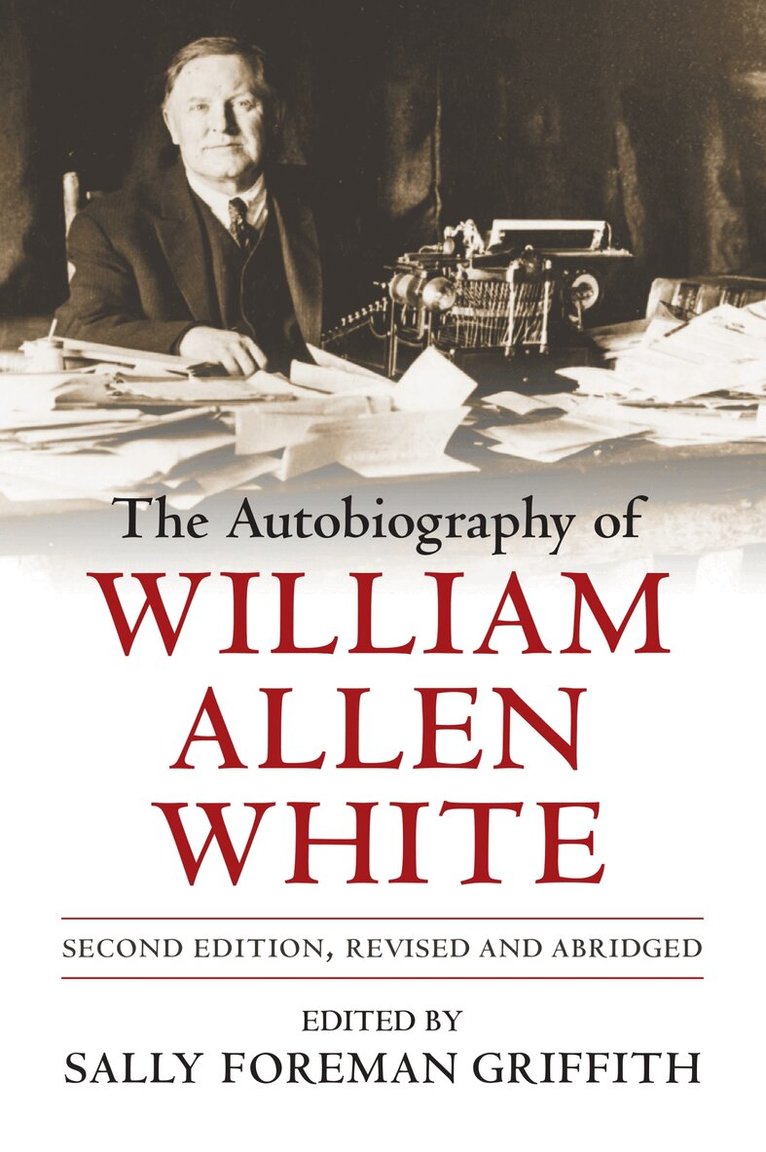
Abridged and edited for the modern reader and available in paperback for the first time ever, this second edition brings back into print a classic autobiography of Middle America—an immensely readable document that enriches our understanding of Progressivism and politics, journalism, and the social history of small-town America from Reconstruction into the Roaring Twenties.At the time of his death in 1944, William Allen White, editor of the Emporia Gazette, was a national celebrity, proclaimed one of the truly great Americans of his age. Life magazine called him "a living symbol of small-town simplicity and kindliness and common sense."During his career White had managed to expand his circle of influence far beyond Emporia Kansas to include most of the nation. By the end of his life he had become a nationally acclaimed journalist and author of biographies, novels, and short stories. He was also widely known for his shrewd commentary on contemporary events in the national media. An influential Republican political leader, he founded the Progressive party and was a longtime advocate of social reform and individual rights. But what endeared him most to his contemporaries was that, in spite of national fame, he remained first and foremost a small-town newspaperman.First published posthumously in 1946, White''s Autobiography was immediately hailed as a classic portrait, not simply of White himself, but of the men and women who transformed America from an agrarian society to a powerful industrial nation in the years before World War I. A bestselling Book-of-the-Month Club selection, the Autobiography was awarded the Pulitzer Prize in 1947.This new edition, edited to eliminate repetitions and digressions, features an introduction by Sally Foreman Griffith, author of a recent biography of White. Griffith explores the background of the Autobiography and illuminates its place in the development of the autobiographical genre.