Samuel Bashfield – författare
Visar alla böcker från författaren Samuel Bashfield. Handla med fri frakt och snabb leverans.
3 produkter
3 produkter
Häftad, Engelska, 2026
230 kr
Kommande
How and why are key Indo-Pacific states adapting respective foreign and defence policies to secure submarine cable networks amid heightened Sino-US network-based competition? States are driven to control submarine cable networks as these infrastructures transmit information between continents and islands, traverse vulnerable maritime zones, and constrict data through limited chokepoints. China's Digital Silk Road has challenged Western submarine cable dominance, prompting a suite of countermeasures by Western states individually and in coalition. This Element posits a nodes-flows-production typology to illustrate how states are attempting to control connectivity nodes, secure transmission flows and dominate production. The analysis highlights how states are pursuing central network positions to mitigate vulnerability - but this structural competition risks enabling weaponisation. This microcosm of network-based competition reveals how the contest to control submarine cable infrastructure is defining contemporary great power rivalry and re-wiring the Indo-Pacific's arteries. This title is also available as Open Access on Cambridge Core.
Inbunden, Engelska, 2026
742 kr
Kommande
How and why are key Indo-Pacific states adapting respective foreign and defence policies to secure submarine cable networks amid heightened Sino-US network-based competition? States are driven to control submarine cable networks as these infrastructures transmit information between continents and islands, traverse vulnerable maritime zones, and constrict data through limited chokepoints. China's Digital Silk Road has challenged Western submarine cable dominance, prompting a suite of countermeasures by Western states individually and in coalition. This Element posits a nodes-flows-production typology to illustrate how states are attempting to control connectivity nodes, secure transmission flows and dominate production. The analysis highlights how states are pursuing central network positions to mitigate vulnerability - but this structural competition risks enabling weaponisation. This microcosm of network-based competition reveals how the contest to control submarine cable infrastructure is defining contemporary great power rivalry and re-wiring the Indo-Pacific's arteries. This title is also available as Open Access on Cambridge Core.
Häftad, Engelska, 2026
454 kr
Kommande
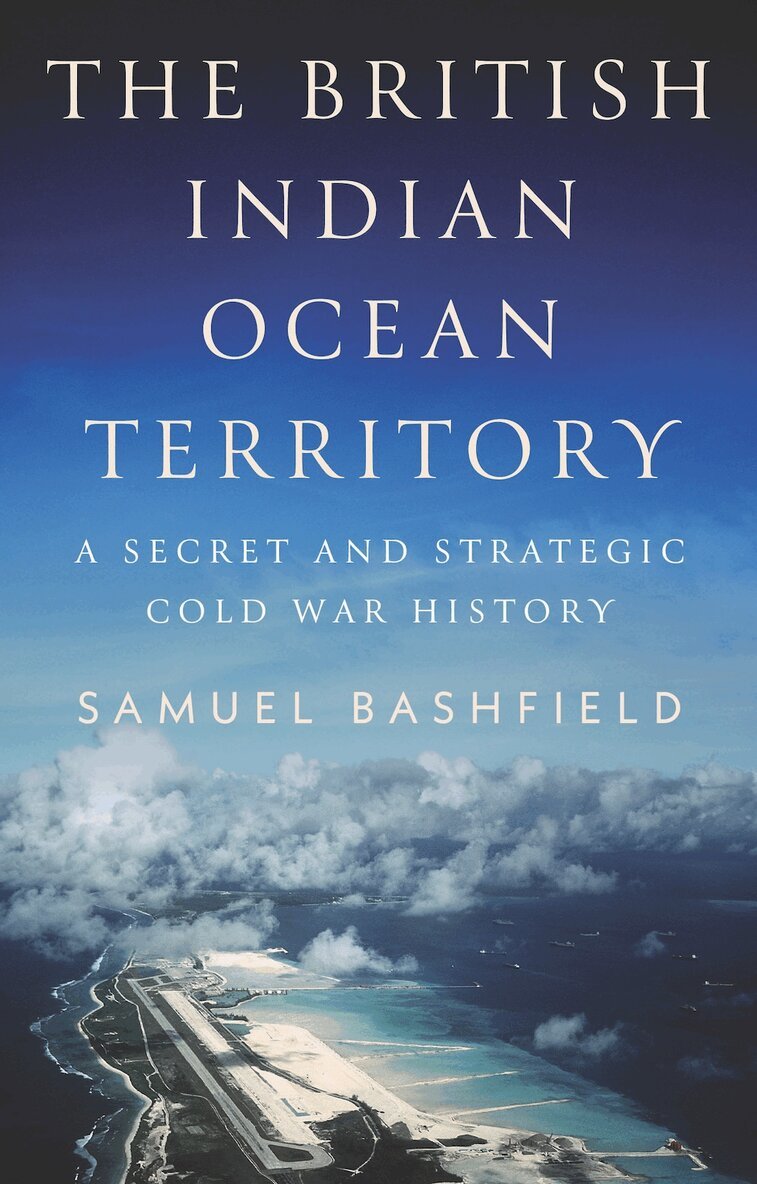
A vital investigation into the mysterious events behind the surreptitious, illegal creation of a British colony in 1965—just as the United Kingdom decolonised elsewhere.While Britain's empire decolonised after the Second World War, one more colony was created, in secret and against international law: the British Indian Ocean Territory (BIOT). This founding, in 1965, dismembered sixty Indian Ocean islands within the then British colonies of Mauritius and Seychelles. The entire population of these islands was forcibly displaced to make way for Anglo-American military facilities.Ostensibly, the new territory was first created to house a communications station on Diego Garcia. But BIOT's utility went far beyond this specific purpose: it facilitated the transfer of strategic power from the UK to the US in the new Cold War world. Samuel Bashfield's eye-opening account illuminates how British and American defence strategies each shaped BIOT's militarisation, with the territory used both by London--to slow its withdrawal 'East of Suez'--and by Washington, to entrench its own power in the Indian Ocean and the Middle East.Diego Garcia did not become one of the West's critical overseas bases by chance. It was painstakingly honed as a linchpin of Western predominance. Drawing on declassified archives, Bashfield reveals how BIOT was selected, militarised, transacted and defended, from its illegal creation through to the end of the Cold War.