Samuel Fleischacker – författare
Visar alla böcker från författaren Samuel Fleischacker. Handla med fri frakt och snabb leverans.
29 produkter
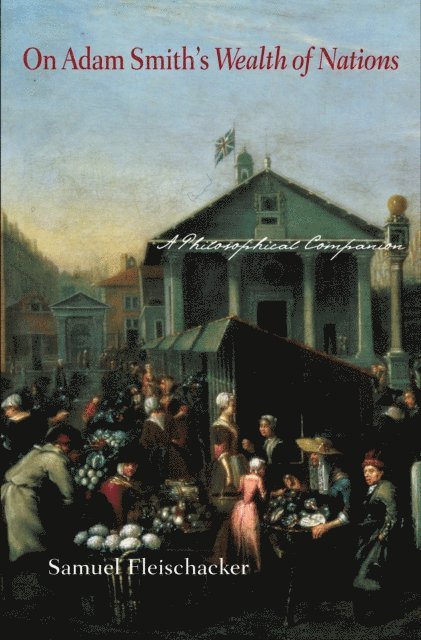
On Adam Smith's Wealth of Nations
A Philosophical Companion
E-bok, 2009
582 kr
Lägg i varukorg
Adam Smith was a philosopher before he ever wrote about economics, yet until now there has never been a philosophical commentary on the Wealth of Nations . Samuel Fleischacker suggests that Smith''s vastly influential treatise on economics can be better understood if placed in the light of his …
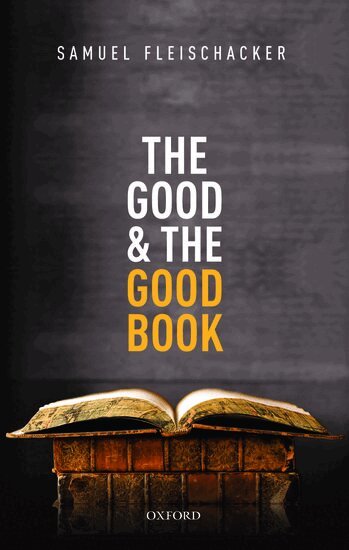
Good and the Good Book
Revelation as a Guide to Life
E-bok, 2015
312 kr
Lägg i varukorg
''It is written ...,'' says the believer in a sacred text, and proceeds to justify all manner of terrifying things. Or so runs a popular caricature of religious faith today. Religions that center around a revelation--around a ''good book,'' like the Torah or Gospels or Quran, which is seen as …
Good and the Good Book
Revelation as a Guide to Life
E-bok, 2015
312 kr
Lägg i varukorg
''It is written ...,'' says the believer in a sacred text, and proceeds to justify all manner of terrifying things. Or so runs a popular caricature of religious faith today. Religions that center around a revelation--around a ''good book,'' like the Torah or Gospels or Quran, which is seen as …
Divine Teaching and the Way of the World
A Defense of Revealed Religion
E-bok, 2011
473 kr
Lägg i varukorg
Samuel Fleischacker defends what the Enlightenment called ''revealed religion'': religions that regard a certain text or oral teaching as sacred, as wholly authoritative over one''s life. At the same time, he maintains that revealed religions stand in danger of corruption or fanaticism unless they …
The Good and the Good Book
Revelation as a Guide to Life
Inbunden, 2015
863 kr
Lägg i varukorg
'It is written ...,' says the believer in a sacred text, and proceeds to justify all manner of terrifying things. Or so runs a popular caricature of religious faith today. Religions that center around a revelation--around a 'good book,' like the Torah or Gospels or Quran, which is seen as God's …
The Good and the Good Book
Revelation as a Guide to Life
Häftad, 2017
342 kr
Lägg i varukorg
'It is written ...,' says the believer in a sacred text, and proceeds to justify all manner of terrifying things. Or so runs a popular caricature of religious faith today. Religions that center around a revelation--around a 'good book,' like the Torah or Gospels or Quran, which is seen as God's …
Divine Teaching and the Way of the World
A Defense of Revealed Religion
Inbunden, 2011
1206 kr
Lägg i varukorg
Samuel Fleischacker defends what the Enlightenment called 'revealed religion': religions that regard a certain text or oral teaching as sacred, as wholly authoritative over one's life. At the same time, he maintains that revealed religions stand in danger of corruption or fanaticism unless they are …
Divine Teaching and the Way of the World
A Defense of Revealed Religion
Häftad, 2013
846 kr
Lägg i varukorg
Samuel Fleischacker defends what the Enlightenment called 'revealed religion': religions that regard a certain text or oral teaching as sacred, as wholly authoritative over one's life. At the same time, he maintains that revealed religions stand in danger of corruption or fanaticism unless they are …
Being Me Being You
Adam Smith and Empathy
Inbunden, 2019
1076 kr
Lägg i varukorg
Modern notions of empathy often celebrate its ability to bridge divides, to unite humankind. Yet how do we square this with the popular view that we can never truly comprehend the experience of being someone else? In this book, Samuel Fleischacker delves into the work of Adam Smith to draw out an …
Being Me Being You
Adam Smith and Empathy
Häftad, 2019
332 kr
Lägg i varukorg
Modern notions of empathy often celebrate its ability to bridge divides, to unite humankind. Yet how do we square this with the popular view that we can never truly comprehend the experience of being someone else? In this book, Samuel Fleischacker delves into the work of Adam Smith to draw out an …
Being Me Being You
Adam Smith and Empathy
E-bok, 2019
629 kr
Lägg i varukorg
Modern notions of empathy often celebrate its ability to bridge divides, to unite humankind. But how do we square this with the popular view that we can never truly comprehend the experience of being someone else? In this book, Samuel Fleischacker delves into the work of Adam Smith to draw out an …
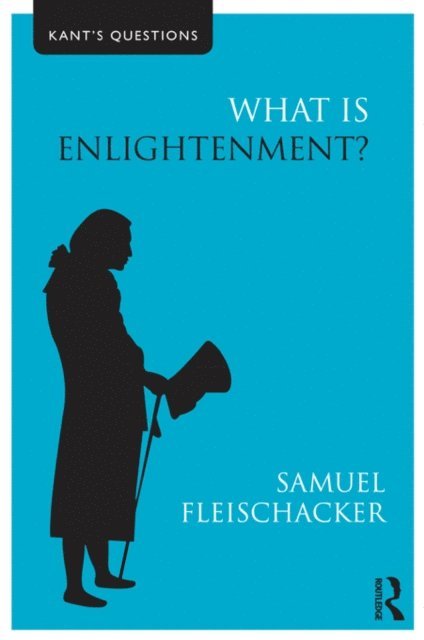
What is Enlightenment?
Inbunden, 2013
2512 kr
Lägg i varukorg
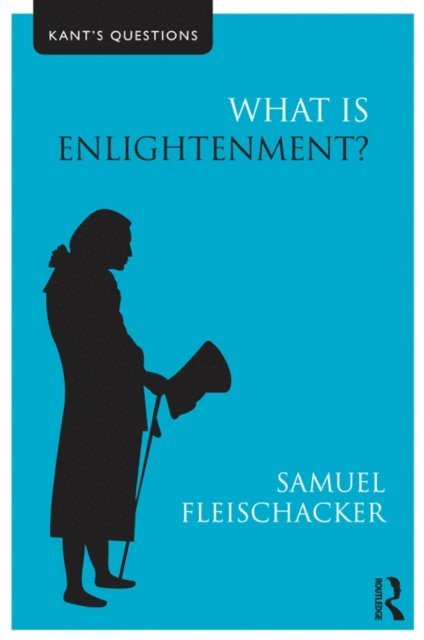
"Have the courage to use your own understanding! - that is the motto of enlightenment." - Immanuel KantThe Enlightenment is one of the most important and contested periods in the history of philosophy. The problems it addressed, such as the proper extent of individual freedom and the challenging of …
What is Enlightenment?
Häftad, 2013
633 kr
Lägg i varukorg
"Have the courage to use your own understanding! - that is the motto of enlightenment." - Immanuel KantThe Enlightenment is one of the most important and contested periods in the history of philosophy. The problems it addressed, such as the proper extent of individual freedom and the challenging of …
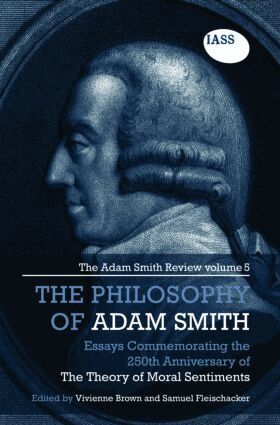
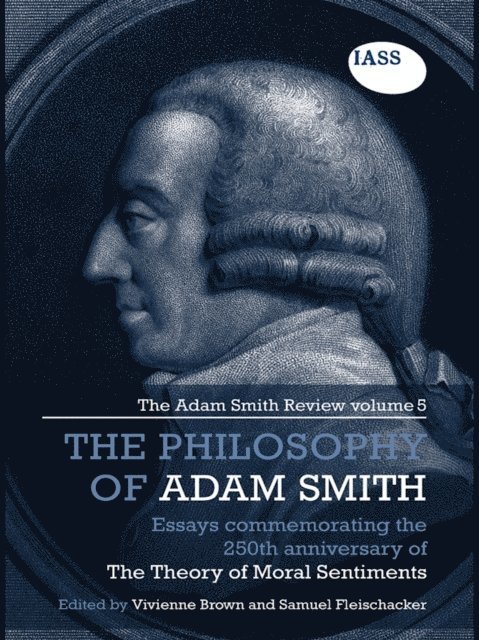
Essays on the Philosophy of Adam Smith
The Adam Smith Review, Volume 5: Essays Commemorating the 250th Anniversary of the Theory of Moral Sentiments
Av Vivienne Brown, Samuel Fleischacker
Inbunden, 2010
2818 kr
Lägg i varukorg
Adam Smith's contribution to economics is well-recognised but in recent years scholars have been exploring the philosophical aspects of his works. The Philosophy of Adam Smith contains essays by some of the most prominent philosophers and scholars working on Adam Smith today. It is a special issue …
Adam Smith
Häftad, 2021
384 kr
Lägg i varukorg
Adam Smith (1723–1790) is widely regarded as one of the great thinkers of the Enlightenment period. Best-known for his founding work of economics, The Wealth of Nations, Smith engaged equally with the nature of morality in his Theory of Moral Sentiments. He also gave lectures on literature and …
Adam Smith
Inbunden, 2021
2504 kr
Lägg i varukorg
Adam Smith (1723–1790) is widely regarded as one of the great thinkers of the Enlightenment period. Best-known for his founding work of economics, The Wealth of Nations, Smith engaged equally with the nature of morality in his Theory of Moral Sentiments. He also gave lectures on literature and …
Short History of Distributive Justice
Häftad, 2005
314 kr
Lägg i varukorg
Distributive justice in its modern sense calls on the state to guarantee that everyone is supplied with a certain level of material means. Samuel Fleischacker argues that guaranteeing aid to the poor is a modern idea, developed only in the last two centuries.Earlier notions of justice, including …
Third Concept of Liberty
Judgment and Freedom in Kant and Adam Smith
Häftad, 1999
665 kr
Lägg i varukorg
Taking the title of his book from Isaiah Berlin's famous essay distinguishing a negative concept of liberty connoting lack of interference by others from a positive concept involving participation in the political realm, Samuel Fleischacker explores a third definition of liberty that lies between …
On Adam Smith's Wealth of Nations
A Philosophical Companion
Häftad, 2005
448 kr
Lägg i varukorg
Adam Smith was a philosopher before he ever wrote about economics, yet until now there has never been a philosophical commentary on the Wealth of Nations. Samuel Fleischacker suggests that Smith's vastly influential treatise on economics can be better understood if placed in the light of his …
From Idolatry to Holiness
A Modern Ethical Framework for Understanding Jewish Law
Inbunden, 2026
1800 kr
Kommande
An ethical approach to religion tries to make sense of religious claims in terms of values shared by religious and secular people alike. In From Idolatry to Holiness, Samuel Fleischaker contributes to that project by providing an ethical framework for understanding the purpose of Jewish law …
From Idolatry to Holiness
A Modern Ethical Framework for Understanding Jewish Law
Häftad, 2026
659 kr
Kommande
An ethical approach to religion tries to make sense of religious claims in terms of values shared by religious and secular people alike. In From Idolatry to Holiness, Samuel Fleischaker contributes to that project by providing an ethical framework for understanding the purpose of Jewish law …
What is Enlightenment?
E-bok, 2013
745 kr
Lägg i varukorg
"Have the courage to use your own understanding! - that is the motto of enlightenment." - Immanuel Kant The Enlightenment is one of the most important and contested periods in the history of philosophy. The problems it addressed, such as the proper extent of individual freedom and the challenging …
What is Enlightenment?
E-bok, 2013
745 kr
Lägg i varukorg
"Have the courage to use your own understanding! - that is the motto of enlightenment." - Immanuel Kant The Enlightenment is one of the most important and contested periods in the history of philosophy. The problems it addressed, such as the proper extent of individual freedom and the challenging …
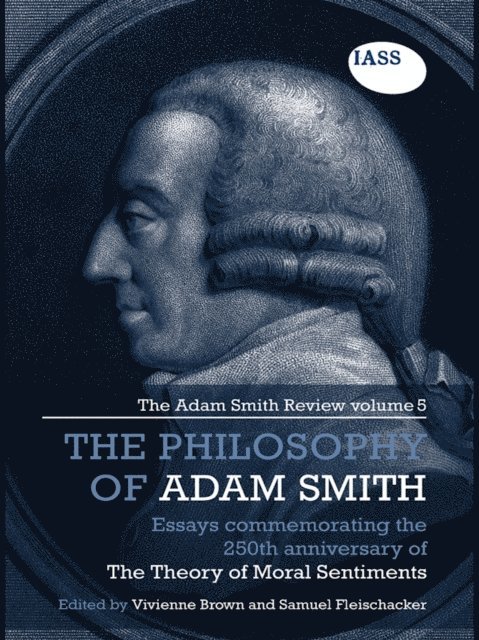
Essays on the Philosophy of Adam Smith
The Adam Smith Review, Volume 5: Essays Commemorating the 250th Anniversary of the Theory of Moral Sentiments
Av Samuel Fleischacker, Vivienne Brown
E-bok, 2010
953 kr
Lägg i varukorg
Adam Smith’s contribution to economics is well-recognised but in recent years scholars have been exploring anew the multidisciplinary nature of his works. The Adam Smith Review is a refereed annual review that provides a unique forum for interdisciplinary debate on all aspects of Adam Smith’s …
Essays on the Philosophy of Adam Smith
The Adam Smith Review, Volume 5: Essays Commemorating the 250th Anniversary of the Theory of Moral Sentiments
Av Samuel Fleischacker, Vivienne Brown
E-bok, 2010
953 kr
Lägg i varukorg
Adam Smith’s contribution to economics is well-recognised but in recent years scholars have been exploring anew the multidisciplinary nature of his works. The Adam Smith Review is a refereed annual review that provides a unique forum for interdisciplinary debate on all aspects of Adam Smith’s …
Essays on the Philosophy of Adam Smith
The Adam Smith Review, Volume 5: Essays Commemorating the 250th Anniversary of the Theory of Moral Sentiments
Av Vivienne Brown, Samuel Fleischacker
Häftad, 2014
934 kr
Lägg i varukorg
Adam Smith's contribution to economics is well-recognised but in recent years scholars have been exploring the philosophical aspects of his works. The Philosophy of Adam Smith contains essays by some of the most prominent philosophers and scholars working on Adam Smith today. It is a special issue …
Adam Smith
E-bok, 2021
441 kr
Lägg i varukorg
Adam Smith (1723–1790) is widely regarded as one of the great thinkers of the Enlightenment period. Best-known for his founding work of economics, The Wealth of Nations , Smith engaged equally with the nature of morality in his Theory of Moral Sentiments . He also gave lectures on literature and …
Adam Smith
E-bok, 2021
450 kr
Lägg i varukorg
Adam Smith (1723–1790) is widely regarded as one of the great thinkers of the Enlightenment period. Best-known for his founding work of economics, The Wealth of Nations , Smith engaged equally with the nature of morality in his Theory of Moral Sentiments . He also gave lectures on literature and …
Third Concept of Liberty
Judgment and Freedom in Kant and Adam Smith
E-bok, 1999
907 kr
Lägg i varukorg
Taking the title of his book from Isaiah Berlin''s famous essay distinguishing a negative concept of liberty connoting lack of interference by others from a positive concept involving participation in the political realm, Samuel Fleischacker explores a third definition of liberty that lies between …