Samuel Milner – författare
Visar alla böcker från författaren Samuel Milner. Handla med fri frakt och snabb leverans.
7 produkter
7 produkter
Häftad, Engelska, 2006
94 kr
Skickas inom 5-8 vardagar
Inbunden, Engelska, 2022
481 kr
Skickas inom 5-8 vardagar
Häftad, Engelska, 2022
339 kr
Skickas inom 5-8 vardagar
Häftad, Engelska, 2002
421 kr
Skickas inom 5-8 vardagar
Häftad, Engelska, 2009
406 kr
Skickas inom 3-6 vardagar
E-bok
Engelska, 201433 kr
Läs direkt efter köp
[Includes 3 charts, 36 maps and 107 illustrations]"The successes of the South Pacific Force," wrote Admiral Halsey in 1944, "were not the achievements of separate services or individuals but the result of whole-hearted subordination of self-interest by all in order that one successful ‘fighting team’ could be created." The history of any South Pacific campaign must deal with this "fighting team," with all United States and Allied services. The victory on Guadalcanal can be understood only by an appreciation of the contribution of each service. No one service won the battle. The most decisive engagement of the campaign was the air and naval Battle of Guadalcanal in mid-November 1942, an engagement in which neither Army nor Marine Corps ground troops took any direct part.This volume attempts to show the contribution of all services to the first victory on the long road to Tokyo. It does not describe all ground, air, and naval operations in detail but it does attempt, by summary when necessary, to show the relationship between air, ground, and surface forces in modern warfare.
33 kr
Läs direkt efter köp
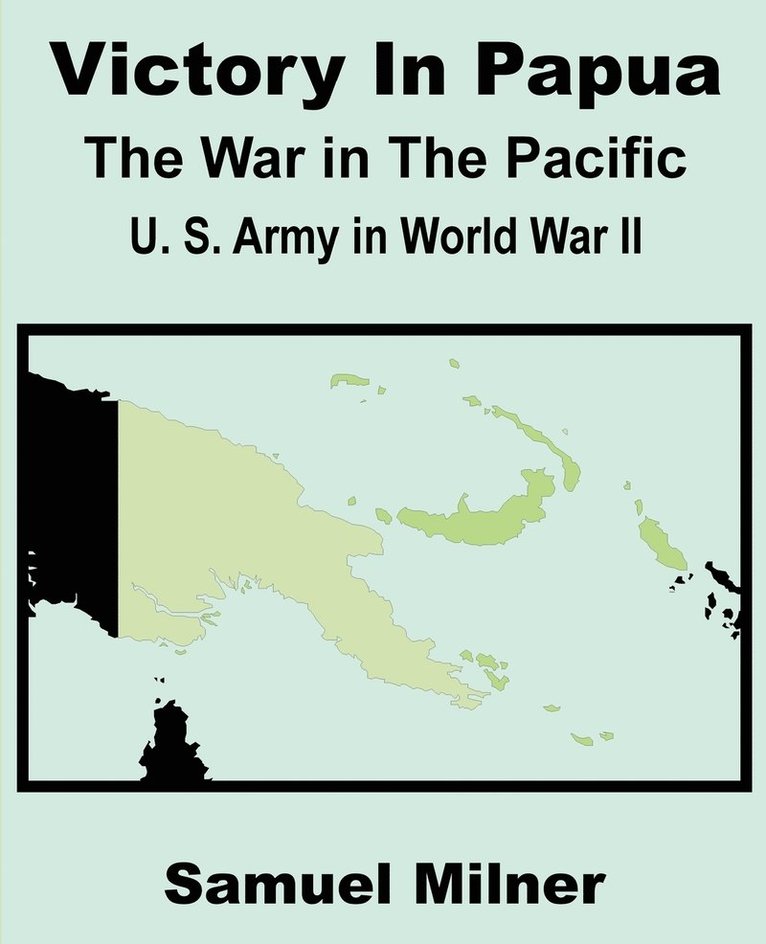
[Includes 23 maps and 95 illustrations]This is a companion volume to the one on Guadalcanal in the series on the war in the Pacific. Both record the operations designed to halt the advance of the enemy toward the vital transpacific line of communications with Australia and secure Australia as a base. Success in Papua and Guadalcanal, achieved in February 1943, put the Allied forces in a position to neutralize Rabaul and, this accomplished, to advance to the Philippines.The present volume concentrates on the action of one United States Army division. In telling the story of a comparatively limited number of troops, the author has been able to present the combat experience of small units in sharper focus than has been possible in most of the other full-scale campaign volumes.The campaign abounds in lessons.The strategic significance of the Papuan Campaign can be briefly stated. In addition to blunting the Japanese thrust toward Australia and the transpacific line of communications, it put General MacArthur’s forces in a favorable position to take the offensive. But this little known campaign is significant for still another reason. It was the battle test of a large hitherto-inexperienced U. S. Army force and its commanders under the conditions which were to attend much of the ground fighting in the Pacific. Costly in casualties and suffering, it taught lessons that the Army had to learn if it was to cope with the Japanese under conditions of tropical warfare.