Samuel Morris Brown – författare
Visar alla böcker från författaren . Handla med fri frakt och snabb leverans.
8 produkter
8 produkter
Inbunden, Engelska, 2020
379 kr
Skickas inom 5-8 vardagar
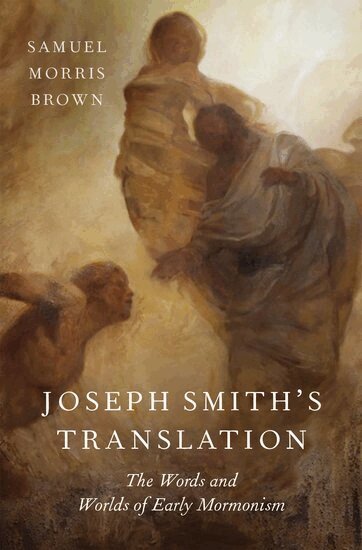
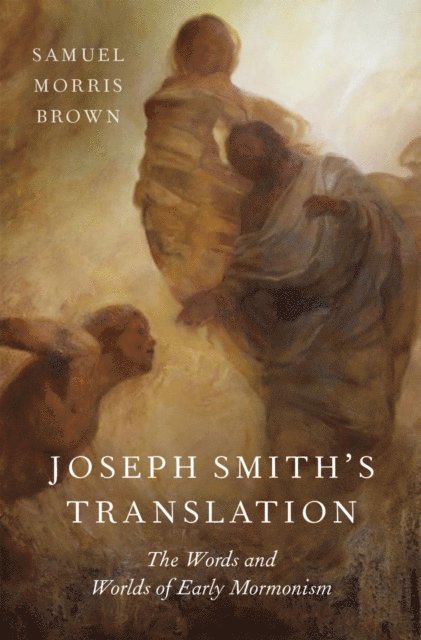
Mormonism's founder, Joseph Smith, claimed to have translated ancient scriptures. He dictated an American Bible from metal plates reportedly buried by ancient Jews in a nearby hill, and produced an Egyptian "Book of Abraham" derived from funerary papyri he extracted from a collection of mummies he bought from a traveling showman. In addition, he rewrote sections of the King James Version as a "New Translation" of the Bible. Smith and his followers used the term translation to describe the genesis of these English scriptures, which remain canonical for the Church of Jesus Christ of Latter-day Saints. Whether one believes him or not, the discussion has focused on whether Smith's English texts represent literal translations of extant source documents. On closer inspection, though, Smith's translations are far more metaphysical than linguistic. In Joseph Smith's Translation, Samuel Morris Brown argues that these translations express the mystical power of language and scripture to interconnect people across barriers of space and time, especially in the developing Mormon temple liturgy. He shows that Smith was devoted to an ancient metaphysics--especially the principle of correspondence, the concept of "as above, so below"--that provided an infrastructure for bridging the human and the divine as well as for his textual interpretive projects. Joseph Smith's projects of metaphysical translation place Mormonism at the productive edge of the transitions associated with shifts toward "secular modernity." This transition into modern worldviews intensified, complexly, in nineteenth-century America. The evolving legacies of Reformation and Enlightenment were the sea in which early Mormons swam, says Brown. Smith's translations and the theology that supported them illuminate the power and vulnerability of the Mormon critique of American culture in transition. This complex critique continues to resonate and illuminate to the present day.
E-bok
PDF, Engelska, 2020317 kr
Läs direkt efter köp
Mormonism''s founder, Joseph Smith, claimed to have translated ancient scriptures. He dictated an American Bible from metal plates reportedly buried by ancient Jews in a nearby hill, and produced an Egyptian "Book of Abraham" derived from funerary papyri he extracted from a collection of mummies he bought from a traveling showman. In addition, he rewrote sections of the King James Version as a "New Translation" of the Bible. Smith and his followers used the term translation to describe the genesis of these English scriptures, which remain canonical for the Church of Jesus Christ of Latter-day Saints. Whether one believes him or not, the discussion has focused on whether Smith''s English texts represent literal translations of extant source documents. On closer inspection, though, Smith''s translations are far more metaphysical than linguistic.In Joseph Smith''s Translation, Samuel Morris Brown argues that these translations express the mystical power of language and scripture to interconnect people across barriers of space and time, especially in the developing Mormon temple liturgy. He shows that Smith was devoted to an ancient metaphysics--especially the principle of correspondence, the concept of "as above, so below"--that provided an infrastructure for bridging the human and the divine as well as for his textual interpretive projects. Joseph Smith''s projects of metaphysical translation place Mormonism at the productive edge of the transitions associated with shifts toward "secular modernity." This transition into modern worldviews intensified, complexly, in nineteenth-century America. The evolving legacies of Reformation and Enlightenment were the sea in which early Mormons swam, says Brown. Smith''s translations and the theology that supported them illuminate the power and vulnerability of the Mormon critique of American culture in transition. This complex critique continues to resonate and illuminate to the present day.
E-bok
Engelska, 2020317 kr
Läs direkt efter köp
Mormonism''s founder, Joseph Smith, claimed to have translated ancient scriptures. He dictated an American Bible from metal plates reportedly buried by ancient Jews in a nearby hill, and produced an Egyptian "Book of Abraham" derived from funerary papyri he extracted from a collection of mummies he bought from a traveling showman. In addition, he rewrote sections of the King James Version as a "New Translation" of the Bible. Smith and his followers used the term translation to describe the genesis of these English scriptures, which remain canonical for the Church of Jesus Christ of Latter-day Saints. Whether one believes him or not, the discussion has focused on whether Smith''s English texts represent literal translations of extant source documents. On closer inspection, though, Smith''s translations are far more metaphysical than linguistic.In Joseph Smith''s Translation, Samuel Morris Brown argues that these translations express the mystical power of language and scripture to interconnect people across barriers of space and time, especially in the developing Mormon temple liturgy. He shows that Smith was devoted to an ancient metaphysics--especially the principle of correspondence, the concept of "as above, so below"--that provided an infrastructure for bridging the human and the divine as well as for his textual interpretive projects. Joseph Smith''s projects of metaphysical translation place Mormonism at the productive edge of the transitions associated with shifts toward "secular modernity." This transition into modern worldviews intensified, complexly, in nineteenth-century America. The evolving legacies of Reformation and Enlightenment were the sea in which early Mormons swam, says Brown. Smith''s translations and the theology that supported them illuminate the power and vulnerability of the Mormon critique of American culture in transition. This complex critique continues to resonate and illuminate to the present day.
E-bok
PDF, Engelska, 2016495 kr
Läs direkt efter köp
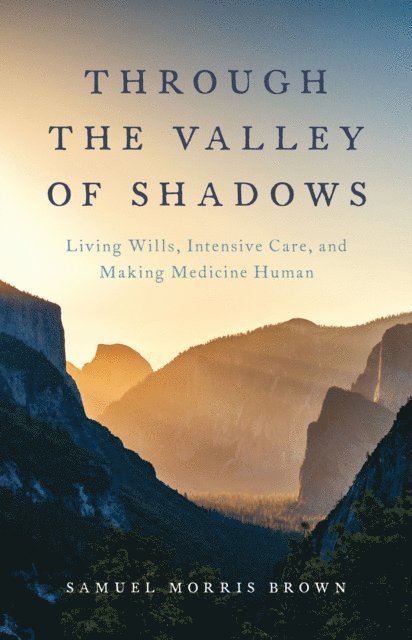
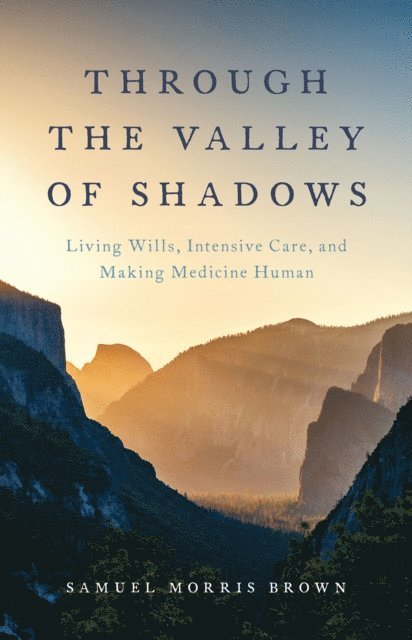
Hospital intensive care units have changed when and how we die--and not always for the better. The ICU is a new world, one in which once-fatal diseases can be cured and medical treatments greatly enhance our chances of full recovery. But, paradoxically, these places of physical healing can exact a terrible toll, and by focusing on technology rather than humanity, they too often rob the dying of their dignity. By some accounts, the expensive medical treatments provided in ICUs also threaten to bankrupt the nation.In an attempt to give patients a voice in the ICU when they might not otherwise have one, the living will was introduced in 1969, in response to several notorious cases. These documents were meant to keep physicians from ignoring patients'' and families'' wishes in stressful situations. Unfortunately, despite their aspirations, living wills contain static statements about hypothetical preferences that rarely apply in practice. And they created a process that isn''t faithful to who we are as human beings. Further confusing difficult and painful situations, living wills leave patients with the impression that actual communication with their physicians has taken place, when in fact their deepest desires and values remain unaddressed.In this provocative and empathetic book, medical researcher and ICU physician Samuel Morris Brown uses stories from his clinical practice to outline a new way of thinking about life-threatening illness. Brown''s approach acknowledges the conflicting emotions we have when talking about the possibility of death and proposes strategies by which patients, their families, and medical practitioners can better address human needs before, during, and after serious illness.Arguing that any solution to the problems of the inhumanity of intensive care must take advantage of new research on the ways human beings process information and make choices, Brown imagines a truly humane ICU. His manifesto for reform advocates wholeness and healing for people facing life-threatening illness.
E-bok
Engelska, 2016495 kr
Läs direkt efter köp
Hospital intensive care units have changed when and how we die--and not always for the better. The ICU is a new world, one in which once-fatal diseases can be cured and medical treatments greatly enhance our chances of full recovery. But, paradoxically, these places of physical healing can exact a terrible toll, and by focusing on technology rather than humanity, they too often rob the dying of their dignity. By some accounts, the expensive medical treatments provided in ICUs also threaten to bankrupt the nation.In an attempt to give patients a voice in the ICU when they might not otherwise have one, the living will was introduced in 1969, in response to several notorious cases. These documents were meant to keep physicians from ignoring patients'' and families'' wishes in stressful situations. Unfortunately, despite their aspirations, living wills contain static statements about hypothetical preferences that rarely apply in practice. And they created a process that isn''t faithful to who we are as human beings. Further confusing difficult and painful situations, living wills leave patients with the impression that actual communication with their physicians has taken place, when in fact their deepest desires and values remain unaddressed.In this provocative and empathetic book, medical researcher and ICU physician Samuel Morris Brown uses stories from his clinical practice to outline a new way of thinking about life-threatening illness. Brown''s approach acknowledges the conflicting emotions we have when talking about the possibility of death and proposes strategies by which patients, their families, and medical practitioners can better address human needs before, during, and after serious illness.Arguing that any solution to the problems of the inhumanity of intensive care must take advantage of new research on the ways human beings process information and make choices, Brown imagines a truly humane ICU. His manifesto for reform advocates wholeness and healing for people facing life-threatening illness.
Inbunden, Engelska, 2012
575 kr
Skickas inom 5-8 vardagar
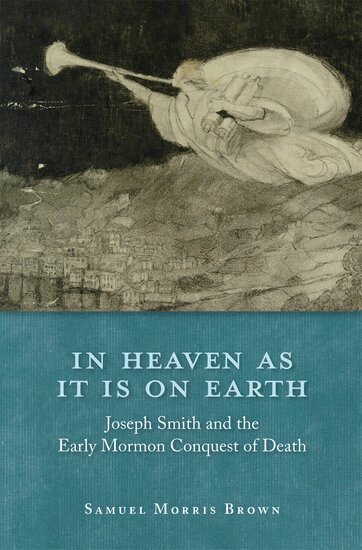
A compelling new interpretation of early Mormonism, Samuel Brown's In Heaven as It Is On Earth views this religion through the lens of founder Joseph Smith's profound preoccupation with the specter of death. Revisiting historical documents and scripture from this novel perspective, Brown offers new insight into the origin and meaning of some of Mormonism's earliest beliefs and practices. The world of early Mormonism was besieged by death--infant mortality, violence, and disease were rampant. A prolonged battle with typhoid fever, punctuated by painful surgeries including a threatened leg amputation, and the sudden loss of his beloved brother Alvin cast a long shadow over Smith's own life. Smith embraced and was deeply influenced by the culture of "holy dying"--with its emphasis on deathbed salvation, melodramatic bereavement, and belief in the Providential nature of untimely death--that sought to cope with the widespread mortality of the period. Seen in this light, Smith's treasure quest, search for Native origins, distinctive approach to scripture, and belief in a post-mortal community all acquire new meaning, as do early Mormonism's Masonic-sounding temple rites and novel family system. Taken together, the varied themes of early Mormonism can be interpreted as a campaign to extinguish death forever. By focusing on Mormon conceptions of death, Brown recasts the story of first-generation Mormonism, showing a religious movement and its founder at once vibrant and fragile, intrepid and unsettled, human and otherworldly. A lively narrative history, In Heaven As It Is on Earth illuminates not only the foundational beliefs of early Mormonism but also the larger issues of family and death in American religious history.
E-bok
PDF, Engelska, 2011659 kr
Läs direkt efter köp
A compelling new interpretation of early Mormonism, Samuel Brown''s In Heaven as It Is On Earth views this religion through the lens of founder Joseph Smith''s profound preoccupation with the specter of death. Revisiting historical documents and scripture from this novel perspective, Brown offers new insight into the origin and meaning of some of Mormonism''s earliest beliefs and practices. The world of early Mormonism was besieged by death--infant mortality, violence, and disease were rampant. A prolonged battle with typhoid fever, punctuated by painful surgeries including a threatened leg amputation, and the sudden loss of his beloved brother Alvin cast a long shadow over Smith''s own life. Smith embraced and was deeply influenced by the culture of "holy dying"--with its emphasis on deathbed salvation, melodramatic bereavement, and belief in the Providential nature of untimely death--that sought to cope with the widespread mortality of the period. Seen in this light, Smith''s treasure quest, search for Native origins, distinctive approach to scripture, and belief in a post-mortal community all acquire new meaning, as do early Mormonism''s Masonic-sounding temple rites and novel family system. Taken together, the varied themes of early Mormonism can be interpreted as a campaign to extinguish death forever. By focusing on Mormon conceptions of death, Brown recasts the story of first-generation Mormonism, showing a religious movement and its founder at once vibrant and fragile, intrepid and unsettled, human and otherworldly.A lively narrative history, In Heaven as It Is on Earth illuminates not only the foundational beliefs of early Mormonism but also the larger issues of family and death in American religious history.
659 kr
Läs direkt efter köp
A compelling new interpretation of early Mormonism, Samuel Brown''s In Heaven as It Is On Earth views this religion through the lens of founder Joseph Smith''s profound preoccupation with the specter of death. Revisiting historical documents and scripture from this novel perspective, Brown offers new insight into the origin and meaning of some of Mormonism''s earliest beliefs and practices. The world of early Mormonism was besieged by death--infant mortality, violence, and disease were rampant. A prolonged battle with typhoid fever, punctuated by painful surgeries including a threatened leg amputation, and the sudden loss of his beloved brother Alvin cast a long shadow over Smith''s own life. Smith embraced and was deeply influenced by the culture of "holy dying"--with its emphasis on deathbed salvation, melodramatic bereavement, and belief in the Providential nature of untimely death--that sought to cope with the widespread mortality of the period. Seen in this light, Smith''s treasure quest, search for Native origins, distinctive approach to scripture, and belief in a post-mortal community all acquire new meaning, as do early Mormonism''s Masonic-sounding temple rites and novel family system. Taken together, the varied themes of early Mormonism can be interpreted as a campaign to extinguish death forever. By focusing on Mormon conceptions of death, Brown recasts the story of first-generation Mormonism, showing a religious movement and its founder at once vibrant and fragile, intrepid and unsettled, human and otherworldly.A lively narrative history, In Heaven as It Is on Earth illuminates not only the foundational beliefs of early Mormonism but also the larger issues of family and death in American religious history.