Sander Oosterloo – författare
Visar alla böcker från författaren Sander Oosterloo. Handla med fri frakt och snabb leverans.
2 produkter
2 produkter
E-bok
PDF, 20091 092 kr
Läs direkt efter köp
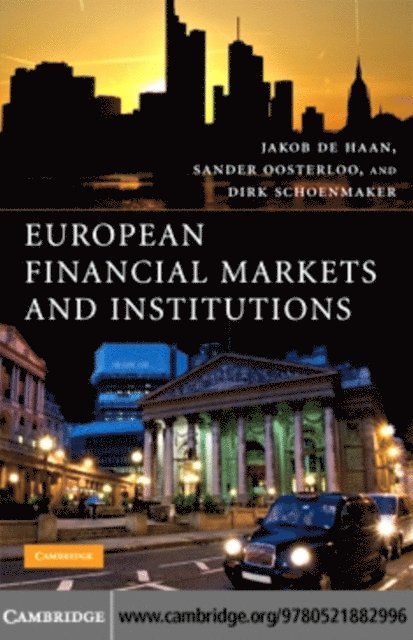
Written for undergraduate and graduate students of finance, economics and business, this textbook provides a fresh analysis of the European financial system. Combining theory, empirical data and policy, it examines and explains financial markets, financial infrastructures, financial institutions, and challenges in the domain of financial supervision and competition policy. Key features: • Designed specifically for courses on European financial integration • Clear signposting and presentation of text with learning objectives, boxes for key concepts and theories, chapter overviews and suggestions for further reading • Broad coverage of European financial system – markets, infrastructure and institutions • Explains the ongoing process of financial integration, in particular the impact of the euro • Examines financial systems of new member states • Uses up-to-date European data throughout A companion website will be available with exercises and freely downloadable solutions.
E-bok
PDF, 2012636 kr
Läs direkt efter köp
Since the first edition of this book, the world''s financial system went through its greatest crisis for a century. What made this crisis unique is that severe financial problems emerged simultaneously in many different countries and that its economic impact was felt throughout the world as a result of the increased interconnectedness of the global economy. Written for undergraduate and graduate students of finance, economics and business, the second edition of this successful textbook provides a fresh analysis of the world financial system in light of the recent financial crisis. Combining theory, empirical data and policy, it examines and explains financial markets, financial infrastructures, financial institutions and challenges in the domain of financial supervision and competition policy. This new edition features three completely new chapters, one on financial crises, a second on financial innovation, and, on the policy side, a third on the monetary policy of the European Central Bank.