Sandra A. Vavra – författare
Visar alla böcker från författaren Sandra A. Vavra. Handla med fri frakt och snabb leverans.
16 produkter
16 produkter
Häftad, Engelska, 2007
536 kr
Skickas inom 5-8 vardagar
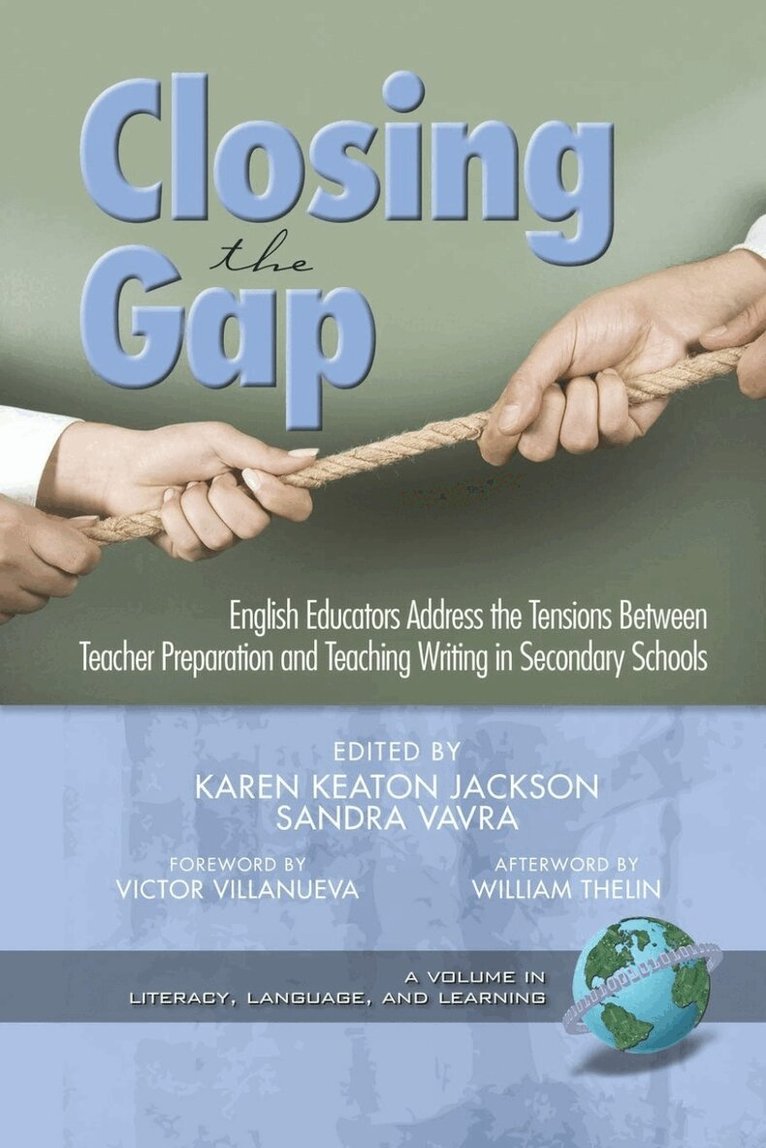
Without contraries there is no progression. ---William BlakeThis is a book about reality and hope. Its chapters reframe the concept of gap, acknowledging distances (for example, acknowledging old insights and theory while also honoring teacher discovery). However, it refuses to bow under the weight of these challenges. Its contributors focus, instead on how to overcome acknowledged inadequacies in learning how to teach writing as well as how to practice principled literacy instruction. These contributors see gaps not as unbridgeable chasms, but rather as opportunities to educate their students to use writing to understand the broader context of their education and pre-service candidates to adapt curriculum creatively.Contributors include new and seasoned secondary school teachers, graduate students, and university faculty who together remind us of “old insights needing to be passed along” (Villanueva) and show us new practices that challenge the conventions of the status quo and promote social justice. To close the gaps, in short, they demonstrate how rhetoric and truth are intertwined. In a time when too many children continue to be left behind, this book should be required reading for all literacy teachers because it is in our continued willingness to learn from each other that hope resides.
Inbunden, Engelska, 2007
999 kr
Skickas inom 5-8 vardagar
Without contraries there is no progression. ---William BlakeThis is a book about reality and hope. Its chapters reframe the concept of gap, acknowledging distances (for example, acknowledging old insights and theory while also honoring teacher discovery). However, it refuses to bow under the weight of these challenges. Its contributors focus, instead on how to overcome acknowledged inadequacies in learning how to teach writing as well as how to practice principled literacy instruction. These contributors see gaps not as unbridgeable chasms, but rather as opportunities to educate their students to use writing to understand the broader context of their education and pre-service candidates to adapt curriculum creatively.Contributors include new and seasoned secondary school teachers, graduate students, and university faculty who together remind us of “old insights needing to be passed along” (Villanueva) and show us new practices that challenge the conventions of the status quo and promote social justice. To close the gaps, in short, they demonstrate how rhetoric and truth are intertwined. In a time when too many children continue to be left behind, this book should be required reading for all literacy teachers because it is in our continued willingness to learn from each other that hope resides.
Häftad, Engelska, 2009
536 kr
Skickas inom 5-8 vardagar
Our goal in writing this book was to validate teachers for strong efforts in their life’s work. We often observe teachers’ frustrations with what they perceive to be a multitude of different “hot topics” in education that they must attend to now, but which they expect to come and go, like the last “hot topics.” So, we wanted to help readers see similarities between many of these “hot topics”—differentiation, multiple intelligences, culturally responsive teaching, “brain-friendly” strategies, authentic assessment, and ethical classroom management—which we feel are not “flashes in the pan.” And we trust that serious practitioners will not oversimplify the findings of neuroscientists and their application to education. Reading studies and books by scientists, a number of which are user-friendly, can help ensure that teachers separate the hype from credible information. We have seen this professionally judicious approach in the work of graduate students (Kolinski, 2007) in adopting “brain-friendly” strategies.We have intentionally packed both theoretical/research-based and practical information in this book because professional educators want to know why they should use certain approaches, models, and strategies. In turn, as professionals, we should be able to explain why we teach the way we do–not to justify, but to educate others about our knowledge-based, reflective, decision-making processes and the impact on student learning. Thus, it is important to read Chapter 1 because it lays a foundation.Each succeeding chapter (2–6) has unique and compelling twists and turns—chock full of ideas to use or to adapt. It is possible to gain lots of ideas, processes, and strategies from reading and implementing (or adapting) even one of the unit chapters, or a part of it. While some of the units are explicitly about literacy, others focus on content using reading, writing, speaking, and listening as critical in the learning process. Thus, literacy skills are reinforced and strengthened. Additionally, some of our colleagues and public school partners have given us feedback that they wanted to implement some of the units and activities themselves. So, feel free to use this book for self-exploration and professional development.
Inbunden, Engelska, 2009
999 kr
Skickas inom 5-8 vardagar
Our goal in writing this book was to validate teachers for strong efforts in their life’s work. We often observe teachers’ frustrations with what they perceive to be a multitude of different “hot topics” in education that they must attend to now, but which they expect to come and go, like the last “hot topics.” So, we wanted to help readers see similarities between many of these “hot topics”—differentiation, multiple intelligences, culturally responsive teaching, “brain-friendly” strategies, authentic assessment, and ethical classroom management—which we feel are not “flashes in the pan.” And we trust that serious practitioners will not oversimplify the findings of neuroscientists and their application to education. Reading studies and books by scientists, a number of which are user-friendly, can help ensure that teachers separate the hype from credible information. We have seen this professionally judicious approach in the work of graduate students (Kolinski, 2007) in adopting “brain-friendly” strategies.We have intentionally packed both theoretical/research-based and practical information in this book because professional educators want to know why they should use certain approaches, models, and strategies. In turn, as professionals, we should be able to explain why we teach the way we do–not to justify, but to educate others about our knowledge-based, reflective, decision-making processes and the impact on student learning. Thus, it is important to read Chapter 1 because it lays a foundation.Each succeeding chapter (2–6) has unique and compelling twists and turns—chock full of ideas to use or to adapt. It is possible to gain lots of ideas, processes, and strategies from reading and implementing (or adapting) even one of the unit chapters, or a part of it. While some of the units are explicitly about literacy, others focus on content using reading, writing, speaking, and listening as critical in the learning process. Thus, literacy skills are reinforced and strengthened. Additionally, some of our colleagues and public school partners have given us feedback that they wanted to implement some of the units and activities themselves. So, feel free to use this book for self-exploration and professional development.
E-bok
Engelska, 2009371 kr
Läs direkt efter köp
Our goal in writing this book was to validate teachers for strong efforts in their life's work. We often observe teachers' frustrations with what they perceive to be a multitude of different "e;hot topics"e; in education that they must attend to now, but which they expect to come and go, like the last "e;hot topics."e; So, we wanted to help readers see similarities between many of these "e;hot topics"e;-differentiation, multiple intelligences, culturally responsive teaching, "e;brain-friendly"e; strategies, authentic assessment, and ethical classroom management-which we feel are not "e;flashes in the pan."e; And we trust that serious practitioners will not oversimplify the findings of neuroscientists and their application to education. Reading studies and books by scientists, a number of which are user-friendly, can help ensure that teachers separate the hype from credible information. We have seen this professionally judicious approach in the work of graduate students (Kolinski, 2007) in adopting "e;brain-friendly"e; strategies.We have intentionally packed both theoretical/research-based and practical information in this book because professional educators want to know why they should use certain approaches, models, and strategies. In turn, as professionals, we should be able to explain why we teach the way we do-not to justify, but to educate others about our knowledge-based, reflective, decision-making processes and the impact on student learning. Thus, it is important to read Chapter 1 because it lays a foundation.Each succeeding chapter (2-6) has unique and compelling twists and turns-chock full of ideas to use or to adapt. It is possible to gain lots of ideas, processes, and strategies from reading and implementing (or adapting) even one of the unit chapters, or a part of it. While some of the units are explicitly about literacy, others focus on content using reading, writing, speaking, and listening as critical in the learning process. Thus, literacy skills are reinforced and strengthened. Additionally, some of our colleagues and public school partners have given us feedback that they wanted to implement some of the units and activities themselves. So, feel free to use this book for self-exploration and professional development.
E-bok
Engelska, 2007371 kr
Läs direkt efter köp
Without contraries there is no progression. ---William BlakeThis is a book about reality and hope. Its chapters reframe the concept of gap, acknowledging distances (for example, acknowledging old insights and theory while also honoring teacher discovery). However, it refuses to bow under the weight of these challenges. Its contributors focus, instead on how to overcome acknowledged inadequacies in learning how to teach writing as well as how to practice principled literacy instruction. These contributors see gaps not as unbridgeable chasms, but rather as opportunities to educate their students to use writing to understand the broader context of their education and pre-service candidates to adapt curriculum creatively.Contributors include new and seasoned secondary school teachers, graduate students, and university faculty who together remind us of "e;old insights needing to be passed along"e; (Villanueva) and show us new practices that challenge the conventions of the status quo and promote social justice. To close the gaps, in short, they demonstrate how rhetoric and truth are intertwined. In a time when too many children continue to be left behind, this book should be required reading for all literacy teachers because it is in our continued willingness to learn from each other that hope resides.
Häftad, Engelska, 2011
602 kr
Skickas inom 5-8 vardagar
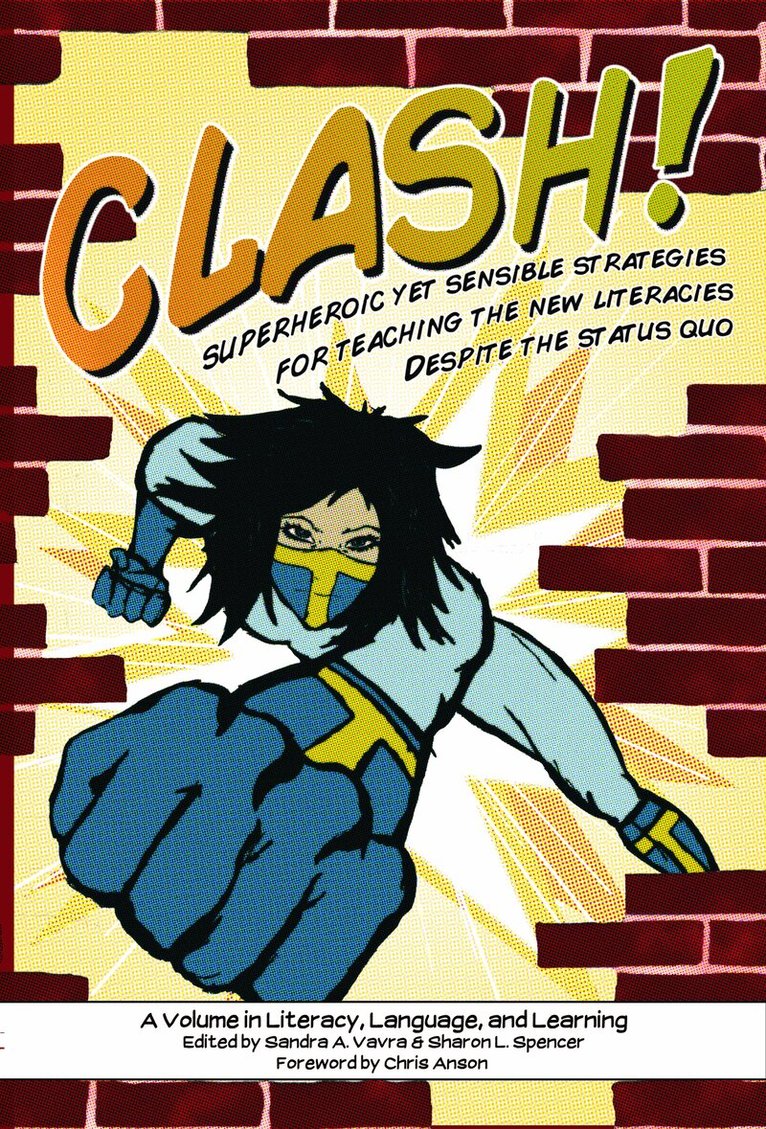
This book offers ideas that secondary teachers, university content faculty, and teacher educators can use to challenge traditional literacy practices and demonstrate creative, innovative ways of incorporating new literacies into the classroom, all within a strong theoretical framework. Teachers are trying to catch up to the new challenges of the twenty-first century. It is a superheroic feat that must be achieved if education is to stay relevant and viable. There is a lot of zip, bam, whap, and wow in the fast-paced, social networking, technological world, but not so much in the often laboriously slow-paced educational world. Where is the balance? How do teachers and students learn together, since one group has seasoned wisdom with limited technological know-how and the other uses all the cool new tools, but not in the service of learning? These are some important issues to consider in finding the balance in an unstable, fast-moving, ever-changing world.This book is practical and useful to literacy teachers, teacher educators, and university faculty by bringing together the expertise of composition/rhetoric researchers and writers, literacy specialists, technology specialists, and teachers who are on the cutting edge of new literacies.
Inbunden, Engelska, 2011
1 065 kr
Skickas inom 5-8 vardagar
This book offers ideas that secondary teachers, university content faculty, and teacher educators can use to challenge traditional literacy practices and demonstrate creative, innovative ways of incorporating new literacies into the classroom, all within a strong theoretical framework. Teachers are trying to catch up to the new challenges of the twenty-first century. It is a superheroic feat that must be achieved if education is to stay relevant and viable. There is a lot of zip, bam, whap, and wow in the fast-paced, social networking, technological world, but not so much in the often laboriously slow-paced educational world. Where is the balance? How do teachers and students learn together, since one group has seasoned wisdom with limited technological know-how and the other uses all the cool new tools, but not in the service of learning? These are some important issues to consider in finding the balance in an unstable, fast-moving, ever-changing world.This book is practical and useful to literacy teachers, teacher educators, and university faculty by bringing together the expertise of composition/rhetoric researchers and writers, literacy specialists, technology specialists, and teachers who are on the cutting edge of new literacies.
E-bok
Engelska, 2011418 kr
Läs direkt efter köp
This book offers ideas that secondary teachers, university content faculty, and teacher educators can use to challenge traditional literacy practices and demonstrate creative, innovative ways of incorporating new literacies into the classroom, all within a strong theoretical framework. Teachers are trying to catch up to the new challenges of the twenty-first century. It is a superheroic feat that must be achieved if education is to stay relevant and viable. There is a lot of zip, bam, whap, and wow in the fast-paced, social networking, technological world, but not so much in the often laboriously slow-paced educational world. Where is the balance? How do teachers and students learn together, since one group has seasoned wisdom with limited technological know-how and the other uses all the cool new tools, but not in the service of learning? These are some important issues to consider in finding the balance in an unstable, fast-moving, ever-changing world.This book is practical and useful to literacy teachers, teacher educators, and university faculty by bringing together the expertise of composition/rhetoric researchers and writers, literacy specialists, technology specialists, and teachers who are on the cutting edge of new literacies.
Häftad, Engelska, 2015
735 kr
Skickas inom 5-8 vardagar
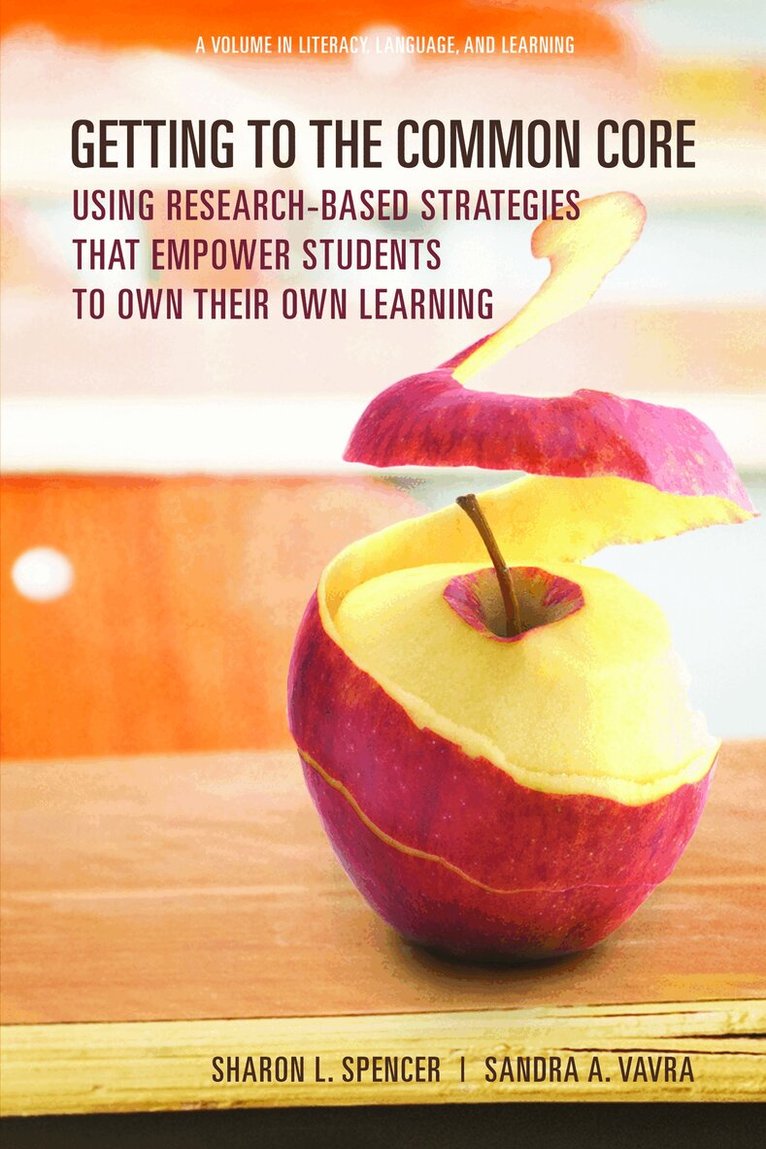
The Common Core Standards have recently been adopted in most states across the nation and teachers are in the process of getting to the core of these standards. Teaching to standards is not a new concept; teachers have adapted to new standards every few years for quite some time. And teachers are adaptable, as can be seen in this book. We are writing this book to demonstrate how teachers use research-based strategies to meet Common Core Standards while still focusing on students. Our goal is to help teachers visualize students in action as other teachers describe the implementation of research-based strategies in their own classrooms, show student work samples, and provide reflections of student success in achieving the standards. Many Common Core Standards books focus on the standards, but our approach focuses on strategies that engage the students in the classroom--showing how different teachers at varying grade levels have used the strategies to meet the standards. With this focus, we believe that teachers gain a new and positive perspective on approaching the new standards and see the flexibility of strategies for meeting standards across subject areas.We have examined research on the strategies with the purpose of giving teachers a brief description of why these strategies work before giving actual examples from classrooms. We also work closely with teachers in the public schools and have our finger on the pulse of what is happening in the public schools—one of the current stressors being unpacking the Common Core StandardsThis book actually focuses on practice. We begin by laying out a rationale in our first chapter---The Core Value(s) of Education. Then, each chapter focuses on a strategy, including 1) a brief description about the research supporting each strategy and 2) several examples from different grade levels, which include a description of how the strategy was used, student work samples, and a reflection on the use of the strategy. The research descriptions are fairly short because, while we believe professional educators (aka teachers, in this case) should know the research that supports practice, we know they are not typically interested in long diatribes about the research.
Inbunden, Engelska, 2015
1 198 kr
Skickas inom 5-8 vardagar
The Common Core Standards have recently been adopted in most states across the nation and teachers are in the process of getting to the core of these standards. Teaching to standards is not a new concept; teachers have adapted to new standards every few years for quite some time. And teachers are adaptable, as can be seen in this book. We are writing this book to demonstrate how teachers use research-based strategies to meet Common Core Standards while still focusing on students. Our goal is to help teachers visualize students in action as other teachers describe the implementation of research-based strategies in their own classrooms, show student work samples, and provide reflections of student success in achieving the standards. Many Common Core Standards books focus on the standards, but our approach focuses on strategies that engage the students in the classroom--showing how different teachers at varying grade levels have used the strategies to meet the standards. With this focus, we believe that teachers gain a new and positive perspective on approaching the new standards and see the flexibility of strategies for meeting standards across subject areas.We have examined research on the strategies with the purpose of giving teachers a brief description of why these strategies work before giving actual examples from classrooms. We also work closely with teachers in the public schools and have our finger on the pulse of what is happening in the public schools—one of the current stressors being unpacking the Common Core StandardsThis book actually focuses on practice. We begin by laying out a rationale in our first chapter---The Core Value(s) of Education. Then, each chapter focuses on a strategy, including 1) a brief description about the research supporting each strategy and 2) several examples from different grade levels, which include a description of how the strategy was used, student work samples, and a reflection on the use of the strategy. The research descriptions are fairly short because, while we believe professional educators (aka teachers, in this case) should know the research that supports practice, we know they are not typically interested in long diatribes about the research.
E-bok
Engelska, 2015510 kr
Läs direkt efter köp
The Common Core Standards have recently been adopted in most states across the nation and teachers are in the process of getting to the core of these standards. Teaching to standards is not a new concept; teachers have adapted to new standards every few years for quite some time. And teachers are adaptable, as can be seen in this book. We are writing this book to demonstrate how teachers use research-based strategies to meet Common Core Standards while still focusing on students. Our goal is to help teachers visualize students in action as other teachers describe the implementation of research-based strategies in their own classrooms, show student work samples, and provide reflections of student success in achieving the standards. Many Common Core Standards books focus on the standards, but our approach focuses on strategies that engage the students in the classroom--showing how different teachers at varying grade levels have used the strategies to meet the standards. With this focus, we believe that teachers gain a new and positive perspective on approaching the new standards and see the flexibility of strategies for meeting standards across subject areas.We have examined research on the strategies with the purpose of giving teachers a brief description of why these strategies work before giving actual examples from classrooms. We also work closely with teachers in the public schools and have our finger on the pulse of what is happening in the public schools-one of the current stressors being unpacking the Common Core StandardsThis book actually focuses on practice. We begin by laying out a rationale in our first chapter---The Core Value(s) of Education. Then, each chapter focuses on a strategy, including 1) a brief description about the research supporting each strategy and 2) several examples from different grade levels, which include a description of how the strategy was used, student work samples, and a reflection on the use of the strategy. The research descriptions are fairly short because, while we believe professional educators (aka teachers, in this case) should know the research that supports practice, we know they are not typically interested in long diatribes about the research.
E-bok
Engelska, 2015772 kr
Läs direkt efter köp
The Common Core Standards have recently been adopted in most states across the nation and teachers are in the process of getting to the core of these standards. Teaching to standards is not a new concept; teachers have adapted to new standards every few years for quite some time. And teachers are adaptable, as can be seen in this book. We are writing this book to demonstrate how teachers use research-based strategies to meet Common Core Standards while still focusing on students. Our goal is to help teachers visualize students in action as other teachers describe the implementation of research-based strategies in their own classrooms, show student work samples, and provide reflections of student success in achieving the standards. Many Common Core Standards books focus on the standards, but our approach focuses on strategies that engage the students in the classroom--showing how different teachers at varying grade levels have used the strategies to meet the standards. With this focus, we believe that teachers gain a new and positive perspective on approaching the new standards and see the flexibility of strategies for meeting standards across subject areas.We have examined research on the strategies with the purpose of giving teachers a brief description of why these strategies work before giving actual examples from classrooms. We also work closely with teachers in the public schools and have our finger on the pulse of what is happening in the public schools-one of the current stressors being unpacking the Common Core StandardsThis book actually focuses on practice. We begin by laying out a rationale in our first chapter---The Core Value(s) of Education. Then, each chapter focuses on a strategy, including 1) a brief description about the research supporting each strategy and 2) several examples from different grade levels, which include a description of how the strategy was used, student work samples, and a reflection on the use of the strategy. The research descriptions are fairly short because, while we believe professional educators (aka teachers, in this case) should know the research that supports practice, we know they are not typically interested in long diatribes about the research.
E-bok
Engelska, 2011626 kr
Läs direkt efter köp
This book offers ideas that secondary teachers, university content faculty, and teacher educators can use to challenge traditional literacy practices and demonstrate creative, innovative ways of incorporating new literacies into the classroom, all within a strong theoretical framework. Teachers are trying to catch up to the new challenges of the twenty-first century. It is a superheroic feat that must be achieved if education is to stay relevant and viable. There is a lot of zip, bam, whap, and wow in the fast-paced, social networking, technological world, but not so much in the often laboriously slow-paced educational world. Where is the balance? How do teachers and students learn together, since one group has seasoned wisdom with limited technological know-how and the other uses all the cool new tools, but not in the service of learning? These are some important issues to consider in finding the balance in an unstable, fast-moving, ever-changing world.This book is practical and useful to literacy teachers, teacher educators, and university faculty by bringing together the expertise of composition/rhetoric researchers and writers, literacy specialists, technology specialists, and teachers who are on the cutting edge of new literacies.
E-bok
Engelska, 2009565 kr
Läs direkt efter köp
Our goal in writing this book was to validate teachers for strong efforts in their life's work. We often observe teachers' frustrations with what they perceive to be a multitude of different "e;hot topics"e; in education that they must attend to now, but which they expect to come and go, like the last "e;hot topics."e; So, we wanted to help readers see similarities between many of these "e;hot topics"e;-differentiation, multiple intelligences, culturally responsive teaching, "e;brain-friendly"e; strategies, authentic assessment, and ethical classroom management-which we feel are not "e;flashes in the pan."e; And we trust that serious practitioners will not oversimplify the findings of neuroscientists and their application to education. Reading studies and books by scientists, a number of which are user-friendly, can help ensure that teachers separate the hype from credible information. We have seen this professionally judicious approach in the work of graduate students (Kolinski, 2007) in adopting "e;brain-friendly"e; strategies.We have intentionally packed both theoretical/research-based and practical information in this book because professional educators want to know why they should use certain approaches, models, and strategies. In turn, as professionals, we should be able to explain why we teach the way we do-not to justify, but to educate others about our knowledge-based, reflective, decision-making processes and the impact on student learning. Thus, it is important to read Chapter 1 because it lays a foundation.Each succeeding chapter (2-6) has unique and compelling twists and turns-chock full of ideas to use or to adapt. It is possible to gain lots of ideas, processes, and strategies from reading and implementing (or adapting) even one of the unit chapters, or a part of it. While some of the units are explicitly about literacy, others focus on content using reading, writing, speaking, and listening as critical in the learning process. Thus, literacy skills are reinforced and strengthened. Additionally, some of our colleagues and public school partners have given us feedback that they wanted to implement some of the units and activities themselves. So, feel free to use this book for self-exploration and professional development.
E-bok
Engelska, 2007557 kr
Läs direkt efter köp
Without contraries there is no progression. ---William BlakeThis is a book about reality and hope. Its chapters reframe the concept of gap, acknowledging distances (for example, acknowledging old insights and theory while also honoring teacher discovery). However, it refuses to bow under the weight of these challenges. Its contributors focus, instead on how to overcome acknowledged inadequacies in learning how to teach writing as well as how to practice principled literacy instruction. These contributors see gaps not as unbridgeable chasms, but rather as opportunities to educate their students to use writing to understand the broader context of their education and pre-service candidates to adapt curriculum creatively.Contributors include new and seasoned secondary school teachers, graduate students, and university faculty who together remind us of "e;old insights needing to be passed along"e; (Villanueva) and show us new practices that challenge the conventions of the status quo and promote social justice. To close the gaps, in short, they demonstrate how rhetoric and truth are intertwined. In a time when too many children continue to be left behind, this book should be required reading for all literacy teachers because it is in our continued willingness to learn from each other that hope resides.