Sandra Guinand – författare
Visar alla böcker från författaren Sandra Guinand. Handla med fri frakt och snabb leverans.
11 produkter
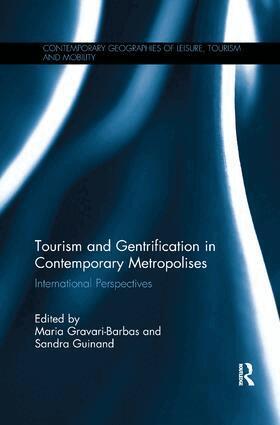
Tourism and Gentrification in Contemporary Metropolises
International Perspectives
Av Maria Gravari-Barbas, Sandra Guinand
Häftad, 2019
747 kr
Lägg i varukorg
Tourism gentrification is a critical shaping force of socio-economic and contemporary urban landscapes. This book aims to be the first substantive text on this subject, explaining the multiple and complex relationships between tourism and gentrification and their outcomes and manifestations in …
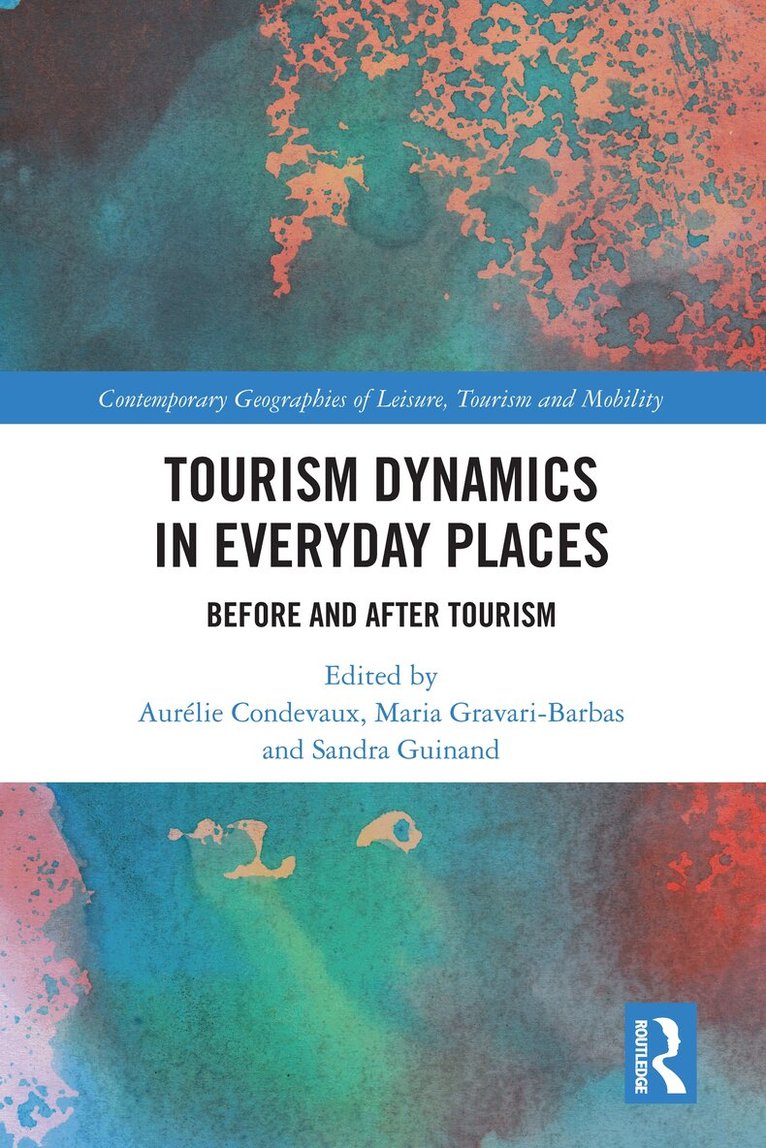
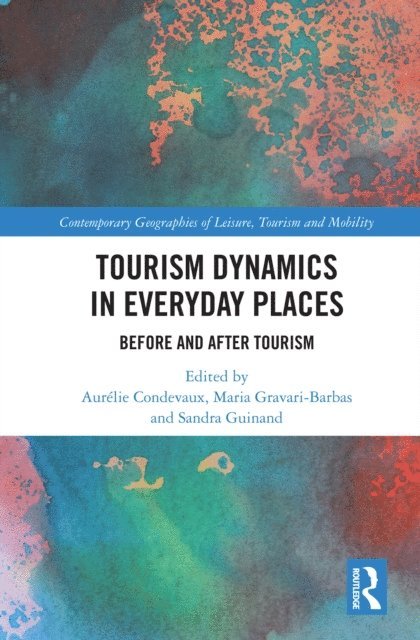
Tourism Dynamics in Everyday Places
Before and After Tourism
Av Aurélie Condevaux, Maria Gravari-Barbas m. fl.
Inbunden, 2021
2504 kr
Lägg i varukorg
This title offers a dynamic understanding of tourism, usually defined in terms of clearly circumscribed places and temporalities, to grasp its changing spatial patterns.The first part looks at the "befores" – everyday places such as daily markets, flea markets, urban neighbourhoods, that have …
Tourism Dynamics in Everyday Places
Before and After Tourism
Av Aurélie Condevaux, Maria Gravari-Barbas m. fl.
Häftad, 2024
710 kr
Lägg i varukorg
This title offers a dynamic understanding of tourism, usually defined in terms of clearly circumscribed places and temporalities, to grasp its changing spatial patterns.The first part looks at the "befores" – everyday places such as daily markets, flea markets, urban neighbourhoods, that have …
Tourism Dynamics in Everyday Places
Before and After Tourism
Av Sandra Guinand, Maria Gravari-Barbas m. fl.
E-bok, 2021
814 kr
Lägg i varukorg
This title offers a dynamic understanding of tourism, usually defined in terms of clearly circumscribed places and temporalities, to grasp its changing spatial patterns. The first part looks at the "befores" – everyday places such as daily markets, flea markets, urban neighbourhoods, that have …
Tourism Dynamics in Everyday Places
Before and After Tourism
Av Sandra Guinand, Maria Gravari-Barbas m. fl.
E-bok, 2021
814 kr
Lägg i varukorg
This title offers a dynamic understanding of tourism, usually defined in terms of clearly circumscribed places and temporalities, to grasp its changing spatial patterns. The first part looks at the "befores" – everyday places such as daily markets, flea markets, urban neighbourhoods, that have …
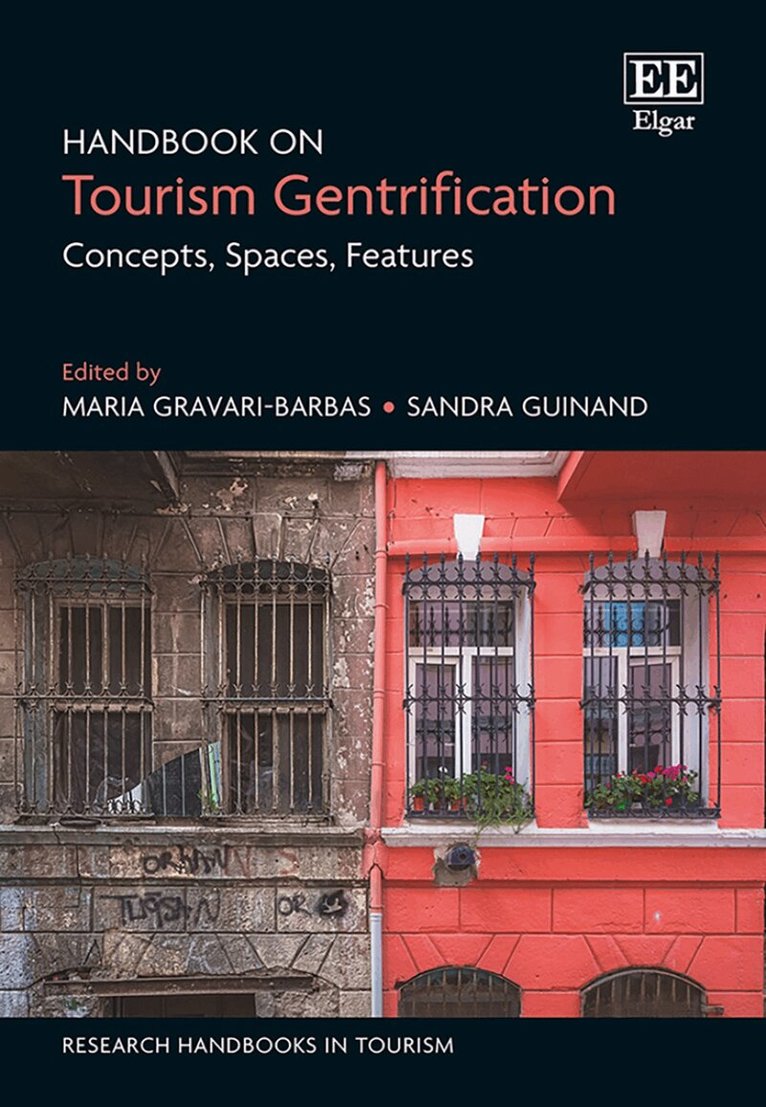
Handbook on Tourism Gentrification
Concepts, Spaces, Features
Av Maria Gravari-Barbas, Sandra Guinand
Inbunden, 2025
4042 kr
Lägg i varukorg
This insightful Handbook explores the relationship between tourism and gentrification, focusing on the post COVID-19 era. It examines the conceptual links between these two social phenomena, outlining the spaces in which tourist gentrification has taken place and its consequences. Expert authors …
Handbook on Tourism Gentrification
Concepts, Spaces, Features
Av Sandra Guinand, Maria Gravari-Barbas
E-bok, 2025
880 kr
Lägg i varukorg
This insightful Handbook explores the relationship between tourism and gentrification, focusing on the post COVID-19 era. It examines the conceptual links between these two social phenomena, outlining the spaces in which tourist gentrification has taken place and its consequences. Expert authors …
Handbook on Tourism Gentrification
Concepts, Spaces, Features
Av Sandra Guinand, Maria Gravari-Barbas
E-bok, 2025
880 kr
Lägg i varukorg
This insightful Handbook explores the relationship between tourism and gentrification, focusing on the post COVID-19 era. It examines the conceptual links between these two social phenomena, outlining the spaces in which tourist gentrification has taken place and its consequences. Expert authors …
Tourism and Gentrification in Contemporary Metropolises
International Perspectives
Av Maria Gravari-Barbas, Sandra Guinand
Inbunden, 2017
3055 kr
Lägg i varukorg
Tourism gentrification is a critical shaping force of socio-economic and contemporary urban landscapes. This book aims to be the first substantive text on this subject, explaining the multiple and complex relationships between tourism and gentrification and their outcomes and manifestations in …
Tourism and Gentrification in Contemporary Metropolises
International Perspectives
Av Sandra Guinand, Maria Gravari-Barbas
E-bok, 2017
864 kr
Lägg i varukorg
Tourism gentrification is a critical shaping force of socio-economic and contemporary urban landscapes. This book aims to be the first substantive text on this subject, explaining the multiple and complex relationships between tourism and gentrification and their outcomes and manifestations in …
Tourism and Gentrification in Contemporary Metropolises
International Perspectives
Av Sandra Guinand, Maria Gravari-Barbas
E-bok, 2017
883 kr
Lägg i varukorg
Tourism gentrification is a critical shaping force of socio-economic and contemporary urban landscapes. This book aims to be the first substantive text on this subject, explaining the multiple and complex relationships between tourism and gentrification and their outcomes and manifestations in …