Sara A. Rich – författare
Visar alla böcker från författaren Sara A. Rich. Handla med fri frakt och snabb leverans.
5 produkter
5 produkter
Häftad, Engelska, 2017
679 kr
Skickas
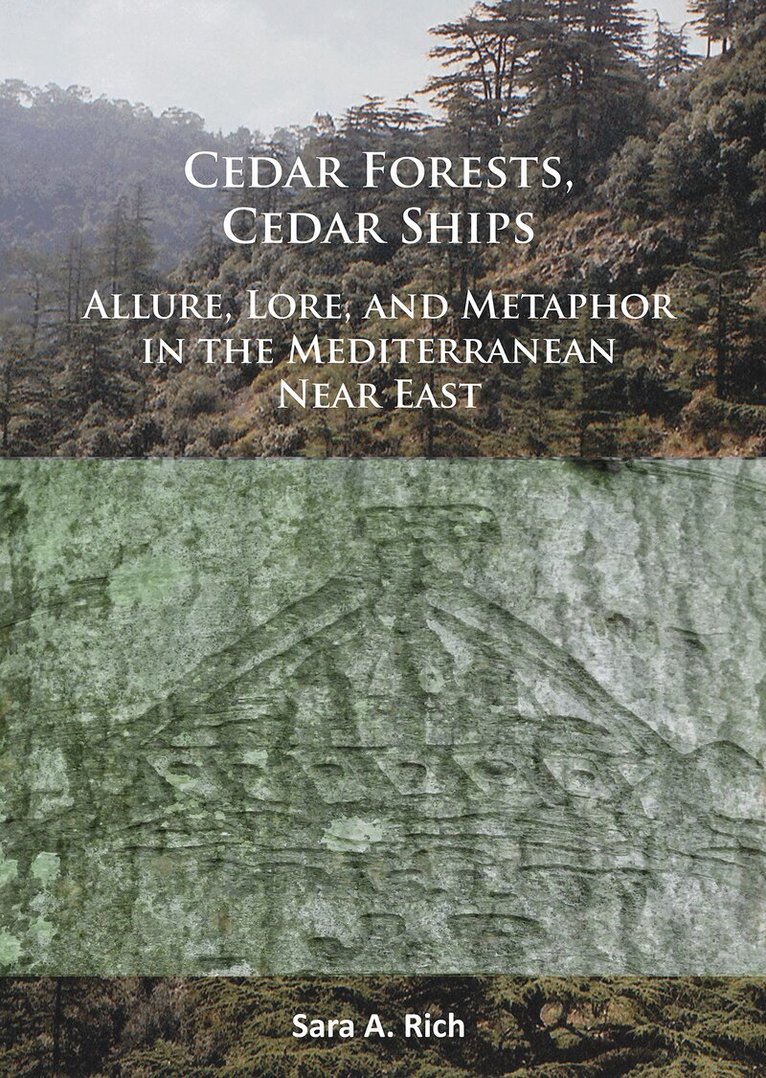
It is commonly recognized that the Cedars of Lebanon were prized in the ancient world, but how can the complex archaeological role of the Cedrus genus be articulated in terms that go beyond its interactions with humans alone? And to what extent can ancient ships and boats made of this material demonstrate such intimate relations with wood? Drawing from object-oriented ontologies and other ‘new materialisms,’ Cedar Forests, Cedar Ships constructs a hylocentric anti-narrative spreading from the Cretaceous to the contemporary. With a dual focus on the woods and the watercraft, and on the considerable historical overlap between them, the book takes another step in the direction of challenging the conceptual binaries of nature/culture and subject/object, while providing an up-to-date synthesis of the relevant archaeological and historical data. Binding physical properties and metaphorical manifestations, the fluctuating presence of cedar (forests, trees, and wood) in religious thought is interpreted as having had a direct bearing on shipbuilding in the ancient East Mediterranean. Close and diachronic excavations of the interstices of allure, lore, and metaphor can begin to navigate the (meta) physical relationships between the forested mountain and the forest afloat, and their myriad unique realities.
E-bok
PDF, Engelska, 2017221 kr
Läs direkt efter köp
It is commonly recognized that the Cedars of Lebanon were prized in the ancient world, but how can the complex archaeological role of the Cedrus genus be articulated in terms that go beyond its interactions with humans alone? And to what extent can ancient ships and boats made of this material demonstrate such intimate relations with wood? Drawing from object-oriented ontologies and other ‘new materialisms,’ Cedar Forests, Cedar Ships constructs a hylocentric anti-narrative spreading from the Cretaceous to the contemporary. With a dual focus on the woods and the watercraft, and on the considerable historical overlap between them, the book takes another step in the direction of challenging the conceptual binaries of nature/culture and subject/object, while providing an up-to-date synthesis of the relevant archaeological and historical data. Binding physical properties and metaphorical manifestations, the fluctuating presence of cedar (forests, trees, and wood) in religious thought is interpreted as having had a direct bearing on shipbuilding in the ancient East Mediterranean. Close and diachronic excavations of the interstices of allure, lore, and metaphor can begin to navigate the (meta) physical relationships between the forested mountain and the forest afloat, and their myriad unique realities.
Häftad, Engelska, 2018
313 kr
Skickas
Two of the questions most frequently asked by archaeologists of sites and the objects that populate them are ‘How old are you?’ and ‘Where are you from?’ These questions can often be answered through archaeometric dating and provenance analyses. As both archaeological sites and objects, shipwrecks pose a special problem in archaeometric dating and provenance because when they sailed, they often accumulated new construction material as timbers were repaired and replaced. Additionally, during periods of globalization, such as the so-called Age of Discovery, the provenance of construction materials may not reflect where the ship was built due to long-distance timber trade networks and the global nature of these ships’ sailing routes. Accepting these special challenges, nautical archaeologists must piece together the nuanced relationship between the ship, its timbers, and the shipwreck, and to do so, wood samples must be removed from the assemblage. Besides the provenance of the vessel’s wooden components, selective removal and analysis of timber samples can also provide researchers with unique insights relating to environmental history. For this period, wood samples could help produce information on the emergent global economy; networks of timber trade; forestry and carpentry practices; climate patterns and anomalies; forest reconstruction; repairs made to ships and when, why, and where those occurred; and much more. This book is a set of protocols to establish the need for wood samples from shipwrecks and to guide archaeologists in the removal of samples for a suite of archaeometric techniques currently available to provenance the timbers used to construct wooden ships and boats. While these protocols will prove helpful to archaeologists working on shipwreck assemblages from any time period and in any place, this book uses Iberian ships of the 16th to 18th centuries as its case studies because their global mobility poses additional challenges to the problem at hand. At the same time, their prolificacy and ubiquity make the wreckage of these ships a uniquely global phenomenon.
Häftad, Engelska, 2026
1 084 kr
Kommande
This multidisciplinary volume is a collection of 13 articles reporting on recent research on the archaeology of shipwrecks, maritime visual culture, and cultural heritage management in the Mediterranean region. While papers in this volume’s predecessor, ‘Under the Mediterranean I’, were arranged thematically, the present volume organizes the research regionally, from the East Mediterranean westward, and within each region chronologically.Following the editors’ introduction, the volume begins with case studies on integrated management in East Africa and the East Mediterranean. Subsequent subjects covered in the eastern Mediterranean range from ancient mariners’ ex votos to an update on the Classical Mazotos shipwreck, and from an investigation of a Roman wreck in Cyprus to an analysis of cargo loading processes on the Ma’agan Mikhael B. Moving to the central Mediterranean, papers include the long legacy of rock art, and an ancient Aegean ship’s cargo assemblage, both in Sicily. An analysis of how iconographic sources can supplement material remains, especially perishable material like rigging, is also presented. Some 32 Roman-era shipwreck cargoes are addressed in the Tyrrhenian, while another paper analyses the distribution of heavy cargos, such as marble. Moving forward in time to the Imperial Age, one chapter examines the ceramic and organic remains from the Torre Santa Sabina I wreck, Italy, and another the wreck of the Capo Sagro II wreck from Corsica. The final paper presents a forward-looking analysis of integrated management on a global scale.This book will be of interest to students and archaeologists researching the Mediterranean region, and all readers interested in a wide range of recent advances in maritime archaeology, the history of art, and critical heritage studies.
Inbunden, Engelska, 2026
1 931 kr
Kommande
This multidisciplinary volume is a collection of 13 articles reporting on recent research on the archaeology of shipwrecks, maritime visual culture, and cultural heritage management in the Mediterranean region. While papers in this volume’s predecessor, ‘Under the Mediterranean I’, were arranged thematically, the present volume organizes the research regionally, from the East Mediterranean westward, and within each region chronologically.Following the editors’ introduction, the volume begins with case studies on integrated management in East Africa and the East Mediterranean. Subsequent subjects covered in the eastern Mediterranean range from ancient mariners’ ex votos to an update on the Classical Mazotos shipwreck, and from an investigation of a Roman wreck in Cyprus to an analysis of cargo loading processes on the Ma’agan Mikhael B. Moving to the central Mediterranean, papers include the long legacy of rock art, and an ancient Aegean ship’s cargo assemblage, both in Sicily. An analysis of how iconographic sources can supplement material remains, especially perishable material like rigging, is also presented. Some 32 Roman-era shipwreck cargoes are addressed in the Tyrrhenian, while another paper analyses the distribution of heavy cargos, such as marble. Moving forward in time to the Imperial Age, one chapter examines the ceramic and organic remains from the Torre Santa Sabina I wreck, Italy, and another the wreck of the Capo Sagro II wreck from Corsica. The final paper presents a forward-looking analysis of integrated management on a global scale.This book will be of interest to students and archaeologists researching the Mediterranean region, and all readers interested in a wide range of recent advances in maritime archaeology, the history of art, and critical heritage studies.