Sarah H. Gordon – författare
Visar alla böcker från författaren Sarah H. Gordon. Handla med fri frakt och snabb leverans.
6 produkter
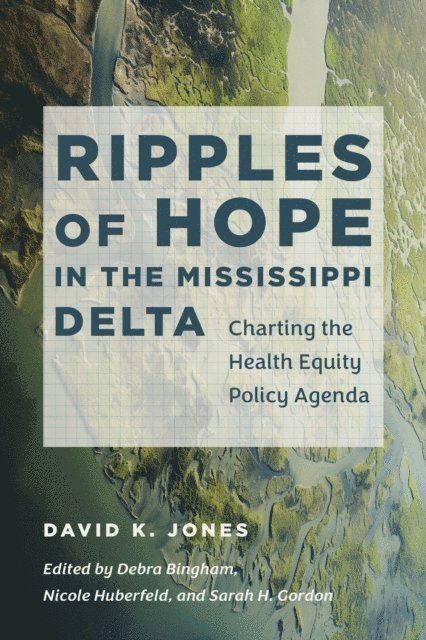
Ripples of Hope in the Mississippi Delta
Charting the Health Equity Policy Agenda
Av David K. Jones, Debra Bingham m. fl.
Inbunden, 2024
1153 kr
Lägg i varukorg
The late David K. Jones spent four years visiting the Mississippi Delta conducting primary research with residents and local leaders to explore the connections between race, place, and health. He weaves their insights with data analysis to show how local, state, and national policies and …
Ripples of Hope in the Mississippi Delta
Charting the Health Equity Policy Agenda
Av David K. Jones, Debra Bingham m. fl.
Häftad, 2024
260 kr
Lägg i varukorg
The late David K. Jones spent four years visiting the Mississippi Delta conducting primary research with residents and local leaders to explore the connections between race, place, and health. He weaves their insights with data analysis to show how local, state, and national policies and …
Ripples of Hope in the Mississippi Delta
Charting the Health Equity Policy Agenda
Av David K. Jones, Sarah H. Gordon m. fl.
E-bok, 2024
235 kr
Lägg i varukorg
The Mississippi Delta consistently ranks as having some of the worst health outcomes in the United States. Even with this stark reality, researcher David K. Jones (1981–2021) found “ripples of hope.” For four years, Jones turned to residents and local leaders to learn firsthand the intricate …
Ripples of Hope in the Mississippi Delta
Charting the Health Equity Policy Agenda
Av David K. Jones, Sarah H. Gordon m. fl.
E-bok, 2024
2165 kr
Lägg i varukorg
The Mississippi Delta consistently ranks as having some of the worst health outcomes in the United States. Even with this stark reality, researcher David K. Jones (1981–2021) found “ripples of hope.” For four years, Jones turned to residents and local leaders to learn firsthand the intricate …
Ripples of Hope in the Mississippi Delta
Charting the Health Equity Policy Agenda
Av David K. Jones, Sarah H. Gordon m. fl.
E-bok, 2024
2165 kr
Lägg i varukorg
The Mississippi Delta consistently ranks as having some of the worst health outcomes in the United States. Even with this stark reality, researcher David K. Jones (1981–2021) found “ripples of hope.” For four years, Jones turned to residents and local leaders to learn firsthand the intricate …
Passage to Union
How the Railroads Transformed American Life, 1829-1929
Häftad, 1998
225 kr
Lägg i varukorg
Exploring the social, economic, and legal impact of the growth of the railroads, Sarah Gordon has written a richly informed narrative history of an American icon—with surprising conclusions. Where the railroads and their entrepreneurs are ordinarily celebrated for drawing together the vast …