Saul David – författare
Visar alla böcker från författaren Saul David. Handla med fri frakt och snabb leverans.
49 produkter
49 produkter
Häftad, Engelska, 2007
160 kr
Skickas
In Victoria's Wars: The Rise of Empire Saul David explores the early part of Queen Victoria's reign,when the British Empire was well on the way to becoming the greatest empire the world had ever seen. This is the story of how it happened and the people who made it happen. In a fast-moving narrative ranging from London to the harsh terrain of India, Russia and the Far East, Saul David shows how Britain ruthlessly exploited her position as the world's only superpower to expand her empire. Yet little of this territorial acquisition was planned or sanctioned by the home government. Instead it was largely the work of the men on the ground, and to those at home it really did seem that the empire was acquired in a 'fit of absence of mind'. Saul David creates a vivid portrait of life on the violent fringes of empire, and of the seemingly endless and brutal wars that were fought in the name of trade, civilization and the balance of power.'Splendid . . . a terrific treasure-chest of anecdotes . . . a splendidly brisk, cool and judicious narrator' Daily Telegraph 'Incisive and acute . . . thorough and occasionally revelatory, [David] always finds a telling phrase, an eye-catching detail or a human story' Sunday Times Saul David is Professor of War Studies at the University of Buckingham and the author of several critically acclaimed history books, including The Indian Mutiny: 1857 (shortlisted for the Westminster Medal for Military Literature), Zulu: The Heroism and Tragedy of the Zulu War of 1879 (a Waterstone's Military History Book of the Year) and, most recently, Victoria's Wars: The Rise of Empire.
Häftad, Engelska, 2022
132 kr
Skickas
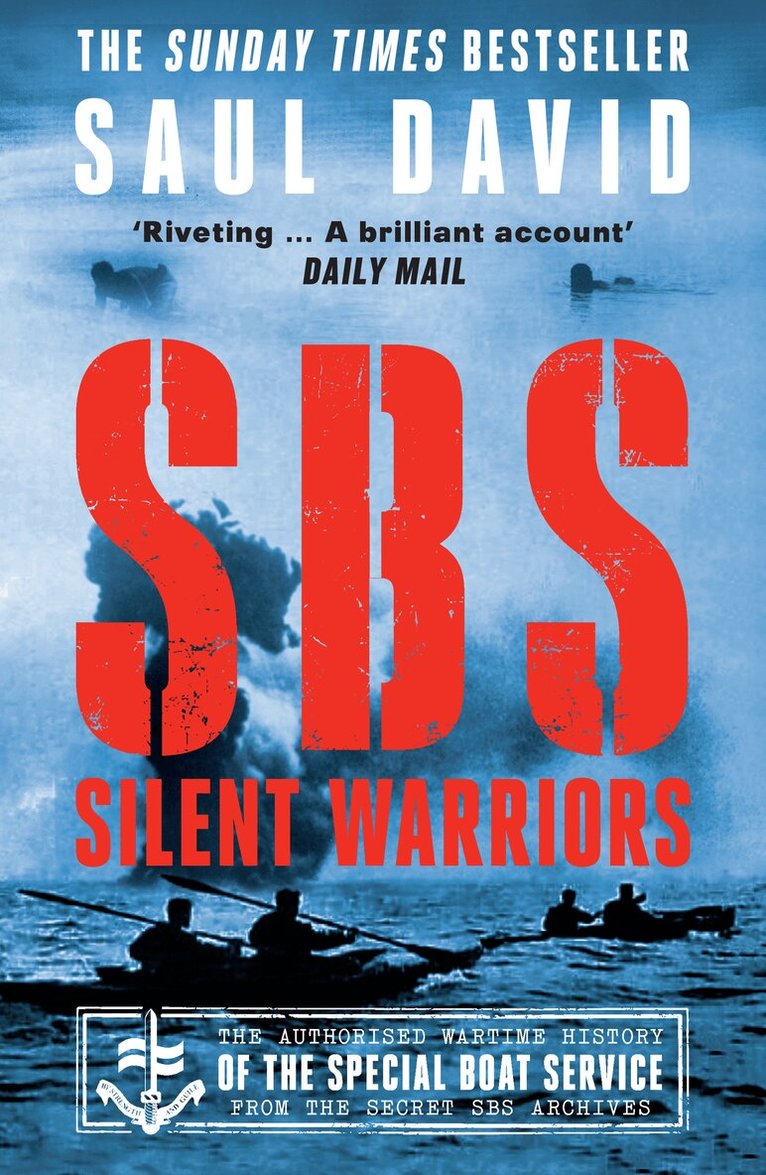
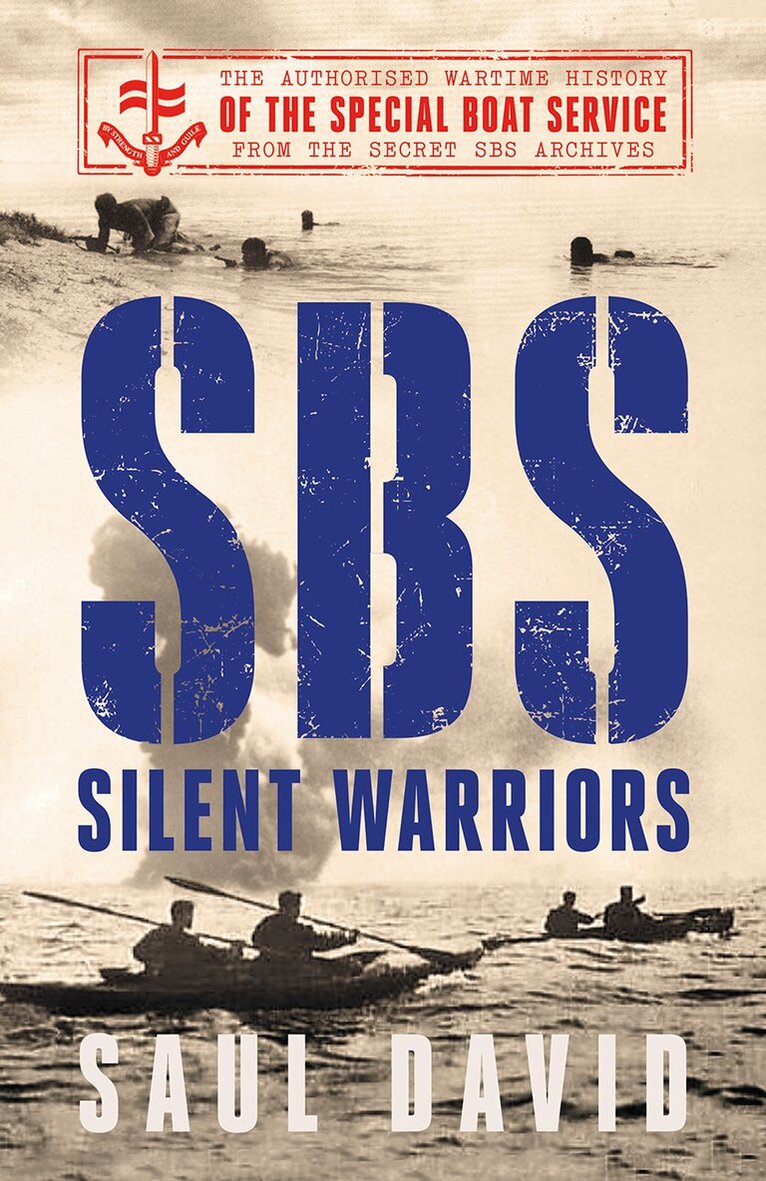
THE SUNDAY TIMES BESTSELLER ‘A terrific book … It really is one of the most enjoyable histories I’ve read in many a year’ JAMES HOLLAND ‘Riveting … A brilliant account’ DAILY MAIL THE FIRST AUTHORISED HISTORY OF THE SBS. Britain’s SBS – or Special Boat Service – was the world’s first maritime special operations unit. Founded in the dark days of 1940, it started as a small and inexperienced outfit that leaned heavily on volunteers’ raw courage and boyish enthusiasm. It went on to change the course of the Second World War – and has served as a model for special forces ever since. The fledgling unit’s first mission was a daring beach reconnaissance of Rhodes in the spring of 1941. Over the next four years, the SBS and its affiliates would carry out many more spectacular operations in the Mediterranean, the Atlantic, the Channel and the Far East. These missions – including Operation Frankton, the daredevil attempt by the ‘Cockleshell Heroes’ to paddle up the Garonne river and sink Axis ships in Bordeaux harbour – were some of the most audacious and legendary of the war.Paddling flimsy canoes, and armed only with knives, pistols and a few sub-machine guns, this handful of brave and determined men operated deep behind enemy lines in the full knowledge that if caught they might be executed. Many were.Yet their many improbable achievements – destroying enemy ships and infrastructure, landing secret agents, tying up enemy forces, spreading fear and uncertainty, and, most importantly, preparing the ground for D-Day – helped to make an Allied victory possible.Written with the full cooperation of the modern SBS – the first time this ultra-secretive unit has given its seal of approval to any book – and exclusive access to its archives, SBS: Silent Warriors allows Britain’s original special forces to emerge from the shadows and take their proper and deserved place in our island story.
E-bok
Engelska, 202097 kr
Läs direkt efter köp
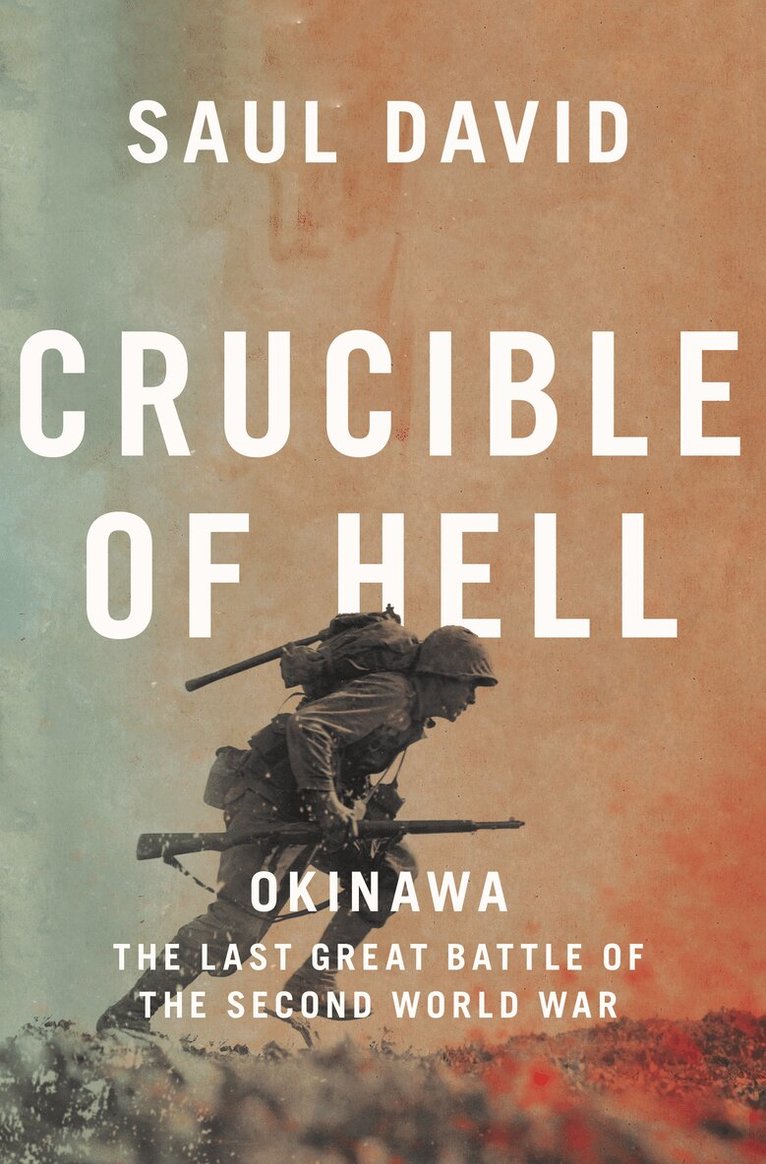
‘Excellent’ Antony Beevor ‘Saul David is a brilliant historian … In shocking and jaw-dropping detail, he brings a battle that deserves far greater prominence and understanding vividly back to life’ James Holland From award-winning historian Saul David, an action-packed and powerful new narrative of the Battle of Okinawa – the last great clash of the Second World War, and one that had profound consequences for the modern world. For eighty-three blood-soaked days, the fighting on the island of Okinawa plumbed depths of savagery as bad as anything seen on the Eastern Front. When it was over, almost a quarter of a million people had lost their lives, making it by far the bloodiest US battle of the Pacific. In Okinawa, the death toll included thousands of civilians lost to mass suicide, convinced by Japanese propaganda that they would otherwise be raped and murdered by the enemy. On the US side, David argues that the horror of the battle ultimately determined President Truman’s choice to use atomic bombs in August 1945.It is a brutal, heart-rending story, and one David tells with masterly attention to detail: the cramped cockpit of a kamikaze plane, the claustrophobic gun turret of a warship under attack, and a half-submerged foxhole amidst the squalor and battle detritus. The narrative follows generals, presidents and emperors, as well as the humbler experiences of ordinary servicemen and families on both sides, and the Okinawan civilians who were caught so tragically between the warring parties.Using graphic eyewitness accounts and declassified documents from archives in three continents, Saul David illuminates a shocking chapter of history that is too often missing from Western-centric narratives of the Second World War.
Ljudbok
Engelska, 2020218 kr
Lyssna direkt efter köp
‘Excellent’ Antony Beevor‘Saul David is a brilliant historian … In shocking and jaw-dropping detail, he brings a battle that deserves far greater prominence and understanding vividly back to life’ James HollandFrom award-winning historian Saul David, an action-packed and powerful new narrative of the Battle of Okinawa – the last great clash of the Second World War, and one that had profound consequences for the modern world. For eighty-three blood-soaked days, the fighting on the island of Okinawa plumbed depths of savagery as bad as anything seen on the Eastern Front. When it was over, almost a quarter of a million people had lost their lives, making it by far the bloodiest US battle of the Pacific. In Okinawa, the death toll included thousands of civilians lost to mass suicide, convinced by Japanese propaganda that they would otherwise be raped and murdered by the enemy. On the US side, David argues that the horror of the battle ultimately determined President Truman’s choice to use atomic bombs in August 1945.It is a brutal, heart-rending story, and one David tells with masterly attention to detail: the cramped cockpit of a kamikaze plane, the claustrophobic gun turret of a warship under attack, and a half-submerged foxhole amidst the squalor and battle detritus. The narrative follows generals, presidents and emperors, as well as the humbler experiences of ordinary servicemen and families on both sides, and the Okinawan civilians who were caught so tragically between the warring parties.Using graphic eyewitness accounts and declassified documents from archives in three continents, Saul David illuminates a shocking chapter of history that is too often missing from Western-centric narratives of the Second World War.
Häftad, Engelska, 2021
150 kr
Skickas
‘Excellent’ Antony Beevor ‘Saul David is a brilliant historian … In shocking and jaw-dropping detail, he brings a battle that deserves far greater prominence and understanding vividly back to life’ James Holland From award-winning historian Saul David, an action-packed and powerful new narrative of the Battle of Okinawa – the last great clash of the Second World War, and one that had profound consequences for the modern world. For eighty-three blood-soaked days, the fighting on the island of Okinawa plumbed depths of savagery as bad as anything seen on the Eastern Front. When it was over, almost a quarter of a million people had lost their lives, making it by far the bloodiest US battle of the Pacific. In Okinawa, the death toll included thousands of civilians lost to mass suicide, convinced by Japanese propaganda that they would otherwise be raped and murdered by the enemy. On the US side, David argues that the horror of the battle ultimately determined President Truman’s choice to use atomic bombs in August 1945.It is a brutal, heart-rending story, and one David tells with masterly attention to detail: the cramped cockpit of a kamikaze plane, the claustrophobic gun turret of a warship under attack, and a half-submerged foxhole amidst the squalor and battle detritus. The narrative follows generals, presidents and emperors, as well as the humbler experiences of ordinary servicemen and families on both sides, and the Okinawan civilians who were caught so tragically between the warring parties.Using graphic eyewitness accounts and declassified documents from archives in three continents, Saul David illuminates a shocking chapter of history that is too often missing from Western-centric narratives of the Second World War.
E-bok
Engelska, 202184 kr
Läs direkt efter köp
THE SUNDAY TIMES BESTSELLER ‘A terrific book … It really is one of the most enjoyable histories I’ve read in many a year’ JAMES HOLLAND ‘Riveting … A brilliant account’ DAILY MAIL THE FIRST AUTHORISED HISTORY OF THE SBS. Britain’s SBS – or Special Boat Service – was the world’s first maritime special operations unit. Founded in the dark days of 1940, it started as a small and inexperienced outfit that leaned heavily on volunteers’ raw courage and boyish enthusiasm. It went on to change the course of the Second World War – and has served as a model for special forces ever since. The fledgling unit’s first mission was a daring beach reconnaissance of Rhodes in the spring of 1941. Over the next four years, the SBS and its affiliates would carry out many more spectacular operations in the Mediterranean, the Atlantic, the Channel and the Far East. These missions – including Operation Frankton, the daredevil attempt by the ‘Cockleshell Heroes’ to paddle up the Garonne river and sink Axis ships in Bordeaux harbour – were some of the most audacious and legendary of the war.Paddling flimsy canoes, and armed only with knives, pistols and a few sub-machine guns, this handful of brave and determined men operated deep behind enemy lines in the full knowledge that if caught they might be executed. Many were.Yet their many improbable achievements – destroying enemy ships and infrastructure, landing secret agents, tying up enemy forces, spreading fear and uncertainty, and, most importantly, preparing the ground for D-Day – helped to make an Allied victory possible.Written with the full cooperation of the modern SBS – the first time this ultra-secretive unit has given its seal of approval to any book – and exclusive access to its archives, SBS: Silent Warriors allows Britain’s original special forces to emerge from the shadows and take their proper and deserved place in our island story.
Ljudbok
Engelska, 2021218 kr
Lyssna direkt efter köp
THE SUNDAY TIMES BESTSELLER‘A terrific book … It really is one of the most enjoyable histories I’ve read in many a year’ JAMES HOLLAND‘Riveting … A brilliant account’ DAILY MAILTHE FIRST AUTHORISED HISTORY OF THE SBS.Britain’s SBS – or Special Boat Service – was the world’s first maritime special operations unit. Founded in the dark days of 1940, it started as a small and inexperienced outfit that leaned heavily on volunteers’ raw courage and boyish enthusiasm. It went on to change the course of the Second World War – and has served as a model for special forces ever since.The fledgling unit’s first mission was a daring beach reconnaissance of Rhodes in the spring of 1941. Over the next four years, the SBS and its affiliates would carry out many more spectacular operations in the Mediterranean, the Atlantic, the Channel and the Far East. These missions – including Operation Frankton, the daredevil attempt by the ‘Cockleshell Heroes’ to paddle up the Garonne river and sink Axis ships in Bordeaux harbour – were some of the most audacious and legendary of the war.Paddling flimsy canoes, and armed only with knives, pistols and a few sub-machine guns, this handful of brave and determined men operated deep behind enemy lines in the full knowledge that if caught they might be executed. Many were.Yet their many improbable achievements – destroying enemy ships and infrastructure, landing secret agents, tying up enemy forces, spreading fear and uncertainty, and, most importantly, preparing the ground for D-Day – helped to make an Allied victory possible.Written with the full cooperation of the modern SBS – the first time this ultra-secretive unit has given its seal of approval to any book – and exclusive access to its archives, SBS: Silent Warriors allows Britain’s original special forces to emerge from the shadows and take their proper and deserved place in our island story.
Häftad, Engelska, 2022
202 kr
Skickas
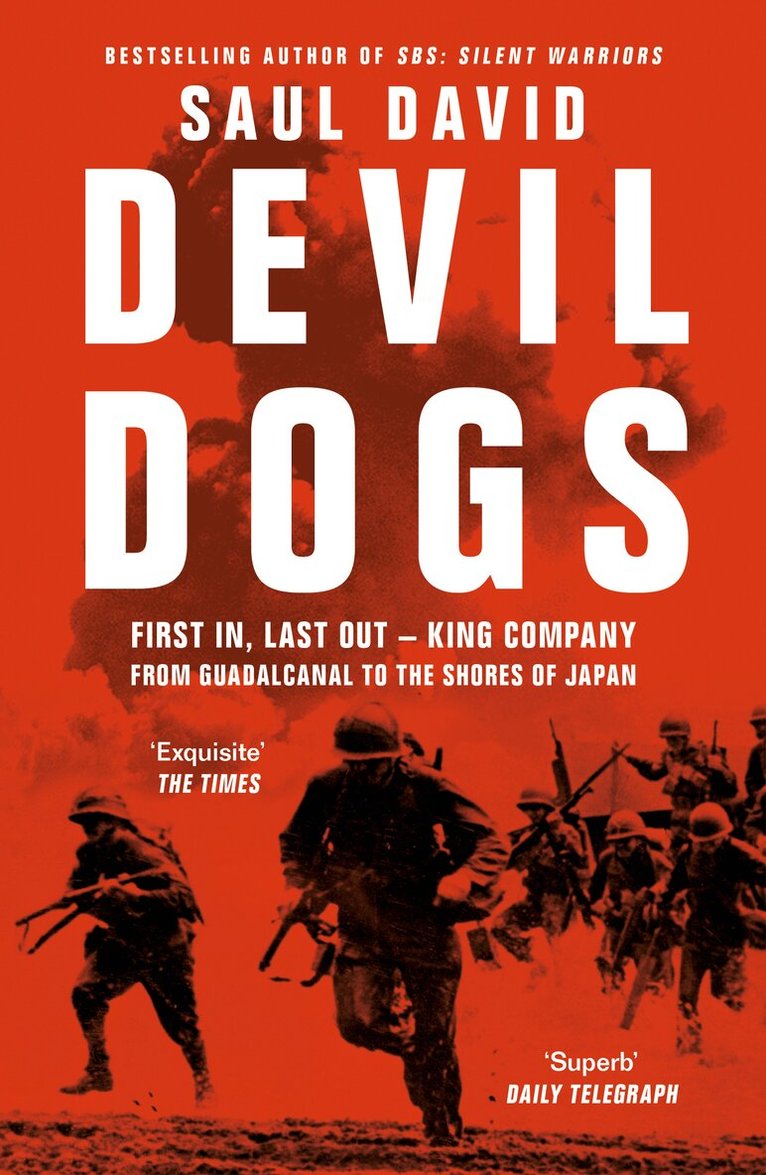
A Times History Book of the Year 2022 From Sunday Times bestselling historian Saul David, the dramatic tale of the first American troops to take the fight to the enemy in the Second World War, and also the last. The ‘Devil Dogs’ of K Company, 3/5 Marines, were part of the legendary first Marine Division. They landed on the beaches of Guadalcanal in the Solomon Islands in 1942 – the first US ground offensive of the war – and were present when Okinawa, Japan’s most southerly prefecture, finally fell to American troops after a bitter struggle in June 1945. In between they fought in the ‘Green Hell’ of Cape Gloucester on the island of New Britain, and across the coral wasteland of Peleliu in the Palau Islands, a campaign described by one K Company veteran as ‘thirty days of the meanest, around-the-clock slaughter that desperate men can inflict on each other.’Ordinary men from very different backgrounds, and drawn from cities, towns, and settlements across America, the Devil Dogs were asked to do something extraordinary: take on the victorious Imperial Japanese Army, composed of some of the most effective soldiers in world history – and defeat it. This is the story of how they did just that and, in the process, forged bonds of brotherhood that still survive today.Remarkably, the company contained an unusually high number of talented writers, whose first-hand accounts and memoirs provide the colour, emotion, and context for this extraordinary story. In Devil Dogs, award-winning historian Saul David sets the searing experience of K Company into the broader context of the brutal war in the Pacific and does for the U.S. Marines what Band of Brothers did for the 101st Airborne.Gripping, intimate, authoritative and far-reaching, this is a unique and incredibly personal narrative of war.Saul David’s previous book SBS -Silent Warriors was in the Sunday Times Bestseller Chart in the 35th and 36th week of 2021.
E-bok
Engelska, 202275 kr
Läs direkt efter köp
A Times History Book of the Year 2022 From Sunday Times bestselling historian Saul David, the dramatic tale of the first American troops to take the fight to the enemy in the Second World War, and also the last. The ‘Devil Dogs’ of K Company, 3/5 Marines, were part of the legendary first Marine Division. They landed on the beaches of Guadalcanal in the Solomon Islands in 1942 – the first US ground offensive of the war – and were present when Okinawa, Japan’s most southerly prefecture, finally fell to American troops after a bitter struggle in June 1945. In between they fought in the ‘Green Hell’ of Cape Gloucester on the island of New Britain, and across the coral wasteland of Peleliu in the Palau Islands, a campaign described by one K Company veteran as ‘thirty days of the meanest, around-the-clock slaughter that desperate men can inflict on each other.’Ordinary men from very different backgrounds, and drawn from cities, towns, and settlements across America, the Devil Dogs were asked to do something extraordinary: take on the victorious Imperial Japanese Army, composed of some of the most effective soldiers in world history – and defeat it. This is the story of how they did just that and, in the process, forged bonds of brotherhood that still survive today.Remarkably, the company contained an unusually high number of talented writers, whose first-hand accounts and memoirs provide the colour, emotion, and context for this extraordinary story. In Devil Dogs, award-winning historian Saul David sets the searing experience of K Company into the broader context of the brutal war in the Pacific and does for the U.S. Marines what Band of Brothers did for the 101st Airborne.Gripping, intimate, authoritative and far-reaching, this is a unique and incredibly personal narrative of war.Saul David’s previous book SBS -Silent Warriors was in the Sunday Times Bestseller Chart in the 35th and 36th week of 2021.
Häftad, Engelska, 2023
121 kr
Skickas
A Times History Book of the Year 2022 From Sunday Times bestselling historian Saul David, the dramatic tale of the first American troops to take the fight to the enemy in the Second World War, and also the last. The ‘Devil Dogs’ of K Company, 3/5 Marines, were part of the legendary first Marine Division. They landed on the beaches of Guadalcanal in the Solomon Islands in 1942 – the first US ground offensive of the war – and were present when Okinawa, Japan’s most southerly prefecture, finally fell to American troops after a bitter struggle in June 1945. In between they fought in the ‘Green Hell’ of Cape Gloucester on the island of New Britain, and across the coral wasteland of Peleliu in the Palau Islands, a campaign described by one K Company veteran as ‘thirty days of the meanest, around-the-clock slaughter that desperate men can inflict on each other.’Ordinary men from very different backgrounds, and drawn from cities, towns, and settlements across America, the Devil Dogs were asked to do something extraordinary: take on the victorious Imperial Japanese Army, composed of some of the most effective soldiers in world history – and defeat it. This is the story of how they did just that and, in the process, forged bonds of brotherhood that still survive today.Remarkably, the company contained an unusually high number of talented writers, whose first-hand accounts and memoirs provide the colour, emotion, and context for this extraordinary story. In Devil Dogs, award-winning historian Saul David sets the searing experience of K Company into the broader context of the brutal war in the Pacific and does for the U.S. Marines what Band of Brothers did for the 101st Airborne.Gripping, intimate, authoritative and far-reaching, this is a unique and incredibly personal narrative of war.Saul David’s previous book SBS -Silent Warriors was in the Sunday Times Bestseller Chart in the 35th and 36th week of 2021.
Ljudbok
Engelska, 2022248 kr
Lyssna direkt efter köp
A Times History Book of the Year 2022From Sunday Times bestselling historian Saul David, the dramatic tale of the first American troops to take the fight to the enemy in the Second World War, and also the last.The ‘Devil Dogs’ of K Company, 3/5 Marines, were part of the legendary first Marine Division. They landed on the beaches of Guadalcanal in the Solomon Islands in 1942 – the first US ground offensive of the war – and were present when Okinawa, Japan’s most southerly prefecture, finally fell to American troops after a bitter struggle in June 1945. In between they fought in the ‘Green Hell’ of Cape Gloucester on the island of New Britain, and across the coral wasteland of Peleliu in the Palau Islands, a campaign described by one K Company veteran as ‘thirty days of the meanest, around-the-clock slaughter that desperate men can inflict on each other.’Ordinary men from very different backgrounds, and drawn from cities, towns, and settlements across America, the Devil Dogs were asked to do something extraordinary: take on the victorious Imperial Japanese Army, composed of some of the most effective soldiers in world history – and defeat it. This is the story of how they did just that and, in the process, forged bonds of brotherhood that still survive today.Remarkably, the company contained an unusually high number of talented writers, whose first-hand accounts and memoirs provide the colour, emotion, and context for this extraordinary story. In Devil Dogs, award-winning historian Saul David sets the searing experience of K Company into the broader context of the brutal war in the Pacific and does for the U.S. Marines what Band of Brothers did for the 101st Airborne.Gripping, intimate, authoritative and far-reaching, this is a unique and incredibly personal narrative of war.Saul David’s previous book SBS -Silent Warriors was in the Sunday Times Bestseller Chart in the 35th and 36th week of 2021.
Inbunden, Engelska, 2024
291 kr
Skickas
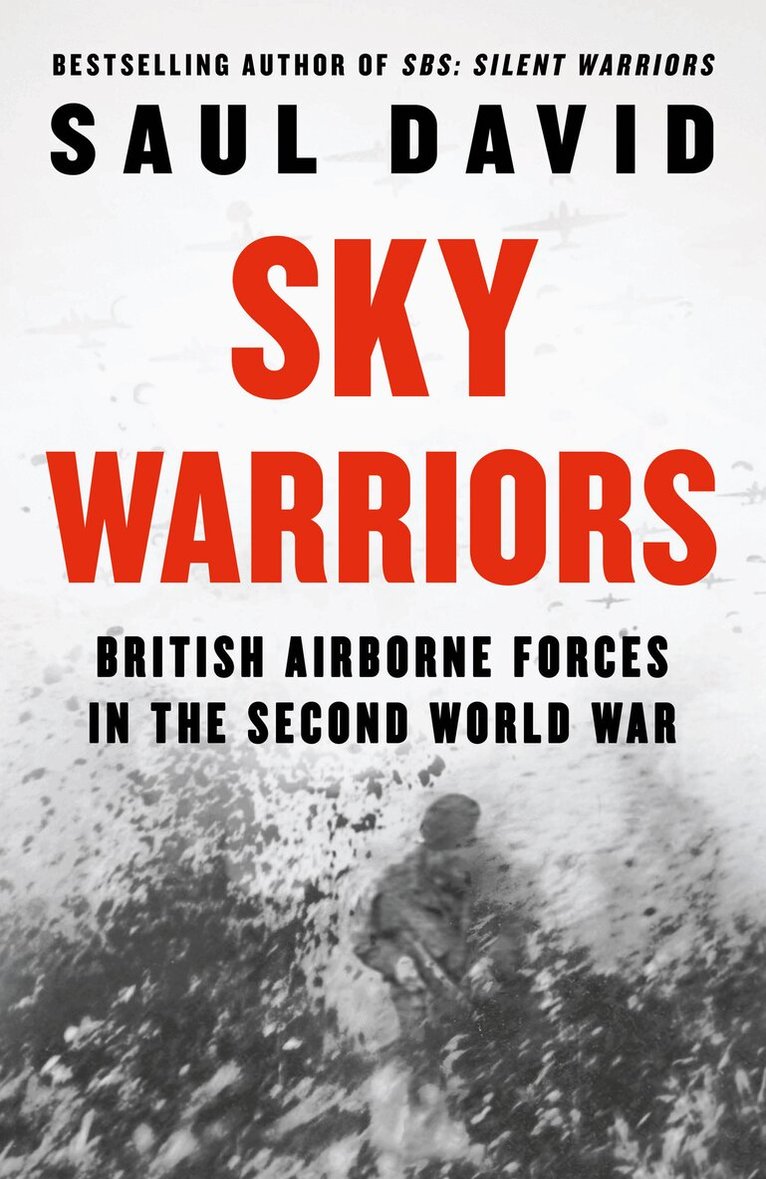
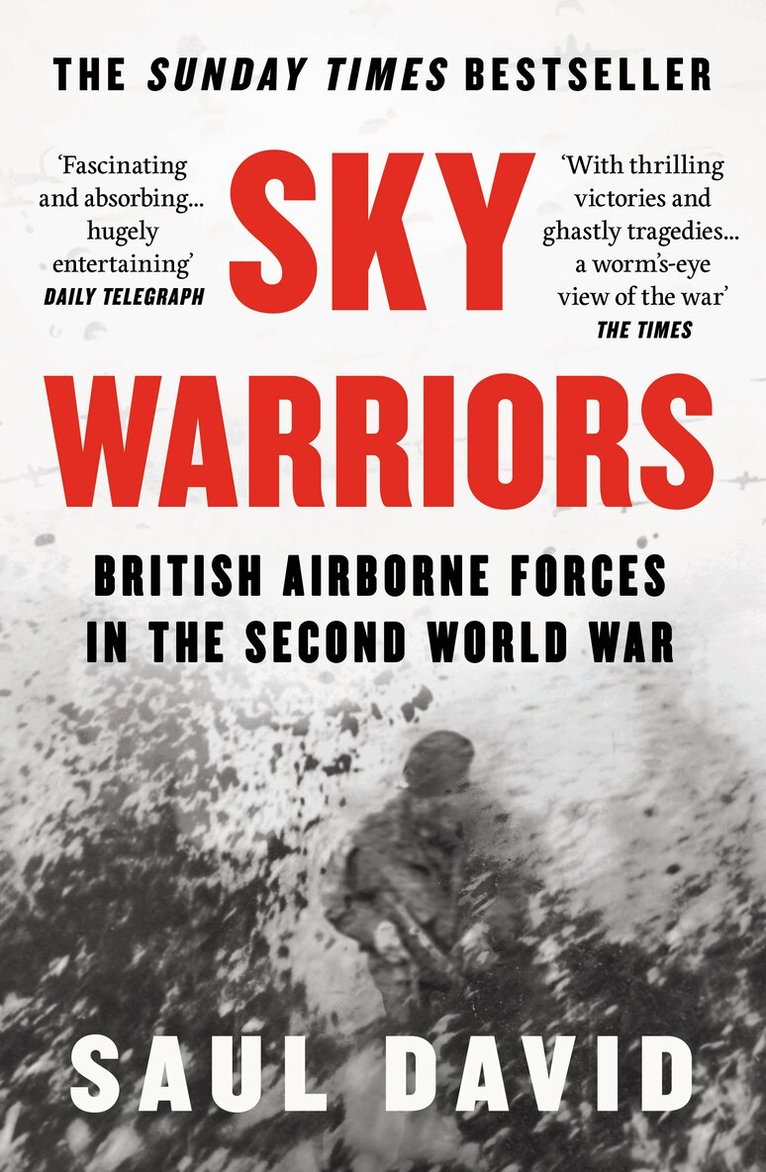
THE SUNDAY TIMES BESTSELLER From bestselling historian Saul David, a riveting new history of the British airborne experience across the Second World War. The legendary ‘Red Devils’ were among the finest combat troops of the Second World War. Created at Churchill’s instigation in June 1940, they began as a single parachute battalion of 500 men and grew into three 10,000-strong airborne divisions: the 1st, 6th and 44th Indian, each composed of parachutists and glider-borne troops.Wearing their distinctive maroon berets, steel helmets and Dennison smocks, they served with distinction in every major theatre of the conflict – including North Africa, Sicily, mainland Europe and the Far East. They played a starring role in some most iconic airborne operations in history: the Bruneval Raid of February 1942; the capture of the Primasole, Pegasus and Arnhem Bridges in July 1943, June 1944 and September 1944 respectively; and Operation Varsity, the biggest parachute drop in history, near Wesel in Germany in March 1945.Sky Warriors is an accomplished act of storytelling; authoritative, far-reaching and deeply moving. Building the narrative from the ground-up, Saul David draws on multiple archives, published memoirs, unpublished diaries and letters, and interviews with participants. The end result is a dramatic narrative of the airborne forces’ recruitment, training and wartime exploits.This is the first time the complete wartime story of the British airborne forces has been told.
E-bok
Engelska, 202484 kr
Läs direkt efter köp
THE SUNDAY TIMES BESTSELLER From bestselling historian Saul David, a riveting new history of the British airborne experience across the Second World War. The legendary ‘Red Devils’ were among the finest combat troops of the Second World War. Created at Churchill’s instigation in June 1940, they began as a single parachute battalion of 500 men and grew into three 10,000-strong airborne divisions: the 1st, 6th and 44th Indian, each composed of parachutists and glider-borne troops. Wearing their distinctive maroon berets, steel helmets and Dennison smocks, they served with distinction in every major theatre of the conflict – including North Africa, Sicily, mainland Europe and the Far East – and played a starring role in some most iconic airborne operations in history: the Bruneval Raid of February 1942; the capture of the Primasole, Pegasus and Arnhem Bridges in July 1943, June 1944 and September 1944 respectively; and Operation Varsity, the biggest parachute drop in history, near Wesel in Germany in March 1945.
Ljudbok
Engelska, 2024222 kr
Lyssna direkt efter köp
THE SUNDAY TIMES BESTSELLERFrom bestselling historian Saul David, a riveting new history of the British airborne experience across the Second World War.The legendary ‘Red Devils’ were among the finest combat troops of the Second World War. Created at Churchill’s instigation in June 1940, they began as a single parachute battalion of 500 men and grew into three 10,000-strong airborne divisions: the 1st, 6th and 44th Indian, each composed of parachutists and glider-borne troops. Wearing their distinctive maroon berets, steel helmets and Dennison smocks, they served with distinction in every major theatre of the conflict – including North Africa, Sicily, mainland Europe and the Far East – and played a starring role in some most iconic airborne operations in history: the Bruneval Raid of February 1942; the capture of the Primasole, Pegasus and Arnhem Bridges in July 1943, June 1944 and September 1944 respectively; and Operation Varsity, the biggest parachute drop in history, near Wesel in Germany in March 1945.
Häftad, Engelska, 2025
133 kr
Skickas
THE SUNDAY TIMES BESTSELLER From bestselling historian Saul David, a riveting new history of the British airborne experience across the Second World War. The legendary ‘Red Devils’ were among the finest combat troops of the Second World War. Created at Churchill’s instigation in June 1940, they began as a single parachute battalion of 500 men and grew into three 10,000-strong airborne divisions: the 1st, 6th and 44th Indian, each composed of parachutists and glider-borne troops. Wearing their distinctive maroon berets, steel helmets and Dennison smocks, they served with distinction in every major theatre of the conflict – including North Africa, Sicily, mainland Europe and the Far East – and played a starring role in some most iconic airborne operations in history: the Bruneval Raid of February 1942; the capture of the Primasole, Pegasus and Arnhem Bridges in July 1943, June 1944 and September 1944 respectively; and Operation Varsity, the biggest parachute drop in history, near Wesel in Germany in March 1945.
Inbunden, Engelska, 2025
300 kr
Skickas
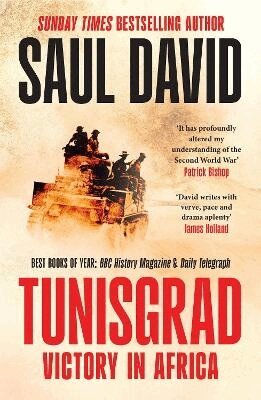
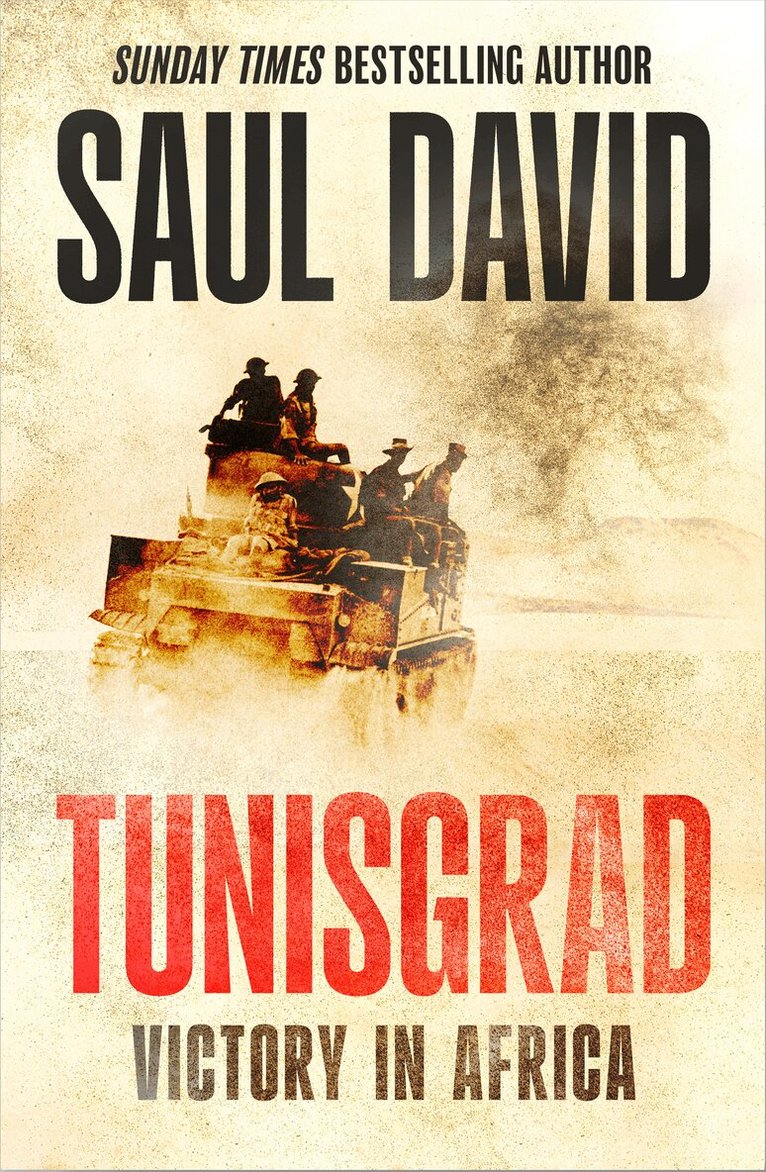
A BBC History Magazine and Aspects of History Book of the Year 2025 'Terrific – full of drama … it has profoundly altered my understanding of the Second World War' PATRICK BISHOP FROM THE SUNDAY TIMES BESTSELLING AUTHOR OF SBS COMES AN EPIC HISTORY OF THE ALLIED VICTORY IN NORTH AFRICA DURING THE SECOND WORLD WAR. On 8 November 1942, British and American troops invaded French North Africa as part of Operation Torch, the largest amphibious operation of the war to date. The Germans responded by flooding troops into Tunisia and the stage was set for one of the most decisive clashes of the war.For months the outcome hung in the balance. The Allies failed to capture Tunis before Christmas, and early in the New Year the legendary German commander Erwin Rommel ( the ‘ Desert Fox ’) inflicted a series of crushing defeats on inexperienced American troops in the mountain passes of central Tunisia. But once the two Allied armies – the First and the Eighth – had joined hands in southern Tunisia in early April, the defeat of Axis forces was inevitable. The end came on 13 May when the remnants of the First Italian Army surrendered to British troops in northern Tunisia, leaving the Allies ‘ masters of the North African shores ’.It was, with Guadalcanal in the Pacific and Stalingrad in Russia, one of three Axis defeats in early 1943 that changed the course of the war. Historians have recognized the significance of the others, but not Tunisia which they have either ignored or characterized ( as the Americans did at the time ) as a sideshow. Yet it ended Axis sea power in the Mediterranean, destroyed more than 2,400 Axis aircraft ( 40 per cent of the Luftwaffe ’ s strength ), and resulted in the surrender of over 250,000 German and Italian troops, more than were captured at Stalingrad. Such was the scale of their defeat that the German public wryly dubbed it ‘ Tunisgrad ’.It was the first campaign fought by the Anglo-American alliance, and would determine how and where the Allies would fight for the rest of the war. It was where America first brought to bear the full weight of its industrial strength, and where the Allies learned, after early setbacks, how to defeat the Germans with a combination of air, land and sea power. It featured many of the great commanders of the Second World War, including ‘ Ike ’ Eisenhower, George S. Patton Jr, Omar N. Bradley, Harold Alexander, Bernard Montgomery and Erwin Rommel. But the campaign ’ s chief significance is that it extinguished any lingering hopes in Italy that the war could be won and led, inexorably, to the dissolution of the Axis in Europe. By destroying the Axis it marked, for Hitler, the beginning of the end.Tunisgrad is the first comprehensive 360-degree history, told from the perspective of all the combatants, and ranging in focus from politicians and senior commanders to ordinary servicemen fighting in and over the mountains of Tunisia, and across the Mediterranean. Using a variety of first-hand sources, it restores the campaign to its rightful place as a defining moment of the war
Häftad, Engelska, 2025
223 kr
Kommande
'Terrific - full of drama ... it has profoundly altered my understanding of the Second World War' PATRICK BISHOPFROM THE SUNDAY TIMES BESTSELLING AUTHOR OF SKY WARRIORS AND SBS COMES AN EPIC HISTORY OF THE ALLIED VICTORY IN NORTH AFRICA DURING THE SECOND WORLD WAR.
E-bok
Engelska, 2025188 kr
Läs direkt efter köp
A BBC History Magazine and Aspects of History Book of the Year 2025 'Terrific – full of drama … it has profoundly altered my understanding of the Second World War' PATRICK BISHOP FROM THE SUNDAY TIMES BESTSELLING AUTHOR OF SBS COMES AN EPIC HISTORY OF THE ALLIED VICTORY IN NORTH AFRICA DURING THE SECOND WORLD WAR. On 8 November 1942, British and American troops invaded French North Africa as part of Operation Torch, the largest amphibious operation of the war to date. The Germans responded by flooding troops into Tunisia and the stage was set for one of the most decisive clashes of the war.For months the outcome hung in the balance. The Allies failed to capture Tunis before Christmas, and early in the New Year the legendary German commander Erwin Rommel ( the ‘ Desert Fox ’) inflicted a series of crushing defeats on inexperienced American troops in the mountain passes of central Tunisia. But once the two Allied armies – the First and the Eighth – had joined hands in southern Tunisia in early April, the defeat of Axis forces was inevitable. The end came on 13 May when the remnants of the First Italian Army surrendered to British troops in northern Tunisia, leaving the Allies ‘ masters of the North African shores ’.It was, with Guadalcanal in the Pacific and Stalingrad in Russia, one of three Axis defeats in early 1943 that changed the course of the war. Historians have recognized the significance of the others, but not Tunisia which they have either ignored or characterized ( as the Americans did at the time ) as a sideshow. Yet it ended Axis sea power in the Mediterranean, destroyed more than 2,400 Axis aircraft ( 40 per cent of the Luftwaffe ’ s strength ), and resulted in the surrender of over 250,000 German and Italian troops, more than were captured at Stalingrad. Such was the scale of their defeat that the German public wryly dubbed it ‘ Tunisgrad ’.It was the first campaign fought by the Anglo-American alliance, and would determine how and where the Allies would fight for the rest of the war. It was where America first brought to bear the full weight of its industrial strength, and where the Allies learned, after early setbacks, how to defeat the Germans with a combination of air, land and sea power. It featured many of the great commanders of the Second World War, including ‘ Ike ’ Eisenhower, George S. Patton Jr, Omar N. Bradley, Harold Alexander, Bernard Montgomery and Erwin Rommel. But the campaign ’ s chief significance is that it extinguished any lingering hopes in Italy that the war could be won and led, inexorably, to the dissolution of the Axis in Europe. By destroying the Axis it marked, for Hitler, the beginning of the end.Tunisgrad is the first comprehensive 360-degree history, told from the perspective of all the combatants, and ranging in focus from politicians and senior commanders to ordinary servicemen fighting in and over the mountains of Tunisia, and across the Mediterranean. Using a variety of first-hand sources, it restores the campaign to its rightful place as a defining moment of the war
Ljudbok
Engelska, 2025225 kr
Lyssna direkt efter köp
A BBC History Magazine and Aspects of History Book of the Year 2025'Terrific - full of drama ... it has profoundly altered my understanding of the Second World War' PATRICK BISHOPFROM THE SUNDAY TIMES BESTSELLING AUTHOR OF SBS COMES AN EPIC HISTORY OF THE ALLIED VICTORY IN NORTH AFRICA DURING THE SECOND WORLD WAR.On 8 November 1942, British and American troops invaded French North Africa as part of Operation Torch, the largest amphibious operation of the war to date. The Germans responded by flooding troops into Tunisia and the stage was set for one of the most decisive clashes of the war.For months the outcome hung in the balance. The Allies failed to capture Tunis before Christmas, and early in the New Year the legendary German commander Erwin Rommel ( the ' Desert Fox ') inflicted a series of crushing defeats on inexperienced American troops in the mountain passes of central Tunisia. But once the two Allied armies - the First and the Eighth - had joined hands in southern Tunisia in early April, the defeat of Axis forces was inevitable. The end came on 13 May when the remnants of the First Italian Army surrendered to British troops in northern Tunisia, leaving the Allies ' masters of the North African shores '.It was, with Guadalcanal in the Pacific and Stalingrad in Russia, one of three Axis defeats in early 1943 that changed the course of the war. Historians have recognized the significance of the others, but not Tunisia which they have either ignored or characterized ( as the Americans did at the time ) as a sideshow. Yet it ended Axis sea power in the Mediterranean, destroyed more than 2,400 Axis aircraft ( 40 per cent of the Luftwaffe ' s strength ), and resulted in the surrender of over 250,000 German and Italian troops, more than were captured at Stalingrad. Such was the scale of their defeat that the German public wryly dubbed it ' Tunisgrad '.It was the first campaign fought by the Anglo-American alliance, and would determine how and where the Allies would fight for the rest of the war. It was where America first brought to bear the full weight of its industrial strength, and where the Allies learned, after early setbacks, how to defeat the Germans with a combination of air, land and sea power. It featured many of the great commanders of the Second World War, including ' Ike ' Eisenhower, George S. Patton Jr, Omar N. Bradley, Harold Alexander, Bernard Montgomery and Erwin Rommel. But the campaign ' s chief significance is that it extinguished any lingering hopes in Italy that the war could be won and led, inexorably, to the dissolution of the Axis in Europe. By destroying the Axis it marked, for Hitler, the beginning of the end.Tunisgrad is the first comprehensive 360-degree history, told from the perspective of all the combatants, and ranging in focus from politicians and senior commanders to ordinary servicemen fighting in and over the mountains of Tunisia, and across the Mediterranean. Using a variety of first-hand sources, it restores the campaign to its rightful place as a defining moment of the war
Häftad, Engelska, 2026
132 kr
Kommande
A BBC History Magazine and Aspects of History Book of the Year 2025 'Terrific – full of drama … it has profoundly altered my understanding of the Second World War' PATRICK BISHOP FROM THE SUNDAY TIMES BESTSELLING AUTHOR OF SBS COMES AN EPIC HISTORY OF THE ALLIED VICTORY IN NORTH AFRICA DURING THE SECOND WORLD WAR. On 8 November 1942, British and American troops invaded French North Africa as part of Operation Torch, the largest amphibious operation of the war to date. The Germans responded by flooding troops into Tunisia and the stage was set for one of the most decisive clashes of the war.For months the outcome hung in the balance. The Allies failed to capture Tunis before Christmas, and early in the New Year the legendary German commander Erwin Rommel ( the ‘ Desert Fox ’) inflicted a series of crushing defeats on inexperienced American troops in the mountain passes of central Tunisia. But once the two Allied armies – the First and the Eighth – had joined hands in southern Tunisia in early April, the defeat of Axis forces was inevitable. The end came on 13 May when the remnants of the First Italian Army surrendered to British troops in northern Tunisia, leaving the Allies ‘ masters of the North African shores ’.It was, with Guadalcanal in the Pacific and Stalingrad in Russia, one of three Axis defeats in early 1943 that changed the course of the war. Historians have recognized the significance of the others, but not Tunisia which they have either ignored or characterized ( as the Americans did at the time ) as a sideshow. Yet it ended Axis sea power in the Mediterranean, destroyed more than 2,400 Axis aircraft ( 40 per cent of the Luftwaffe ’ s strength ), and resulted in the surrender of over 250,000 German and Italian troops, more than were captured at Stalingrad. Such was the scale of their defeat that the German public wryly dubbed it ‘ Tunisgrad ’.It was the first campaign fought by the Anglo-American alliance, and would determine how and where the Allies would fight for the rest of the war. It was where America first brought to bear the full weight of its industrial strength, and where the Allies learned, after early setbacks, how to defeat the Germans with a combination of air, land and sea power. It featured many of the great commanders of the Second World War, including ‘ Ike ’ Eisenhower, George S. Patton Jr, Omar N. Bradley, Harold Alexander, Bernard Montgomery and Erwin Rommel. But the campaign ’ s chief significance is that it extinguished any lingering hopes in Italy that the war could be won and led, inexorably, to the dissolution of the Axis in Europe. By destroying the Axis it marked, for Hitler, the beginning of the end.Tunisgrad is the first comprehensive 360-degree history, told from the perspective of all the combatants, and ranging in focus from politicians and senior commanders to ordinary servicemen fighting in and over the mountains of Tunisia, and across the Mediterranean. Using a variety of first-hand sources, it restores the campaign to its rightful place as a defining moment of the war
Häftad, Engelska, 2024
128 kr
Skickas
December 1943. A German fort sits impregnable atop a mountain. Standing between the Allied forces and their path to Rome is a steep climb up a 200-foot cliff, in the snow, in the middle of the night. As the future of civilisation hangs in the balance, with Axis forces sprawled around the world, a group of highly trained US and Canadian soldiers from humble backgrounds is asked to do the impossible: capture this crucial Nazi stronghold. After completing state-of-the-art training – including skiing, rock climbing and parachuting – they advance upwards, through savage conditions and vicious fighting, into the darkness and towards almost certain defeat ‘Every chapter is filled with harrowing adventure, life and death struggle… The amount of new cutting-edge research is impressive. A monumental achievement!’ Douglas Brinkley ‘Saul David has both a knack with the pen and a nose for a thrilling tale….Masterly [in] style…Readers should exult in The Force, whose heroic subjects deserve to be forever remembered’ Wall Street Journal
E-bok
Engelska, 202484 kr
Läs direkt efter köp
December 1943. A German fort sits impregnable atop a mountain. Standing between the Allied forces and their path to Rome is a steep climb up a 200-foot cliff, in the snow, in the middle of the night. As the future of civilisation hangs in the balance, with Axis forces sprawled around the world, a group of highly trained US and Canadian soldiers from humble backgrounds is asked to do the impossible: capture this crucial Nazi stronghold. After completing state-of-the-art training – including skiing, rock climbing and parachuting – they advance upwards, through savage conditions and vicious fighting, into the darkness and towards almost certain defeat ‘Every chapter is filled with harrowing adventure, life and death struggle… The amount of new cutting-edge research is impressive. A monumental achievement!’ Douglas Brinkley ‘Saul David has both a knack with the pen and a nose for a thrilling tale….Masterly [in] style…Readers should exult in The Force, whose heroic subjects deserve to be forever remembered’ Wall Street Journal
Ljudbok
Engelska, 2024213 kr
Lyssna direkt efter köp
December 1943. A German fort sits impregnable atop a mountain. Standing between the Allied forces and their path to Rome is a steep climb up a 200-foot cliff, in the snow, in the middle of the night.As the future of civilisation hangs in the balance, with Axis forces sprawled around the world, a group of highly trained US and Canadian soldiers from humble backgrounds is asked to do the impossible: capture this crucial Nazi stronghold. After completing state-of-the-art training – including skiing, rock climbing and parachuting – they advance upwards, through savage conditions and vicious fighting, into the darkness and towards almost certain defeat‘Every chapter is filled with harrowing adventure, life and death struggle… The amount of new cutting-edge research is impressive. A monumental achievement!’ Douglas Brinkley‘Saul David has both a knack with the pen and a nose for a thrilling tale….Masterly [in] style…Readers should exult in The Force, whose heroic subjects deserve to be forever remembered’ Wall Street Journal
Häftad, Engelska, 2003
160 kr
Skickas
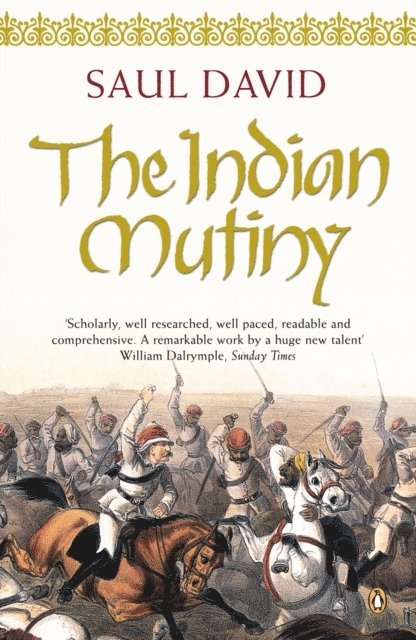
In The Indian Mutiny: 1857 Saul David explores one of Britain's most harrowing colonial battles.In 1857 the native troops of the Bengal army rose against their colonial masters. The ensuing insurrection was to become the bloodiest in the history of the British Empire.Combining formidable storytelling with ground-breaking research, Saul David narrates a tale at once heart-rendingly tragic and extraordinarily compelling. David provides new and convincing evidence that the true causes of the mutiny were much more complex, and disturbing, than previously assumed.'A fine achievement by a huge new talent' William Dalrymple, Sunday TimesSaul David is Professor of War Studies at the University of Buckingham and the author of several critically acclaimed history books, including The Indian Mutiny: 1857 (shortlisted for the Westminster Medal for Military Literature), Zulu: The Heroism and Tragedy of the Zulu War of 1879 (a Waterstone's Military History Book of the Year) and, most recently, Victoria's Wars: The Rise of Empire.
Häftad, Engelska, 2005
152 kr
Skickas
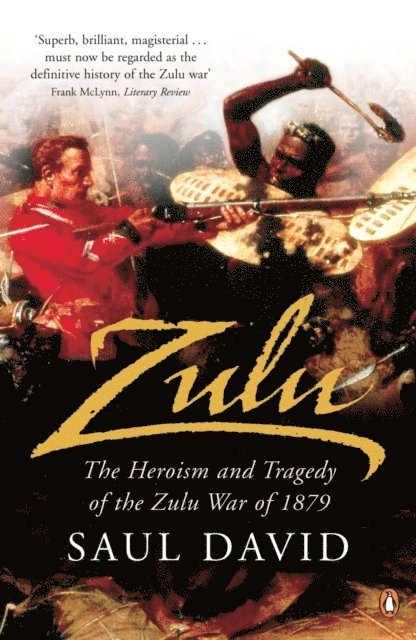
Saul David's Zulu: The Heroism and Tragedy of the Zulu War of 1879 is a fascinating look at the most controversial and brutal British imperial conflict of the nineteenth century.The real story of the Anglo-Zulu war was one of deception, dishonour, incompetence and dereliction of duty by Lord Chelmsford who invaded Zululand without the knowledge of the British Government. But it did not go to plan and there were many political repercussions. Using new material from archives in Britain and South Africa, Saul David blows the lid on this most sordid of imperial wars and comes to a number of startling new conclusions.'Saul David's brilliant and magisterial account must now be regarded as the definitive history of the Zulu War' Frank McLynn, Literary Review'This meticulously detailed book...give[s] a fully rounded and judicious account of this dismal conflict Guardian'Fascinating, thrilling, convincing... reads like a novel' EconomistSaul David is Professor of War Studies at the University of Buckingham and the author of several critically acclaimed history books, including The Indian Mutiny: 1857 (shortlisted for the Westminster Medal for Military Literature), Zulu: The Heroism and Tragedy of the Zulu War of 1879 (a Waterstone's Military History Book of the Year) and, most recently, Victoria's Wars: The Rise of Empire.
Häftad, Engelska, 2013
221 kr
Skickas
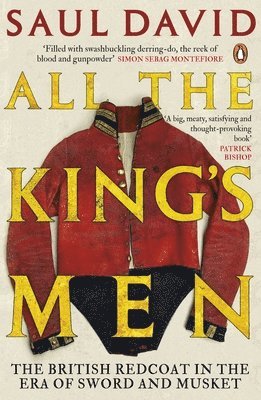
Saul David's All The King's Men is a thrilling history of the British Redcoat from the English Civil War to Waterloo.Between 1660 and 1815 British supremacy on foreign soil was near total. Central to this success was the humble redcoat soldier who showed heroism in battle and stoicism in peace, despite appalling treatment. This is their story: of brutal discipline and inedible food, of loyalty and low pay, of barracks and battlefield - of victory, defeat, life and death.Praise for All The King's Men:'An extraordinary story, packed with drama, incident and great characters...All The King's Men is all you could hope for...Quite an achievement', Patrick Bishop, Country Life'A heady mixture of heroism, incompetence, devilish tactics and plain good luck', Sunday Times 'Filled with swashbuckling derring-do, the reek of blood and gunpowder, combined with shrewd analysis of power, war and psychology', Simon Sebag Montefiore Saul David is Professor of War Studies at the University of Buckingham and the author of several critically acclaimed books, including The Indian Mutiny: 1857, Zulu and, most recently, Victoria's Wars: The Rise of Empire. He recently presented 'Bullets, Boots and Bandages' for BBC 4 and is a regular contributor to Radio 4.
E-bok
Engelska, 2003118 kr
Läs direkt efter köp
'A fine achievement by a huge new talent' William Dalrymple, Sunday TimesIn 1857 the native troops of the Bengal army rose against their colonial masters. The ensuing insurrection was to become the bloodiest in the history of the British Empire.Combining formidable storytelling with ground-breaking research, Saul David narrates a tale at once heart-rendingly tragic and extraordinarily compelling. David provides new and convincing evidence that the true causes of the mutiny were much more complex, and disturbing, than previously assumed.
E-bok
Engelska, 2005102 kr
Läs direkt efter köp
The Zulu War of 1879 was the most brutal and controversial British imperial conflict of the 19th century. Saul David is presenting a programme on the subject which will be aired in October 2003. He is using research from that to compile this book. The programme will hopefully raise awareness of this young historian's name and of the subject matter.
E-bok
Engelska, 2006102 kr
Läs direkt efter köp
In the early part of Queen Victoria's reign, the British Empire almost quintupled in size. It was well on the way to becoming the greatest empire the world had ever seen. This is the story of how it happened and the people who made it happen. In a fast-moving narrative that ranges from London to the harsh terrain of India, Russia and the Far East, Saul David shows how Britain ruthlessly exploited her position as the world's only superpower to expand her empire. Yet little of this territorial acquisition was planned or sanctioned by the home government. Instead it was largely the work of the men on the ground, and to those at home it really did seem that the empire was acquired in a 'fit of absence of mind'. Saul David creates a vivid portrait of life on the violent fringes of empire, and of the seemingly endless and brutal wars that were fought in the name of trade, civilization and the balance of power.
E-bok
Engelska, 201132 kr
Läs direkt efter köp
Penguin Specials are designed to fill a gap. Written to be read over a long commute or a short journey, they are original and exclusively in digital form. This is Saul David's compelling examination of one of history's greatest battles.On 22nd January, at Isandlwana in Zululand, South-East Africa, the British Army suffered one of the worst defeats in its history. A camp of 1,700 men, armed with state-of-the-art weapons and two artillery pieces, was surprised and overwhelmed by a huge Zulu army equipped with only spears. It became the seminal battle of the Zulu War, an ill-conceived, incompetently executed and fruitless campaign for the British.In this Penguin Short, Saul David presents a concise, devastating and utterly gripping account of the most brutal of battles that will transport you to the plains of Africa and the cauldron of war, and all for less than the price of a cup of coffee.