Saurabh Mishra - Böcker
Visar alla böcker från författaren Saurabh Mishra. Handla med fri frakt och snabb leverans.
5 produkter
5 produkter
Del 121 - Studies in Imperialism
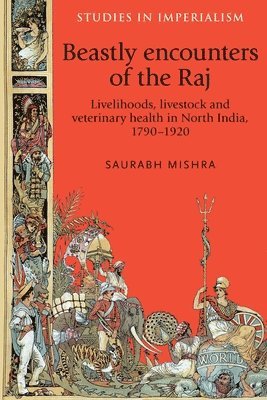
Beastly Encounters of the Raj
Livelihoods, Livestock and Veterinary Health in North India, 1790–1920
Inbunden, Engelska, 2015
1 202 kr
Skickas inom 5-8 vardagar
This is the first full-length monograph to examine the history of colonial medicine in India from the perspective of veterinary health. The history of human health in the subcontinent has received a fair amount of attention in the last few decades, but nearly all existing texts have completely ignored the question of animal health. This book will not only fill this gap, but also provide fresh perspectives and insights that might challenge existing arguments.At the same time, this volume is a social history of cattle in India. Keeping the question of livestock at the centre, it explores a range of themes such as famines, agrarian relations, urbanisation, middle-class attitudes, caste formations etc. The overall aim is to integrate medical history with social history in a way that has not often been attempted.
204 kr
Skickas inom 5-8 vardagar
219 kr
Skickas inom 5-8 vardagar
2 045 kr
Skickas inom 10-15 vardagar
This new volume offers up-to-date coverage of the energy scenario in South Asia, showcasing the major challenges being faced in the South Asian Energy Corridor in the context of energy security versus clean energy. The volume explores the role of diversifying supplies for the future to gain energy security that can lead to mapping joint ventures among conventional rival countries, especially due to the rapidly emerging economies of this region. India, China, Japan, and Pakistan, by their location and demography, occupy a major role in this corridor.The book examines the role of major technologies vis-a-vis dominant energy players in South Asia to put checks and balances on energy security along with clean energy resources hand in hand. The economics along with the geopolitics of various pipelines, ports, and regional strategic relations strongly favor developing an "energy bond" among nations, with both technologies as well as markets available within the same region. The book strongly suggests increasing strategic energy cooperation between the major energy players to maximize mutual interest and reduce carbon emission for larger interests.The volume first provides an overview of the South Asia Energy Corridor. It then goes on to look at the energy scenarios in the countries of the region, considering India’s need for energy security and for clean energy initiatives. The topics include advances in renewable energy in the region, new fossil fuel reserves exploration in South Asia advances in wind and solar energy in the region, and so much more.
1 980 kr
Kommande
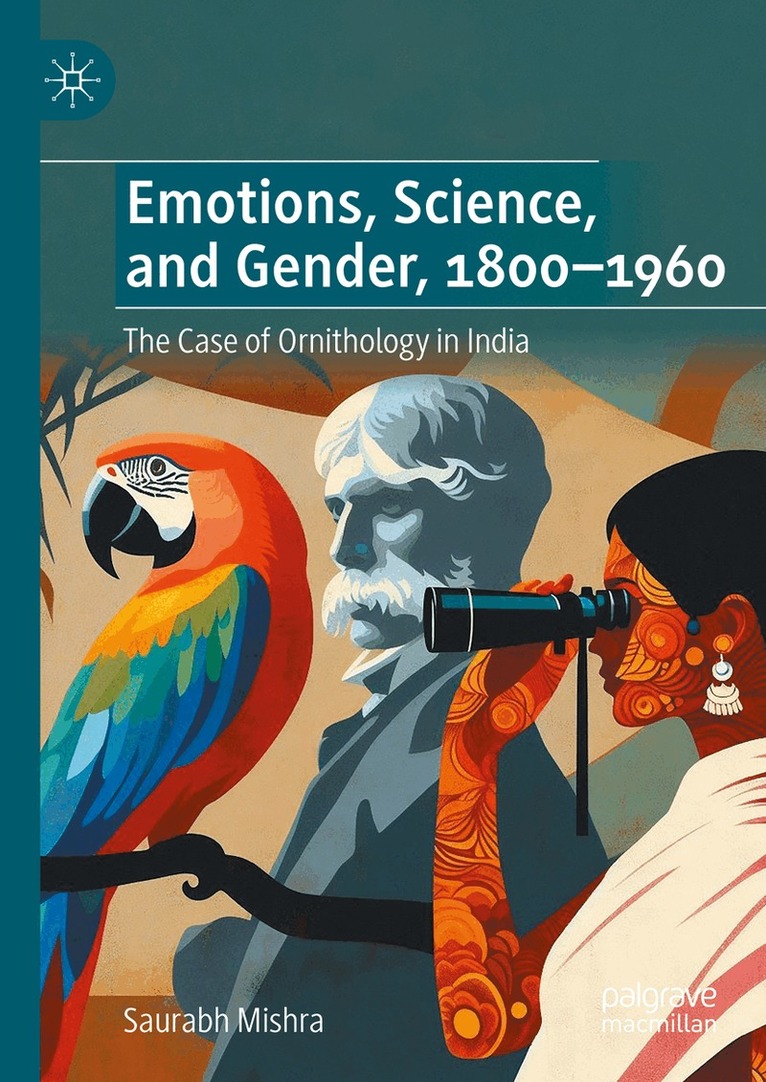
This book presents a novel approach to the history of science by moving beyond the traditional focus on scientific authorities, institutions, and informants. It argues that histories of science cannot be limited to the study of 'science' alone, but must also consider the formation of scientific subjectivities (suffused with emotions), which were neither pre-formed nor fixed. Examining how individual scientific perspectives were formed within the context of non-settler colonies, the author focuses specifically on the case of ornithology in India. He highlights the role of gender, particularly femininity, and the work of 'women of science,' an area that has received limited attention in colonial histories of science. Simultaneously, the book explores how gendered categories of masculinity and femininity were implicated in these practices and reformulated in the process.This book also examines the intersection between science and emotion. For example, the author explores the influence of loneliness, grief, arrogance, and racial superiority in attracting people to science and shaping their works. Drawing on concepts from the history of emotions, such as ‘emotional communities,’ ‘emotional clusters,’ and ‘emotional performances,’ the book highlights the fluid nature of emotional experiences within scientific practices. This interdisciplinary approach provides a comprehensive understanding of how emotional, gendered, and scientific subjectivities were entangled within a complex colonial context.