Scott A. Miller – författare
Visar alla böcker från författaren Scott A. Miller. Handla med fri frakt och snabb leverans.
9 produkter
9 produkter
Inbunden, Engelska, 2016
943 kr
Skickas inom 5-8 vardagar
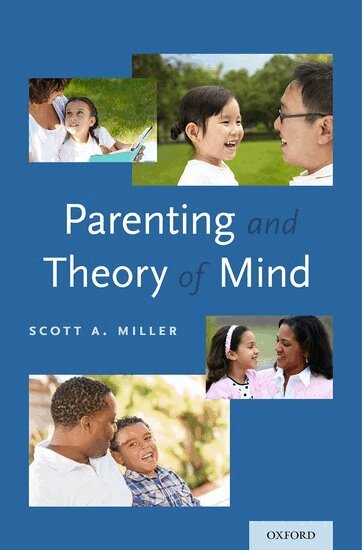
Parenting and Theory of Mind represents the conjunction of two major research literatures in child psychology. One is longstanding. The question of how best to rear children has been a central topic for psychology ever since psychology began to develop as a science. The other research literature is a good deal younger, though quickly expanding. Theory of mind (ToM) has to do with understanding of the mental world-what people (children in particular) know or think about mental phenomena such as beliefs, desires, and emotions. An important question that research on TOM addresses is where do children's ToM abilities come from? In particular, how do children's experiences shape their development? If we know the formative experiences that underlie ToM, then we may be able to optimize this important aspect of development for all children. The last 15 or so years have seen a rapid expansion of the literature on the social contributors to ToM, including hundreds of studies directed to various aspects of parenting. These studies have made clear that parents can be important contributors to what their children understand about the mental world. This is the first book to comprehensively bring together the literature on ToM and parenting, summarizing what we know about how parenting contributes to one of the most important outcomes in cognitive development and outlining future directions for research in this growing area.
Inbunden, Engelska, 2020
715 kr
Skickas inom 5-8 vardagar
One of the most important questions in psychology is how best to nurture children's development. Parents' child-rearing practices are a major contributor to how their children develop, and parents' beliefs about children are a major contributor to how they treat their children. This book synthesizes a large and diverse literature on what parents believe about children in general and their own children in particular. Its scope is broad, encompassing beliefs directed to numerous aspects of children's development in both the cognitive and social realms that span the age periods from birth through adolescence. For each topic, this book seeks to ask four crucial questions: What is the nature of parents' beliefs? What are the origins of parents' beliefs? How do parents' beliefs relate to parents' behavior? And how do parents' beliefs relate to children's development? These questions tie into longstanding theoretical issues in psychology, they are central to our understanding of both parenting practices and children's development, and they speak to some of the most important pragmatic issues for which psychology can provide answers. Parents' Beliefs About Children brings together a vast body of scholarship in a new way, which makes the material accessible to both researchers in the field of child development and a more general readership.
Inbunden, Engelska, 2022
821 kr
Skickas inom 5-8 vardagar
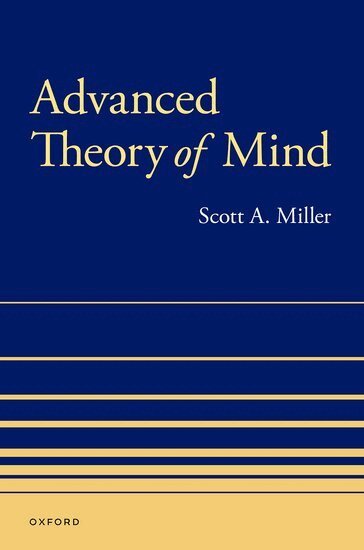
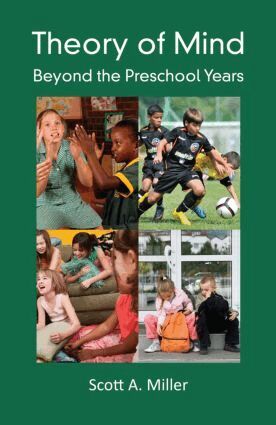
Theory of mind has been perhaps the most heavily researched topic in developmental psychology for close to 30 years. Most research, as well as most secondary accounts, has concentrated on the first 5 years of life-a time period during which a number of important developmental changes occur. No one, however, has ever believed that the development of theory of mind is complete by age 5, and in recent years there has been a growing body of research literature dedicated to exploring further developments across the middle childhood and adolescent years. Advanced Theory of Mind brings together this large and diverse body of work. Four interrelated themes recur throughout the volume. One concerns the descriptive picture for the target of study: What is the nature of theory of mind across different parts of the life span? In particular, how does the study of advanced developments add to the well-documented achievements of the first 5 years? A second theme addresses how to explain the developmental changes that are observed, both the commonalties that characterize development and individual differences in the speed or the extent of mastery. The third theme examines the effects of theory of mind on other aspects of development, and a final theme is the theoretical question of how best to characterize advanced theory of mind, namely whether theories designed to explain early developments can be successfully extended to more advanced forms of understanding.
Inbunden, Engelska, 2008
1 066 kr
Skickas inom 5-8 vardagar
This new fifth edition captures the excitement and relevance of child psychology at the beginning of the 21st century; a theme that is exemplified in the text's new subtitle: Child Development in a Changing Society. In addition to extensive research coverage, each chapter includes an additional section that relates the chapter subject to social and cultural contexts, or implications of research for social policy, public practice, or societal change. This new edition places children, child development, and the contexts in which development occurs at the center of the discourse. Thus, this edition has a strong balance of theory, research, and real-world application.
Häftad, Engelska, 2018
215 kr
Skickas inom 3-6 vardagar
Inbunden, Engelska, 2022
2 097 kr
Skickas inom 10-15 vardagar
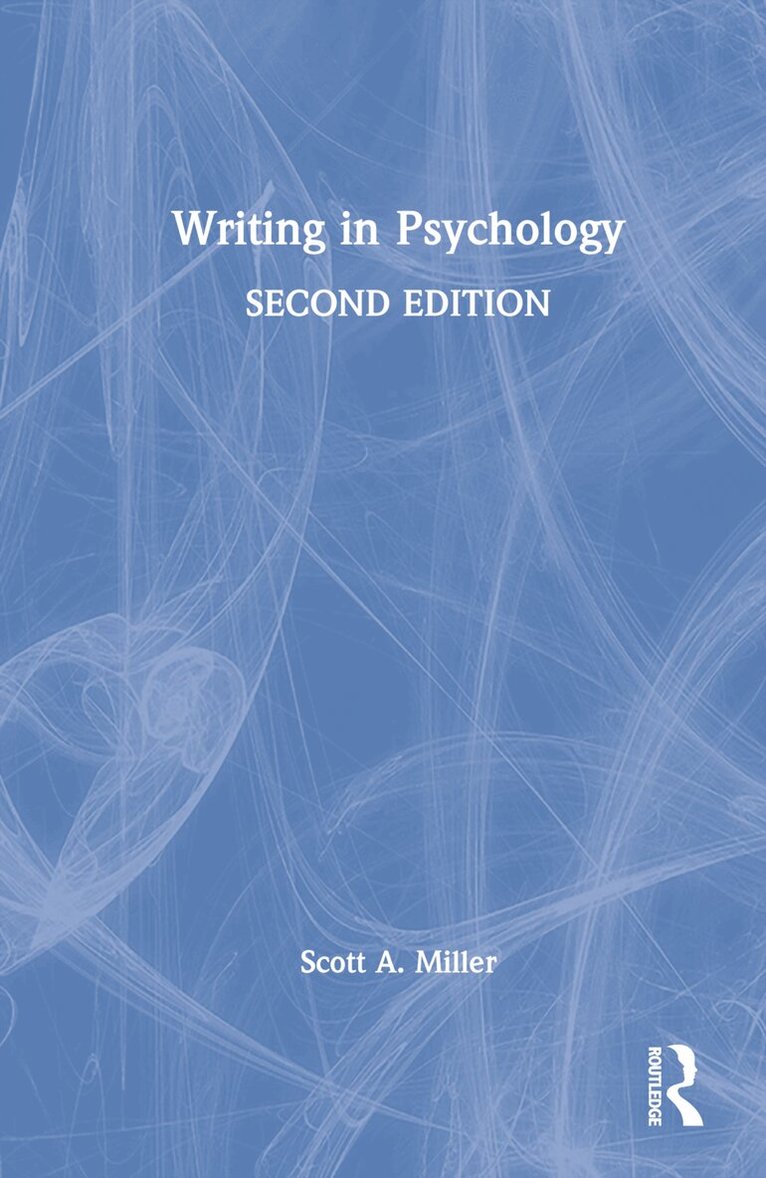
The second edition of Writing in Psychology by Scott A. Miller is a comprehensive guide to addressing the most challenging issues that students face while writing about psychology, including what to say and how to say it. It offers practical tools to overcome the challenges and create an engaging work.The book is a valuable resource for helping readers become better writers of psychology with the aid of various helpful learning tools, which provide detailed coverage of how to write empirical reviews, research proposals, literature reviews, term papers, and posters. It examines examples from journal articles that give readers a grasp of the content they will encounter in writing psychological reports. Furthermore, it includes exercises that provide an opportunity to apply the points conveyed in each chapter, examples of ways to avoid the most common mistakes made by students, and a guide to the best practices for improving one’s writing. Readers will also develop a thorough understanding of how to write in an engaging yet accurate style, using grammatical and word use rules that govern writing in general, and the rules of seventh edition APA (American Psychological Association) Publication Manual that determine the expression of that content. Throughout, the book emphasizes inclusion, diversity, and fair treatment of those with whom psychologists deal, in research and writing.The book will benefit anyone looking for guidance on how to write about psychological content. It is ideal for research scholars and psychology students as a primary text for writing in psychology courses and a supplement for graduate or advanced undergraduate courses in research design or research methods.
Häftad, Engelska, 2022
708 kr
Skickas inom 10-15 vardagar
The second edition of Writing in Psychology by Scott A. Miller is a comprehensive guide to addressing the most challenging issues that students face while writing about psychology, including what to say and how to say it. It offers practical tools to overcome the challenges and create an engaging work.The book is a valuable resource for helping readers become better writers of psychology with the aid of various helpful learning tools, which provide detailed coverage of how to write empirical reviews, research proposals, literature reviews, term papers, and posters. It examines examples from journal articles that give readers a grasp of the content they will encounter in writing psychological reports. Furthermore, it includes exercises that provide an opportunity to apply the points conveyed in each chapter, examples of ways to avoid the most common mistakes made by students, and a guide to the best practices for improving one’s writing. Readers will also develop a thorough understanding of how to write in an engaging yet accurate style, using grammatical and word use rules that govern writing in general, and the rules of seventh edition APA (American Psychological Association) Publication Manual that determine the expression of that content. Throughout, the book emphasizes inclusion, diversity, and fair treatment of those with whom psychologists deal, in research and writing.The book will benefit anyone looking for guidance on how to write about psychological content. It is ideal for research scholars and psychology students as a primary text for writing in psychology courses and a supplement for graduate or advanced undergraduate courses in research design or research methods.
Inbunden, Engelska, 2012
2 097 kr
Skickas inom 10-15 vardagar
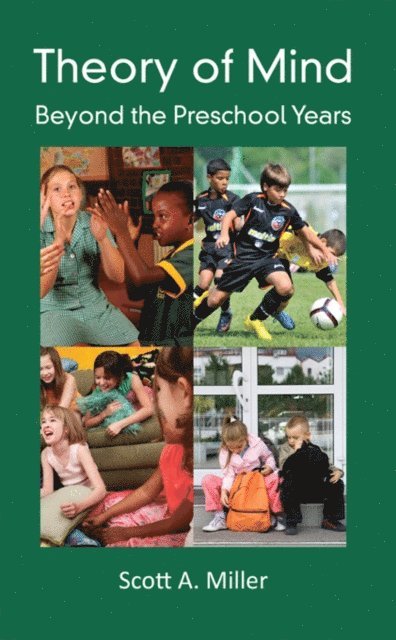
This is the first book to provide a comprehensive review of the burgeoning literature on theory of mind (TOM) after the preschool years and the first to integrate this literature with other approaches to the study of social understanding. By highlighting the relationship between early and later developments, the book provides readers with a greater understanding of what we know and what we still need to know about higher-order TOM. Although the focus is on development in typical populations, development in individuals with autism and in older adults is also explored to give readers a deeper understanding of possible problems in development.Examining the later developments of TOM gives readers a greater understanding of:Developments that occur after the age of 5. Individual differences in rate of development and atypical development and the effects of those differences. The differences in rate of mastery which become more marked, and therefore more informative, with increased age.What it means to have a “good theory of mind.” The differences between first- and second- order theory of mind development in preschoolers, older children, adolescents, and adults. The range of beliefs available to children at various ages, providing a fuller picture of what is meant by “understanding of belief.” After the introduction, the literature on first-order developments during the preschool period is summarized to serve as a backdrop for understanding more advanced developments. Chapter 3 is devoted to the second-order false belief task. Chapters 4 and 5 introduce a variety of other measures for understanding higher-level forms of TOM thereby providing readers with greater insight into other cognitive and social developmental outcomes. Chapter 6 discusses the relation between children’s TOM abilities and other aspects of their development. Chapters 7 and 8 place the work in a historical context. First, the research on the development of social and mental worlds that predated the emergence of TOM is examined. Chapter 8 then provides a comparative treatment of the two literatures and how they complement one another. Ideal as a supplement in graduate or advanced undergraduate courses in theory of mind, cognitive development, or social development taught in psychology and education. Veteran researchers will also appreciate this book‘s unique synthesis of this critical research.
Häftad, Engelska, 2012
721 kr
Skickas inom 10-15 vardagar
This is the first book to provide a comprehensive review of the burgeoning literature on theory of mind (TOM) after the preschool years and the first to integrate this literature with other approaches to the study of social understanding. By highlighting the relationship between early and later developments, the book provides readers with a greater understanding of what we know and what we still need to know about higher-order TOM. Although the focus is on development in typical populations, development in individuals with autism and in older adults is also explored to give readers a deeper understanding of possible problems in development.Examining the later developments of TOM gives readers a greater understanding of:Developments that occur after the age of 5. Individual differences in rate of development and atypical development and the effects of those differences. The differences in rate of mastery which become more marked, and therefore more informative, with increased age.What it means to have a “good theory of mind.” The differences between first- and second- order theory of mind development in preschoolers, older children, adolescents, and adults. The range of beliefs available to children at various ages, providing a fuller picture of what is meant by “understanding of belief.” After the introduction, the literature on first-order developments during the preschool period is summarized to serve as a backdrop for understanding more advanced developments. Chapter 3 is devoted to the second-order false belief task. Chapters 4 and 5 introduce a variety of other measures for understanding higher-level forms of TOM thereby providing readers with greater insight into other cognitive and social developmental outcomes. Chapter 6 discusses the relation between children’s TOM abilities and other aspects of their development. Chapters 7 and 8 place the work in a historical context. First, the research on the development of social and mental worlds that predated the emergence of TOM is examined. Chapter 8 then provides a comparative treatment of the two literatures and how they complement one another. Ideal as a supplement in graduate or advanced undergraduate courses in theory of mind, cognitive development, or social development taught in psychology and education. Veteran researchers will also appreciate this book‘s unique synthesis of this critical research.