Sebastian Ille - Böcker
Visar alla böcker från författaren Sebastian Ille. Handla med fri frakt och snabb leverans.
3 produkter
3 produkter
1 833 kr
Skickas inom 10-15 vardagar
Models of Society and Complex Systems introduces readers to a variety of different mathematical tools used for modelling human behaviour and interactions, and the complex social dynamics that drive institutions, conflict, and coordination. What laws govern human affairs? How can we make sense of the complexity of societies and how do individual actions, characteristics, and beliefs interact? Social systems follow regularities which allow us to answer these questions using different mathematical approaches.This book emphasises both theory and application. It systematically introduces mathematical approaches, such as evolutionary and spatial game theory, social network analysis, agent-based modelling, and chaos theory. It provides readers with the necessary theoretical background of each toolset as well as the underlying intuition, while each chapter includes exercises and applications to real-world phenomena. By looking behind the surface of various social occurrences, the reader uncovers the reasons why social systems exhibit both cultural universals and at the same time a diversity of practices and norms to a degree that even surpasses biological variety, or why some riots turn into revolutions while others do not even make it into the news. This book is written for any scholar in the social sciences interested in studying and understanding human behaviour, social dynamics, and the complex systems of society. It does not expect readers to have a particular background apart from some elementary knowledge and affinity for mathematics.
613 kr
Skickas inom 10-15 vardagar
Models of Society and Complex Systems introduces readers to a variety of different mathematical tools used for modelling human behaviour and interactions, and the complex social dynamics that drive institutions, conflict, and coordination. What laws govern human affairs? How can we make sense of the complexity of societies and how do individual actions, characteristics, and beliefs interact? Social systems follow regularities which allow us to answer these questions using different mathematical approaches.This book emphasises both theory and application. It systematically introduces mathematical approaches, such as evolutionary and spatial game theory, social network analysis, agent-based modelling, and chaos theory. It provides readers with the necessary theoretical background of each toolset as well as the underlying intuition, while each chapter includes exercises and applications to real-world phenomena. By looking behind the surface of various social occurrences, the reader uncovers the reasons why social systems exhibit both cultural universals and at the same time a diversity of practices and norms to a degree that even surpasses biological variety, or why some riots turn into revolutions while others do not even make it into the news. This book is written for any scholar in the social sciences interested in studying and understanding human behaviour, social dynamics, and the complex systems of society. It does not expect readers to have a particular background apart from some elementary knowledge and affinity for mathematics.
528 kr
Kommande
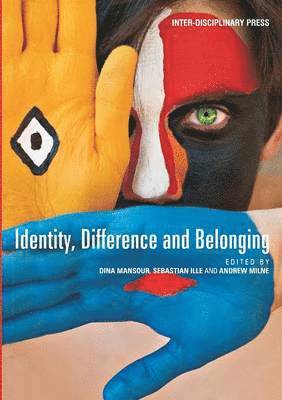
The first volume of the two-volume book publication entitled "Multiculturalism, Conflict and Belonging", which stems out of the four-day international conference under the same title organized by Interdisciplinary.Net at Mansfield College, Oxford University, in September 2012, aims not only at exploring the concepts of "identity", "difference" and "belonging" from a theoretical perspective, but more importantly at relating them empirically to multicultural contexts that shed a better light on the concepts in question. Both volumes are composed of chapters under various themes that provide an analytical analysis on how individuals choose and shift from one identity to the other as well as how they voluntarily and involuntarily belong to one or the other group thus shaping the very fabrics of a multicultural environment. This first volume entitled "Identity, Difference and Belonging" is composed of nine chapters that are divided under two main themes, namely: (1) Making and Negotiating Identities: Education, Religion and Culture; and (2) Making Identities: Cultural Representations.