Sergio André Rocha – författare
2 276 kr
Skickas inom 3-6 vardagar
2 018 kr
Läs direkt efter köp
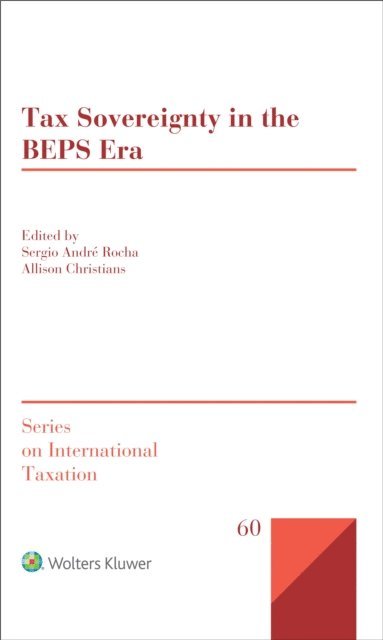
The power of a country to freely design its tax system is generally understood to be an integral feature of sovereignty. However, as an inevitable result of globalization and income mobility, one country’s exercise of tax sovereignty often overlaps, interferes with, or even impedes that of another. In this collection of essays, internationally respected practitioners and academics reveal how the OECD’s Base Erosion and Pro t Shifting (BEPS) initiative, although a major step in the right direction, is insuf cient to resolve the tax sovereignty paradox. Each contribution deals with different facets of a single topic: How tax sovereignty is shaped in a post ,BEPS world. <\P>
The contributors provide in ,depth analysis of such relevant issues as the following: hy multilateral cooperation and soft law consensus are the preferred solutions to a loss of autonomy over national tax policy; – how digital commerce has upended traditional notions of source and residence; – why residence and source continue to be the two essential building blocks of tax sovereignty and the backbone of the international tax system; – how developing countries can take advantage of the new international tax architecture to ensure that their voices are truly shaping the standards; and – transfer pricing reform.
Collectively, the authors provide an authoritative commentary on the necessary preconditions for exercising the power to tax in today’s world. Their perspectives and recommendations will prove of great value to all policymakers, legislators, practitioners, and academics in the international taxation arena.
2 018 kr
Läs direkt efter köp
The power of a country to freely design its tax system is generally understood to be an integral feature of sovereignty. However, as an inevitable result of globalization and income mobility, one country’s exercise of tax sovereignty often overlaps, interferes with, or even impedes that of another. In this collection of essays, internationally respected practitioners and academics reveal how the OECD’s Base Erosion and Pro t Shifting (BEPS) initiative, although a major step in the right direction, is insuf cient to resolve the tax sovereignty paradox. Each contribution deals with different facets of a single topic: How tax sovereignty is shaped in a post ,BEPS world. <\P>
The contributors provide in ,depth analysis of such relevant issues as the following: hy multilateral cooperation and soft law consensus are the preferred solutions to a loss of autonomy over national tax policy; – how digital commerce has upended traditional notions of source and residence; – why residence and source continue to be the two essential building blocks of tax sovereignty and the backbone of the international tax system; – how developing countries can take advantage of the new international tax architecture to ensure that their voices are truly shaping the standards; and – transfer pricing reform.
Collectively, the authors provide an authoritative commentary on the necessary preconditions for exercising the power to tax in today’s world. Their perspectives and recommendations will prove of great value to all policymakers, legislators, practitioners, and academics in the international taxation arena.
2 083 kr
Skickas inom 5-8 vardagar
1 836 kr
Läs direkt efter köp
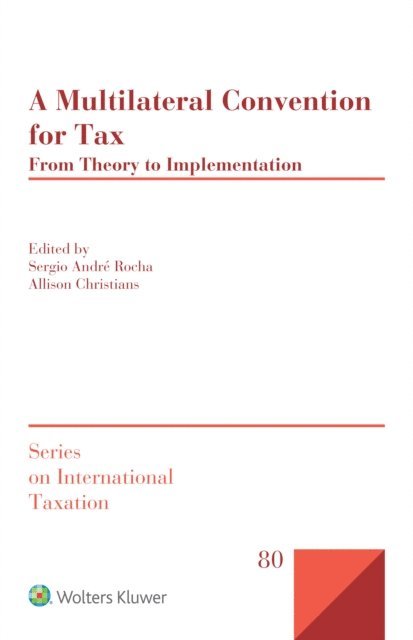
The Multilateral Convention to Implement Tax Treaty Related Measures to Prevent Base Erosion and Profit Shifting (MLI) is the most forceful multilateral initiative to coordinate tax regimes on a worldwide basis since the dawn of modern income taxation over a century ago. This book evaluates two radically opposed viewpoints on the convention—a momentous and revolutionary paradigm shift versus a mechanism that merely continues an ongoing flow of limited policy coordination—with detailed investigations that bring to life the hopes and the realities of the current era of multilateral tax cooperation.
Bringing together authors from national jurisdictions across the globe to scrutinize the MLI and its likely future ramifications, the book provides in-depth commentary and analysis in the following sequence:
first, a comprehensive discussion of the design and goals of the MLI as a treaty and an institutional framework; second, an overview of the structure of the convention and its take-up across the globe to date; and third, the substantive implementation of the MLI with a wide range of country reports.Practice areas covered include tax law, international law, and international relations.
The legal workings and implications of the MLI might still seem mysterious to those whose daily work is impacted by it, and there is as yet little jurisprudence regarding its legal nature or ultimate effect on the bilateral treaties coming within its scope. For these reasons, this pathbreaking book will be warmly welcomed by in-house counsel and law firms advising cross-border investors and firms; nongovernmental organizations involved in policy analysis and issue advocacy; researchers working on technical areas of international tax law; and lawyers interested in international policymaking, including the creation and diffusion of consensus-based fiscal and related regulatory norms across jurisdictions of differing development levels.
1 836 kr
Läs direkt efter köp
The Multilateral Convention to Implement Tax Treaty Related Measures to Prevent Base Erosion and Profit Shifting (MLI) is the most forceful multilateral initiative to coordinate tax regimes on a worldwide basis since the dawn of modern income taxation over a century ago. This book evaluates two radically opposed viewpoints on the convention—a momentous and revolutionary paradigm shift versus a mechanism that merely continues an ongoing flow of limited policy coordination—with detailed investigations that bring to life the hopes and the realities of the current era of multilateral tax cooperation.
Bringing together authors from national jurisdictions across the globe to scrutinize the MLI and its likely future ramifications, the book provides in-depth commentary and analysis in the following sequence:
first, a comprehensive discussion of the design and goals of the MLI as a treaty and an institutional framework; second, an overview of the structure of the convention and its take-up across the globe to date; and third, the substantive implementation of the MLI with a wide range of country reports.Practice areas covered include tax law, international law, and international relations.
The legal workings and implications of the MLI might still seem mysterious to those whose daily work is impacted by it, and there is as yet little jurisprudence regarding its legal nature or ultimate effect on the bilateral treaties coming within its scope. For these reasons, this pathbreaking book will be warmly welcomed by in-house counsel and law firms advising cross-border investors and firms; nongovernmental organizations involved in policy analysis and issue advocacy; researchers working on technical areas of international tax law; and lawyers interested in international policymaking, including the creation and diffusion of consensus-based fiscal and related regulatory norms across jurisdictions of differing development levels.
1 244 kr
Läs direkt efter köp
Because the normative concepts referred to in tax treaties are susceptible to contextual variation, the rules embedded in such treaties cannot be applied without interpretation. In this incomparable book, an internationally known tax law practitioner and scholar draws on decades of knowledge-gathering to present a deeply evolved general theory of tax treaty interpretation, thoroughly discussing the starting points and elements of interpretation that should be considered by all stakeholders in the field of international taxation.
In the course of his rigorous commentary, the author invokes the established canons that apply to the interpretation of tax treaties, including the Vienna Convention on the Law of Treaties and the OECD and UN Model Conventions. He presents a detailed investigation of the implications for tax treaty interpretation of such topics and issues as the following:
essential concepts such as “context” and “qualification”;
evolution of international taxation from bilateralism to multilateralism;
specific interpretation issues raised by bilateral tax treaties;
economic crises as drivers for changes in international taxation rules;
the OECD/G-20 BEPS project;
digitalization of the economy;
pandemic, war, and deglobalization;
interpretation of international treaties versus interpretation of domestic laws; and
interpretation of double tax conventions in countries that are not OECD members.
In the absence of a declaration of international tax principles, this book’s in-depth analysis of the theory of interpretation of international tax treaties—given the risks of interpreting treaties with different jurisdictions and different languages—will ensure an appropriate understanding of the current context of international taxation, providing practitioners and policymakers with a fully informed background that will guide the interpretation of any international tax treaty.
1 289 kr
Läs direkt efter köp
Because the normative concepts referred to in tax treaties are susceptible to contextual variation, the rules embedded in such treaties cannot be applied without interpretation. In this incomparable book, an internationally known tax law practitioner and scholar draws on decades of knowledge-gathering to present a deeply evolved general theory of tax treaty interpretation, thoroughly discussing the starting points and elements of interpretation that should be considered by all stakeholders in the field of international taxation.
In the course of his rigorous commentary, the author invokes the established canons that apply to the interpretation of tax treaties, including the Vienna Convention on the Law of Treaties and the OECD and UN Model Conventions. He presents a detailed investigation of the implications for tax treaty interpretation of such topics and issues as the following:
essential concepts such as “context” and “qualification”;
evolution of international taxation from bilateralism to multilateralism;
specific interpretation issues raised by bilateral tax treaties;
economic crises as drivers for changes in international taxation rules;
the OECD/G-20 BEPS project;
digitalization of the economy;
pandemic, war, and deglobalization;
interpretation of international treaties versus interpretation of domestic laws; and
interpretation of double tax conventions in countries that are not OECD members.
In the absence of a declaration of international tax principles, this book’s in-depth analysis of the theory of interpretation of international tax treaties—given the risks of interpreting treaties with different jurisdictions and different languages—will ensure an appropriate understanding of the current context of international taxation, providing practitioners and policymakers with a fully informed background that will guide the interpretation of any international tax treaty.
2 716 kr
Tillfälligt slut