Shalini Shankar - Böcker
Visar alla böcker från författaren Shalini Shankar. Handla med fri frakt och snabb leverans.
5 produkter
5 produkter
361 kr
Skickas inom 7-10 vardagar
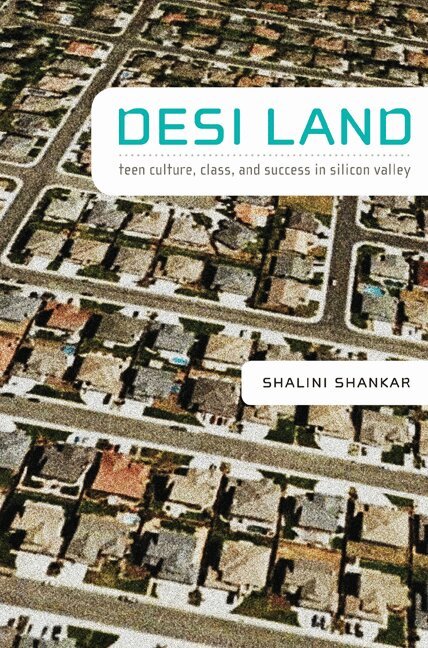
Desi Land is Shalini Shankar’s lively ethnographic account of South Asian American teen culture during the Silicon Valley dot-com boom. Shankar focuses on how South Asian Americans, or “Desis,” define and manage what it means to be successful in a place brimming with the promise of technology. Between 1999 and 2001 Shankar spent many months “kickin’ it” with Desi teenagers at three Silicon Valley high schools, and she has since followed their lives and stories. The diverse high-school students who populate Desi Land are Muslims, Hindus, Christians, and Sikhs, from South Asia and other locations; they include first- to fourth-generation immigrants whose parents’ careers vary from assembly-line workers to engineers and CEOs. By analyzing how Desi teens’ conceptions and realizations of success are influenced by community values, cultural practices, language use, and material culture, she offers a nuanced portrait of diasporic formations in a transforming urban region.Whether discussing instant messaging or arranged marriages, Desi bling or the pressures of the model minority myth, Shankar foregrounds the teens’ voices, perspectives, and stories. She investigates how Desi teens interact with dialogue and songs from Bollywood films as well as how they use their heritage language in ways that inform local meanings of ethnicity while they also connect to a broader South Asian diasporic consciousness. She analyzes how teens negotiate rules about dating and reconcile them with their longer-term desire to become adult members of their communities. In Desi Land Shankar not only shows how Desi teens of different socioeconomic backgrounds are differently able to succeed in Silicon Valley schools and economies but also how such variance affects meanings of race, class, and community for South Asian Americans.
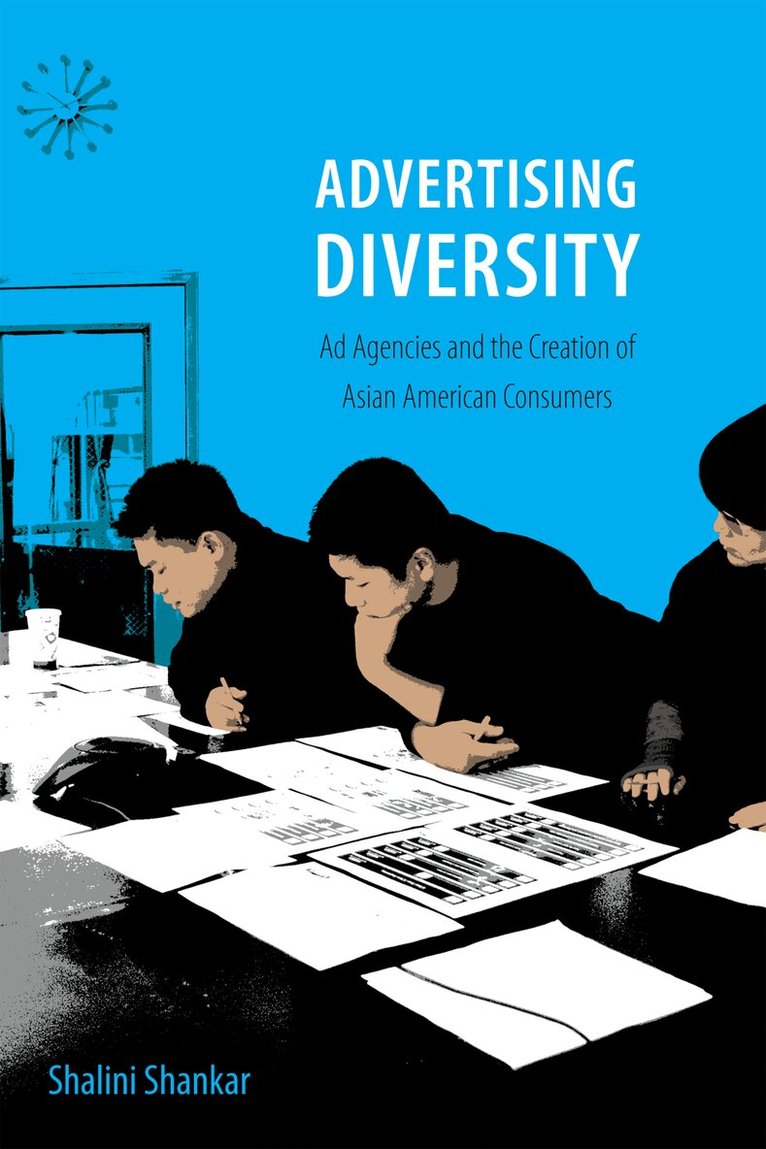
Advertising Diversity
Ad Agencies and the Creation of Asian American Consumers
Inbunden, Engelska, 2015
1 518 kr
Skickas inom 7-10 vardagar
In Advertising Diversity Shalini Shankar explores how racial and ethnic differences are created and commodified through advertisements, marketing, and public relations. Drawing from periods of fieldwork she conducted over four years at Asian American ad agencies in New York, San Francisco, and Los Angeles, Shankar illustrates the day-to-day process of creating and producing broadcast and internet advertisements. She examines the adaptation of general market brand identities for Asian American audiences, the ways ad executives make Asian cultural and linguistic concepts accessible to their clients, and the differences between casting Asian Americans in ads for general and multicultural markets. Shankar argues that as a form of racialized communication, advertising shapes the political and social status of Asian Americans, transforming them from "model minorities" to "model consumers." Asian Americans became visible in the twenty-first century United States through a process Shankar calls "racial naturalization." Once seen as foreign, their framing as model consumers has legitimized their presence in the American popular culture landscape. By making the category of Asian American suitable for consumption, ad agencies shape and refine the population they aim to represent.
371 kr
Skickas inom 7-10 vardagar
In Advertising Diversity Shalini Shankar explores how racial and ethnic differences are created and commodified through advertisements, marketing, and public relations. Drawing from periods of fieldwork she conducted over four years at Asian American ad agencies in New York, San Francisco, and Los Angeles, Shankar illustrates the day-to-day process of creating and producing broadcast and internet advertisements. She examines the adaptation of general market brand identities for Asian American audiences, the ways ad executives make Asian cultural and linguistic concepts accessible to their clients, and the differences between casting Asian Americans in ads for general and multicultural markets. Shankar argues that as a form of racialized communication, advertising shapes the political and social status of Asian Americans, transforming them from "model minorities" to "model consumers." Asian Americans became visible in the twenty-first century United States through a process Shankar calls "racial naturalization." Once seen as foreign, their framing as model consumers has legitimized their presence in the American popular culture landscape. By making the category of Asian American suitable for consumption, ad agencies shape and refine the population they aim to represent.
1 271 kr
Skickas inom 7-10 vardagar
Language and Materiality integrates linguistic anthropological and sociolinguistic scholarship on a range of topics: semiotic approaches to language, language commodification, sound, embodiment, mediatization, and aesthetics. Empirically rigorous, the volume engages scholars and students interested in language, its use, and meanings. It consists of three sections - 'Texts, Objects, Mediality', 'Sound, Aesthetics, Embodiment', and 'Time, Place, Circulation' - containing chapters and short commentaries, framed by a curated conversation about semiotics and materiality in anthropology. Each section theorizes intersections, connections, and relationships between language and materiality across diverse topics and ethnographic contexts. The volume shows that materiality may be approached as a feature of political economy, sensual experience, aesthetics, and affective relationships in its relation to language as talk, register, genre, ideology, and acoustic object. It consists of new perspectives on materiality as a vital dimension of social life and signification in global capitalism, connecting inquiries on subjects as diverse as food, media, fonts, and music.
336 kr
Skickas inom 7-10 vardagar
Language and Materiality integrates linguistic anthropological and sociolinguistic scholarship on a range of topics: semiotic approaches to language, language commodification, sound, embodiment, mediatization, and aesthetics. Empirically rigorous, the volume engages scholars and students interested in language, its use, and meanings. It consists of three sections - 'Texts, Objects, Mediality', 'Sound, Aesthetics, Embodiment', and 'Time, Place, Circulation' - containing chapters and short commentaries, framed by a curated conversation about semiotics and materiality in anthropology. Each section theorizes intersections, connections, and relationships between language and materiality across diverse topics and ethnographic contexts. The volume shows that materiality may be approached as a feature of political economy, sensual experience, aesthetics, and affective relationships in its relation to language as talk, register, genre, ideology, and acoustic object. It consists of new perspectives on materiality as a vital dimension of social life and signification in global capitalism, connecting inquiries on subjects as diverse as food, media, fonts, and music.