
Shashi Kiran Nayak – författare
Visar alla böcker från författaren . Handla med fri frakt och snabb leverans.
2 produkter
2 produkter
E-bok
Engelska, 20164 153 kr
Läs direkt efter köp
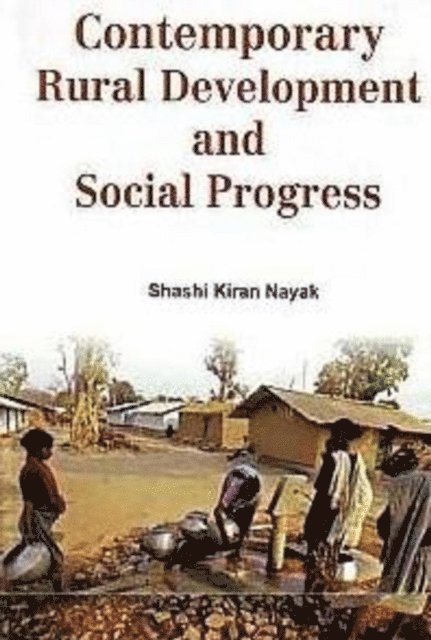
It is not an exaggeration to say that the battle to achieve the global society’s stated objectives on hunger and poverty reduction will be won or lost in the rural areas of the developing countries. Globally, extreme poverty continues to be a rural phenomenon despite increasing urbanization. Of the world’s 1.2 billion extremely poor people, 75 percent live in rural areas and for the most part they depend on agriculture, forestry, fisheries and related activities for survival. The promotion of the rural economy in a sustainable way has the potential of increasing employment opportunities in rural areas, reducing regional income disparities, stemming pre-mature rural-urban migration, and ultimately reducing poverty at its very source. In addition, development of rural areas may contribute to the preservation of the rural landscape, the protection of indigenous cultures and traditions while rural societies could serve as a social buffer for the urban poor in periods of economic crisis or social urban unrest. This book will help development planners, development administrators and local leaders of non-governmental organisations engaged in the task of rural development academicians and students of rural poverty studies and all those who are moved by the bane of poverty in the country.
E-bok
Engelska, 20154 277 kr
Läs direkt efter köp
The use of mathematics in the service of social and economic analysis dates back to the 17th century. Then, mainly in German universities, a style of instruction emerged which dealt specifically with detailed presentation of data as it related to public administration. Gottfried Achenwall lectured in this fashion, coining the term statistics. Mathematics arises from many different kinds of problems. At first these were found in commerce, land measurement, architecture and later astronomy; today, all sciences suggest problems studied by mathematicians, and many problems arise within mathematics itself. Mathematics has become indispensable in the modelling of economics, finance, business and management. Without expecting any particular background of the reader, this book provides an introduction to mathematical methods in economics and finance that will be welcomed for its clarity and breadth.