Sheilagh Hodgins - Böcker
Visar alla böcker från författaren Sheilagh Hodgins. Handla med fri frakt och snabb leverans.
6 produkter
6 produkter
1 899 kr
Skickas inom 5-8 vardagar
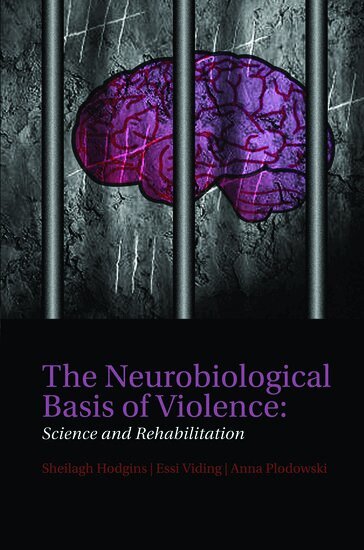
In recent years, there has been an explosion of knowledge concerning the developmental processes that lead to persistent violent offending, and in particular, the neurobiological determinants. However, the field of violence has suffered from a divide between basic laboratory neuroscience and clinical science. Hence, this new knowledge has hitherto had little impact on government policies, prevention programmes, and on the rehabilitation of offenders. This book embraces a translational approach to treating the problem of violent offending. It highlights some of the key scientific challenges, as well as the dilemmas and difficulties in the translation of scientific findings (whether basic or clinical) into policy and practice applications. Using findings derived from studies in molecular genetics, and brain imaging, it provides the latest field of knowledge about violent offending and how to treat and prevent this major problem.The book starts by examining what we know about the development of persistent violent offenders and the factors and mechanisms thought to underlie their pattern of aggressive behaviour. Subsequent chapters describe studies looking at the cognitive and neural functioning of persistent violent offenders, and the kind of children at risk of becoming violent offenders. The chapters in the latter part of the volume review the effectiveness of rehabilitation programmes for adult violent offenders. The book ends by focusing on the establishment of effective interventions for children at risk of becoming violent offenders and for mothers who are at risk of having at-risk children. Throughout, the volume emphasizes the need to consider both biological and non-biological factors as promoters of violence. For neuroscientists, criminologists, psychologists, and psychiatrists, this state of the art volume demonstrates just what can be achieved by integrating neuroscience with clinical practice, and presents a way forward for the development of effective treatments for persistent violent offending.
Del 13 - Wiley Series in Forensic Clinical Psychology
Violence, Crime and Mentally Disordered Offenders
Concepts and Methods for Effective Treatment and Prevention
Häftad, Engelska, 2000
902 kr
Skickas inom 7-10 vardagar
The mentally disordered criminal is a public nightmare, and themanagement of these offenders can be driven as much by politicaland economic concerns as by scientific evidence and professionaljudgement within the fields of mental health and correctionservices. This book aims to provide a critical and focused reviewof knowledge and best practice in this field for mental health andcorrection professionals and for those concerned with policy andmanagement of services for these offenders. Mentally disordered offenders include offenders who suffer fromschizophrenia, major affective disorders, personality disorders(including psychopathy), brain damage, and mental retardation. Thetopic is of increasing importance because of the growth ofcommunity psychiatry, and the growing community programmes foroffenders, and also because of the growing pressures on thoseinstitutions which deal with offenders and care for the mentallydisordered or disabled. Professionals in these fields will welcomethis book which:* Provides a review of approaches to treatment, accessible to awide mental health and forensic readership* Relates treatment approaches to specific mental problems, andreviews evidence of effectiveness* features a truly international group of authors bringing togethera wide variety of approaches, scientific research, and practicalexperience of important programmes for treatment and prevention"Few recent texts provide both the depth and breadth necessary tounderstand the vexing behaviour of mentally disordered offenders.Drs Hodgins and Muller-Isberner, a remarkable pairing of researchand clinical expertise, have put together a highly readable andsuperb resource for anyone interested in this interface of seriousmental illness and criminal behavior. The authors of theconstituent chapters are leading authorities in their respectiveareas and have provided thoughtful commentary on the most recentinternational literature. This is a first-rate treatment of arapidly growing and fascinating field." Marvin Swartz, DukeUniversity, USA
Criminality and Violence among the Mentally Disordered
The Stockholm Metropolitan Project
Häftad, Engelska, 2009
441 kr
Skickas inom 7-10 vardagar
In recent years it has become apparent that mentally ill people are at increased risk of committing crimes of violence. Most writing and research about crime and mental disorder has focused necessarily on the immediate problems which confront clinicians and law makers - assessing and managing the future risk of violence. In this important new book the authors attempt to step back from these immediate preoccupations and describe the criminality of the mentally ill and try to identify the complex chain of factors which cause it. As part of their analysis they examine a unique cohort composed of 15,117 persons born in Stockholm who were studied from pregnancy to the age of thirty. While they conclude that we still do not understand exactly how and why persons with major mental disorders commit crimes, their findings make a valuable contribution to ongoing debates on mental health and criminal justice policy and practice.
Criminality and Violence among the Mentally Disordered
The Stockholm Metropolitan Project
Inbunden, Engelska, 2002
1 192 kr
Skickas inom 7-10 vardagar
In recent years it has become apparent that mentally ill people are at increased risk of committing crimes of violence. Most writing and research about crime and mental disorder has focused necessarily on the immediate problems which confront clinicians and law makers - assessing and managing the future risk of violence. In this important new book the authors attempt to step back from these immediate preoccupations and describe the criminality of the mentally ill and try to identify the complex chain of factors which cause it. As part of their analysis they examine a unique cohort composed of 15,117 persons born in Stockholm who were studied from pregnancy to the age of thirty. While they conclude that we still do not understand exactly how and why persons with major mental disorders commit crimes, their findings make a valuable contribution to ongoing debates on mental health and criminal justice policy and practice.
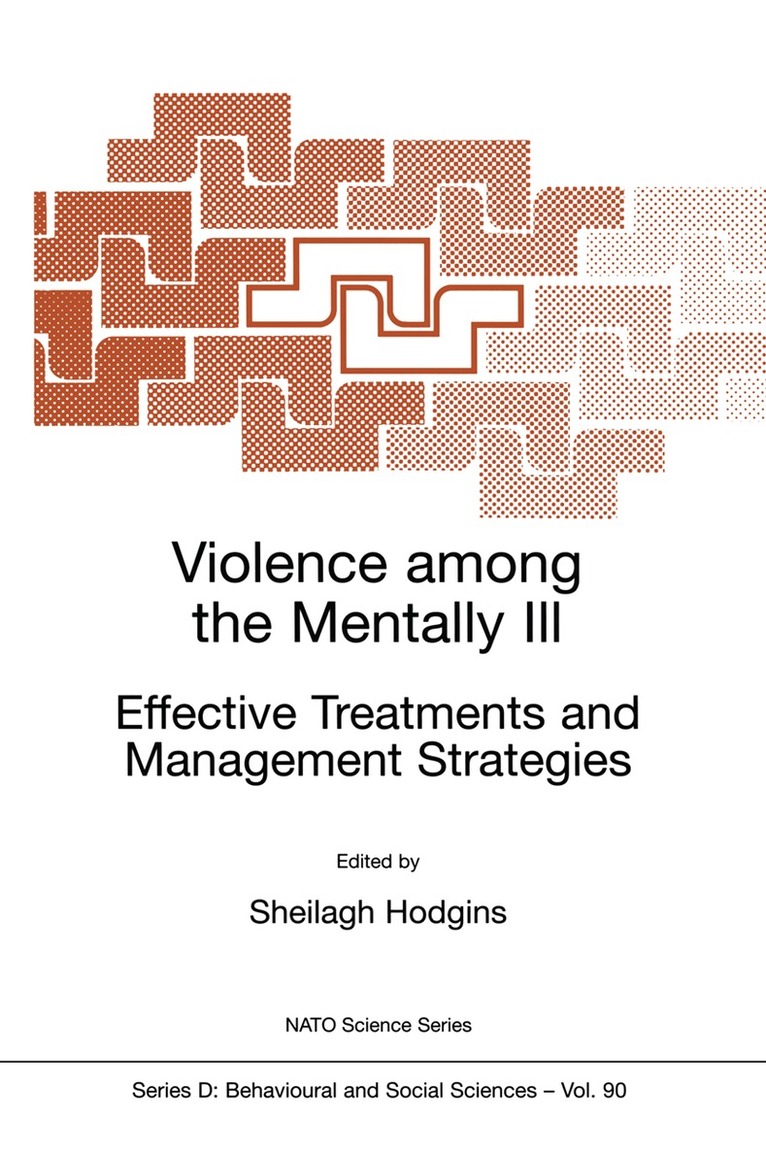
Violence among the Mentally III
Effective Treatments and Management Strategies
Inbunden, Engelska, 2000
2 180 kr
Skickas inom 10-15 vardagar
The text, written by some of the leading researchers in the world in the field of mental illness and crime, starts by reviewing investigations of crime and violence by the mentally ill in the community, in hospitals and in correctional facilities. It goes on to review the development of offending and violent behaviour among persons with mental illness. Subsequent chapters document what is known about the effective prevention of offending and violent behaviour among the mentally ill. The provision of treatment in the community, in hospitals and correctional facilities is then critically reviewed and discussed, with specific descriptions of pharmacological and behavioural treatments. Compliance with treatment is discussed at length. Methodological issues in measuring the effectiveness of treatment of mentally ill offenders are described, with recommendations for future studies to evaluate treatments.
2 180 kr
Skickas inom 10-15 vardagar
The text, written by some of the leading researchers in the world in the field of mental illness and crime, starts by reviewing investigations of crime and violence by the mentally ill in the community, in hospitals and in correctional facilities. It goes on to review the development of offending and violent behaviour among persons with mental illness. Subsequent chapters document what is known about the effective prevention of offending and violent behaviour among the mentally ill. The provision of treatment in the community, in hospitals and correctional facilities is then critically reviewed and discussed, with specific descriptions of pharmacological and behavioural treatments. Compliance with treatment is discussed at length. Methodological issues in measuring the effectiveness of treatment of mentally ill offenders are described, with recommendations for future studies to evaluate treatments.