Sherrilyn Ifill – författare
Visar alla böcker från författaren . Handla med fri frakt och snabb leverans.
3 produkter
3 produkter
E-bok
Engelska, 2007209 kr
Läs direkt efter köp
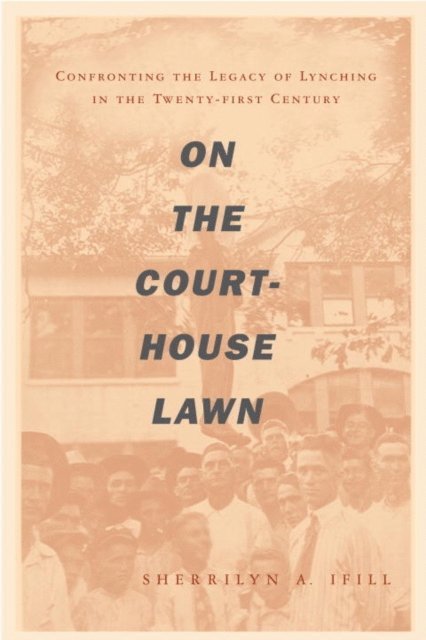
Nearly 5,000 black Americans were lynched between 1890 and 1960. Over forty years later, Sherrilyn Ifill''s On the Courthouse Lawn examines the numerous ways that this racial trauma still resounds across the United States. While the lynchings and their immediate aftermath were devastating, the little-known contemporary consequences, such as the marginalization of political and economic development for black Americans, are equally pernicious. On the Courthouse Lawn investigates how the lynchings implicated average white citizens, some of whom actively participated in the violence while many others witnessed the lynchings but did nothing to stop them. Ifill observes that this history of complicity has become embedded in the social and cultural fabric of local communities, who either supported, condoned, or ignored the violence. She traces the lingering effects of two lynchings in Maryland to illustrate how ubiquitous this history is and issues a clarion call for American communities with histories of racial violence to be proactive in facing this legacy today. Inspired by South Africa''s Truth and Reconciliation Commission, as well as by techniques of restorative justice, Ifill provides concrete ideas to help communities heal, including placing gravestones on the unmarked burial sites of lynching victims, issuing public apologies, establishing mandatory school programs on the local history of lynching, financially compensating those whose family homes or businesses were destroyed in the aftermath of lynching, and creating commemorative public spaces. Because the contemporary effects of racial violence are experienced most intensely in local communities, Ifill argues that reconciliation and reparation efforts must also be locally based in order to bring both black and white Americans together in an efficacious dialogue. A landmark book, On the Courthouse Lawn is a much-needed and urgent road map for communities finally confronting lynching''s long shadow by embracing pragmatic reconciliation and reparation efforts.
E-bok
Engelska, 2018172 kr
Läs direkt efter köp
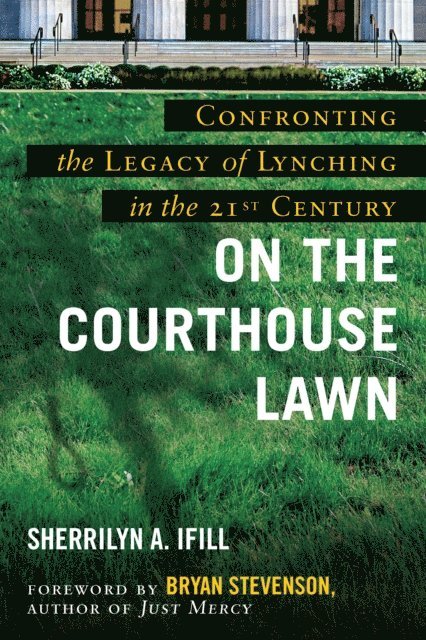
Revised edition of the groundbreaking book on the effects of lynching in the U.S. featuring a foreword from Bryan StevensonNearly 5,000 black Americans were lynched between 1890 and 1960, and, as Sherrilyn Ifill argues, the effects of this racial trauma continue to resound. In On the Courthouse Lawn Ifill, President and Director-Counsel of the NAACP Legal Defense and Educational Fund, issues a clarion call for American communities with histories of racial violence to be proactive in facing this legacy. Inspired by South Africa''s Truth and Reconciliation Commission, and drawing on techniques of restorative justice, she offers concrete ways for communities to heal. Featuring a new afterword from the author and a new foreword from Bryan Stevenson, this revised edition will help readers to navigate and better understand contemporary struggles to come to terms with the legacy of racial terror in the United States including debates about the National Anthem and Civil War monuments.
Inbunden, Engelska, 2018
213 kr
Skickas inom 5-8 vardagar
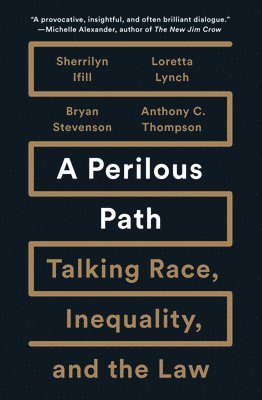
A frank and enlightening discussion on race and the law in America today, from some of our leading legal minds—including the bestselling author of Just MercyThis blisteringly candid discussion of the American racial dilemma in the age of Black Lives Matter brings together the head of the NAACP Legal Defense Fund, the former attorney general of the United States, a bestselling author and death penalty lawyer, and a star professor for an honest conversation the country desperately needs to hear.Drawing on their collective decades of work on civil rights issues as well as personal histories of rising from poverty and oppression, these titans of the legal profession discuss the importance of working for justice in an unjust time.Covering topics as varied as “the commonality of pain,” “when ‘public’ became a dirty word,” and the concept of an “equality dividend” that is due to people of color for helping America brand itself internationally as a country of diversity and acceptance, Sherrilyn Ifill, Loretta Lynch, Bryan Stevenson, and Anthony C. Thompson engage in a deeply thought-provoking discussion on the law’s role in both creating and solving our most pressing racial quandaries. A Perilous Path will speak loudly and clearly to everyone concerned about America’s perpetual fault line.