Shigenori Maruyama – författare
Visar alla böcker från författaren Shigenori Maruyama. Handla med fri frakt och snabb leverans.
6 produkter
6 produkter
Inbunden, Engelska, 2007
1 622 kr
Skickas inom 10-15 vardagar
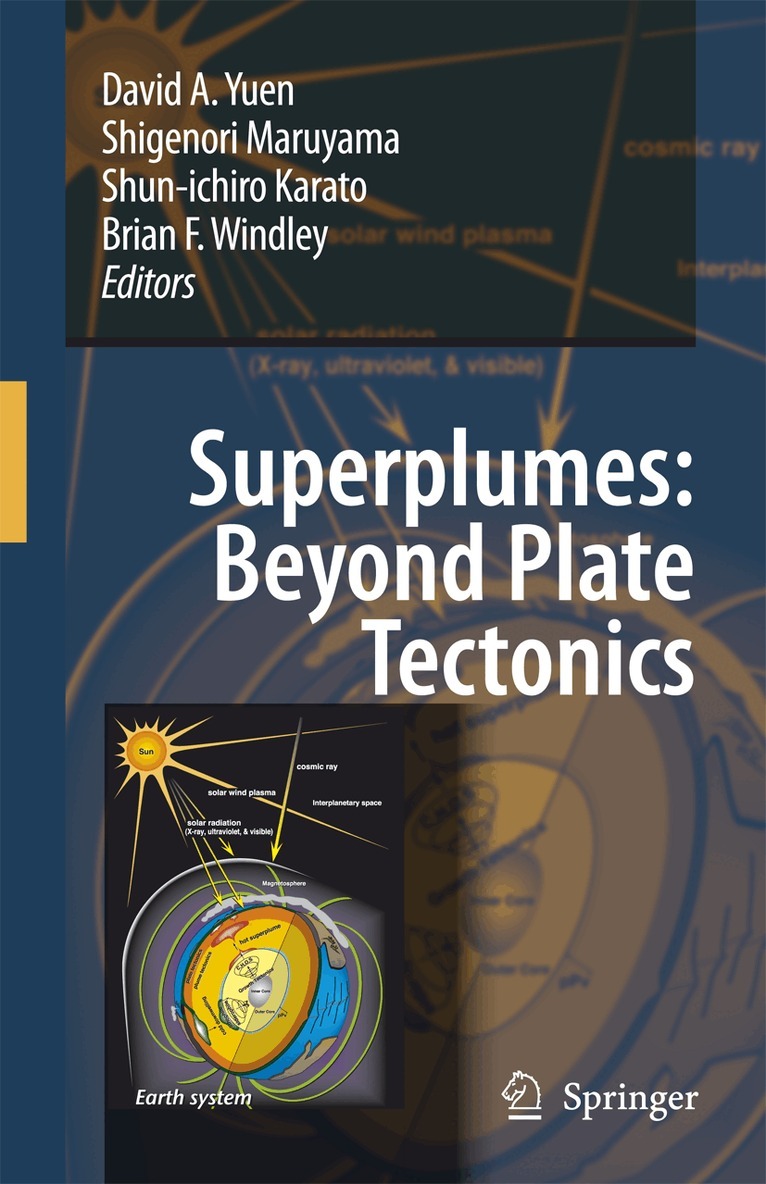
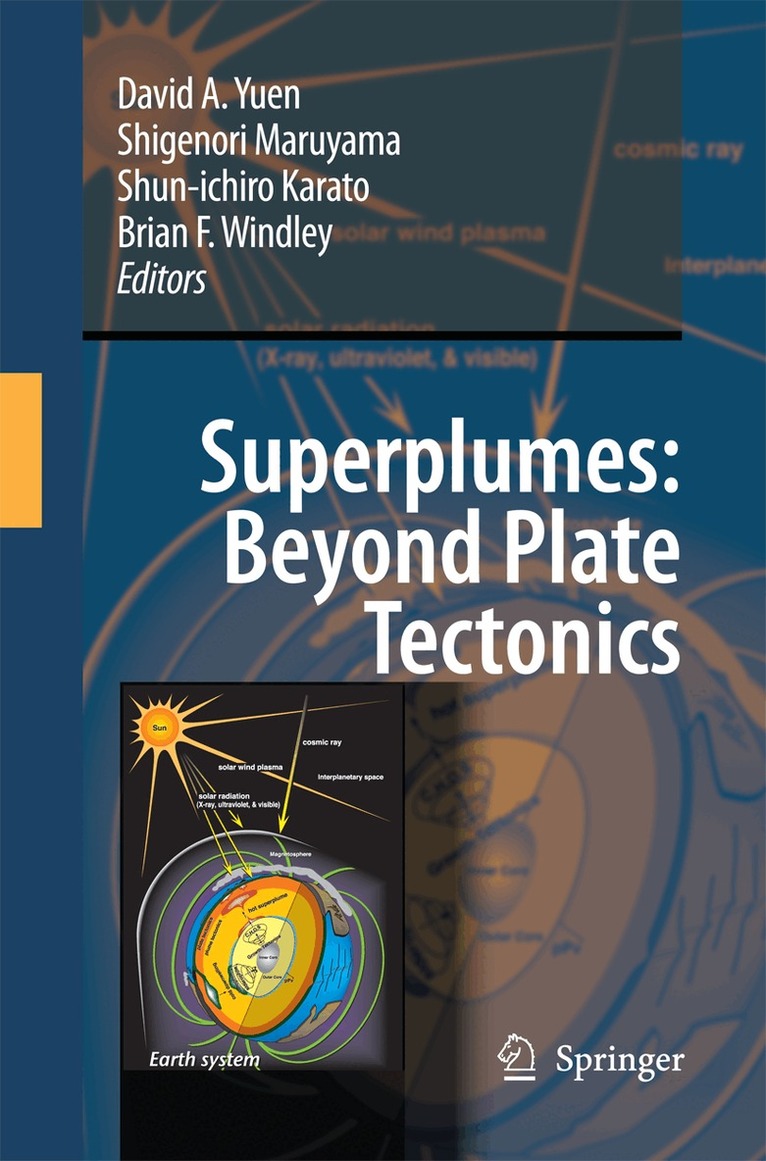
Forty years ago when plate tectonics was first discovered, there was a major shift in thinking in the Earth Sciences. Little was known at that time about the deep mantle because of the lack of knowledge about material properties, the absence of any seismic tomography or concepts such as mantle convection. Thus the theory of platetectonicswasbuiltonsurfaceobservationsandkinematicconstraints.Thetheory of plate tectonics is not independent but consists of several assumptions. Examples are the origin of arc magma, MORB or OIB, and the distribution of earthquakes and the plate margin processes are all part of plate tectonics theory. In the intervening years much progress has been made in all three burgeoning areas of mineral physics, seismic tomography and mantle dynamics, thanks to the technological advances in synchrotron radiation and supercomputers. Mineralphysicsstudieshaveprovidedsomeofthekeyparametersthatcontrolthe style of mantle convection. The style of convection in the Earth’s mantle is largely controlled by complex material properties including the changes in density and v- cosityassociatedwithalargevariationinthepressureandtemperatureoftheEarth’s interior. These key physical properties have become the target of both experimental andtheoreticalstudiesinmineralphysics.Startingfromtheearly90s,theadvancesin high-performance computational capability has allowed us to incorporate these m- eral physics findings into large-scale computational modeling of mantle convection; and these studies have highlighted the complexities of mantle convection caused by the variation in density due to both thermal and chemical anomalies (and viscosity) in the Earth’s deep interior.
E-bok
PDF, Engelska, 20072 049 kr
Läs direkt efter köp
Forty years ago when plate tectonics was first discovered, there was a major shift in thinking in the Earth Sciences. Little was known at that time about the deep mantle because of the lack of knowledge about material properties, the absence of any seismic tomography or concepts such as mantle convection. Thus the theory of platetectonicswasbuiltonsurfaceobservationsandkinematicconstraints.Thetheory of plate tectonics is not independent but consists of several assumptions. Examples are the origin of arc magma, MORB or OIB, and the distribution of earthquakes and the plate margin processes are all part of plate tectonics theory. In the intervening years much progress has been made in all three burgeoning areas of mineral physics, seismic tomography and mantle dynamics, thanks to the technological advances in synchrotron radiation and supercomputers. Mineralphysicsstudieshaveprovidedsomeofthekeyparametersthatcontrolthe style of mantle convection. The style of convection in the Earth’s mantle is largely controlled by complex material properties including the changes in density and v- cosityassociatedwithalargevariationinthepressureandtemperatureoftheEarth’s interior. These key physical properties have become the target of both experimental andtheoreticalstudiesinmineralphysics.Startingfromtheearly90s,theadvancesin high-performance computational capability has allowed us to incorporate these m- eral physics findings into large-scale computational modeling of mantle convection; and these studies have highlighted the complexities of mantle convection caused by the variation in density due to both thermal and chemical anomalies (and viscosity) in the Earth’s deep interior.
Häftad, Engelska, 2012
230 kr
Skickas inom 5-8 vardagar
Inbunden, Engelska, 2012
331 kr
Skickas inom 3-6 vardagar
E-bok
Engelska, 201250 kr
Läs direkt efter köp
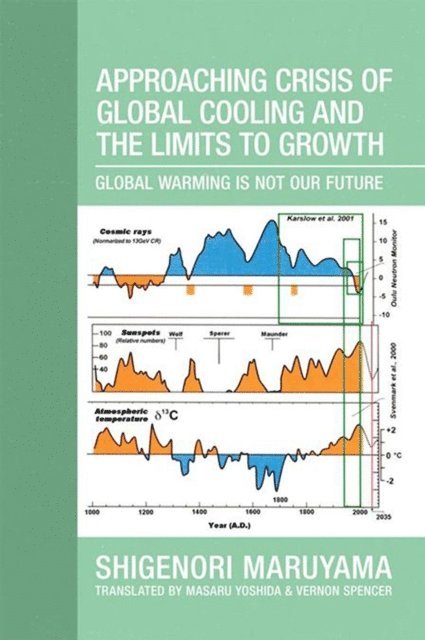
We are at the terminal point of the warm interglacial period, and thenext glacial age may anytime start. The first step of the global cooling ispredicted by the author to come in 2035, when the food production willsurely decrease. The population is expanding and the shortage of foodand drain of natural resources result in the limits to the growth of thehuman society. It was predicted by the Rome Club (1972) that The Limitsto Growth would come in 2020. All these conditions together corroborateto bring a severe crisis to human beings in near future. If the earth wouldbe meeting warming in near future as predicted by IPCC, then the crisiswould be mild.However, it is not the case. The atmospheric temperature of the earthwill surely become cold, because most of major controlling factors of theatmospheric temperature, i.e., solar activity, cosmic rays, and geomagnetismare changing in a way to the cooling. The effect of carbon dioxide gas onlycannot be too much evaluated. The effort of decreasing carbon dioxidegas is important in the sustainability of our limited resources, however, wehave to seriously consider the measures for the approaching crisis of globalcooling and the limits to growth.
Häftad, Engelska, 2014
1 622 kr
Skickas inom 10-15 vardagar
Forty years ago when plate tectonics was first discovered, there was a major shift in thinking in the Earth Sciences. Little was known at that time about the deep mantle because of the lack of knowledge about material properties, the absence of any seismic tomography or concepts such as mantle convection. Thus the theory of platetectonicswasbuiltonsurfaceobservationsandkinematicconstraints.Thetheory of plate tectonics is not independent but consists of several assumptions. Examples are the origin of arc magma, MORB or OIB, and the distribution of earthquakes and the plate margin processes are all part of plate tectonics theory. In the intervening years much progress has been made in all three burgeoning areas of mineral physics, seismic tomography and mantle dynamics, thanks to the technological advances in synchrotron radiation and supercomputers. Mineralphysicsstudieshaveprovidedsomeofthekeyparametersthatcontrolthe style of mantle convection. The style of convection in the Earth’s mantle is largely controlled by complex material properties including the changes in density and v- cosityassociatedwithalargevariationinthepressureandtemperatureoftheEarth’s interior. These key physical properties have become the target of both experimental andtheoreticalstudiesinmineralphysics.Startingfromtheearly90s,theadvancesin high-performance computational capability has allowed us to incorporate these m- eral physics findings into large-scale computational modeling of mantle convection; and these studies have highlighted the complexities of mantle convection caused by the variation in density due to both thermal and chemical anomalies (and viscosity) in the Earth’s deep interior.